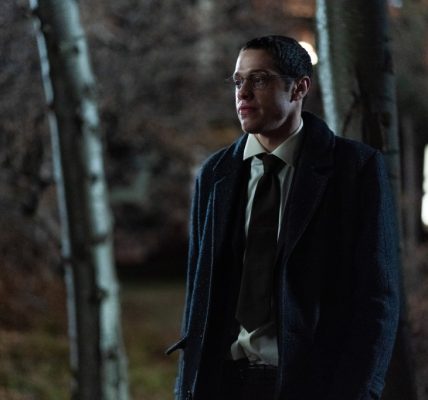
Taylor John Smith has transitioned from a minor role in the deleted scenes of “The Hunger Games” to a significant presence in “Where the Crawdads Sing,” establishing an impressive acting career. Recently, during the Taormina Film Festival, he took the stage to introduce the film “Warfare,” directed by Ray Mendoza and Alex Garland. Following the screening, he engaged in a candid discussion with Variety about the film’s themes and his evolving career.
Reflecting on Early Career Moments in “The Hunger Games”
I was not even a recognized extra in “The Hunger Games.” My involvement was limited to the bonus features found on the DVD. The experience marked my debut on a film set where Gary Ross was the director. Even though it was thrilling to be part of such a major production, I was overwhelmed with nerves. Just being there was a privilege, and I am incredibly thankful that I’ve been able to pursue my passion for acting since I turned 18 years old.
Insights on the Film’s Message: A Balanced Perspective on War
Last night, I mentioned that “Warfare” should not be categorized strictly as a pro- or anti-war film. The focus is on the consequences and the harsh realities of warfare. We aimed to depict the gravity of what it means when someone signs a document and sends young individuals off to combat. It’s crucial that viewers understand this decision is anything but trivial. War is chaotic, and once our brave young men and women are deployed, they are often detached from the political motivations that placed them there; their primary concern becomes returning home safely.
The Moment of Discovery: Learning About the Project
It was around the holiday season when I found out about this project. I was spending quality time with my grandparents and family in Delaware, but I was completely engrossed in reading this script. I told my agent that I would take on any role, even if it was just as the door they kick in. I had a meeting with Ray and Alex in Los Angeles where our discussion revolved less around the script and more about the perspective they wanted from me. They wanted to ensure I was fully committed because this role was going to be incredibly challenging—physically, emotionally, and mentally exhausting.
Intensive Training for Authenticity in “Warfare”
For this film, we underwent rigorous training, which included live-fire weapons training, radio communication protocols, and small unit tactics and drills. Ray Mendoza organized our training like a mini boot camp, which allowed us to bond closely as a cast. From that moment onward, we were inseparable; I don’t recall anyone spending much time alone in their trailers. This experience was vital in building an authentic camaraderie that translated directly into our performances on screen.
Collaborating with Two Directors: A Unique Experience
Having two directors for this film was a beneficial experience, particularly for the nature of our project. Alex Garland focused more on the technical aspects, such as camera placement and lens choices, while Ray Mendoza concentrated on performance. Since Ray was present during the film’s shooting, he had firsthand experience of what the other actors were going through, from fear to the ramifications of concussions. As an actor, it’s invaluable to have someone who understands the mental and emotional challenges we face, providing guidance without sugarcoating the realities.
Character Development: Navigating the Lack of Backstory
In “Warfare,” my character lacks a traditional backstory, which raised questions for me. All characters in the film are inspired by real people, and some of us had the chance to interact with our real-life counterparts. Unfortunately, I couldn’t meet the individual my character is based on. However, Ray did his best to provide me with a sense of my character’s background, focusing less on personal history and more on their personality traits and team dynamics.
Powerful Themes in the Film’s Ending: Reflection on War’s Impact
The concluding shot of the film leaves viewers with the impression that not much has changed. I am grateful that the filmmakers chose to end the movie in this manner. Witnessing an Iraqi family emerge from their home, completely disrupted by war, reminds the audience that this is just another day in their lives. We also see the Al Qaeda members celebrating their perceived victory against the invaders. This scene compels viewers to take a step back and reflect on the broader implications of our actions; it’s an incredibly powerful moment that doesn’t dictate how to feel but rather encourages deep contemplation.
Looking Ahead: Aspirations Beyond Acting
As I consider the second half of my career, I hope to transition behind the camera. While being an actor is fulfilling, it often feels like you have limited control over the projects you work on and the creative processes involved. I aspire to reach a point where I can contribute to shaping the narrative and direction of the projects, effectively taking on a role in creating the artistic vision rather than merely being a part of it.
Upcoming Projects: Exciting Collaborations Ahead
I am currently involved in an exciting new project with Paul Tamasy, the writer behind “The Fighter.” The film is titled “What’s Left of Us,” which explores the life of a heroin addict and his relationship with his father while growing up in Boston. We are in the pre-production stage right now, and I anticipate that we will begin filming by the end of the year.
This interview has been edited and condensed for clarity and ease of reading.
The post Taylor John Smith Talks Preparing for “Warfare” appeared first on Allcelebrities.