
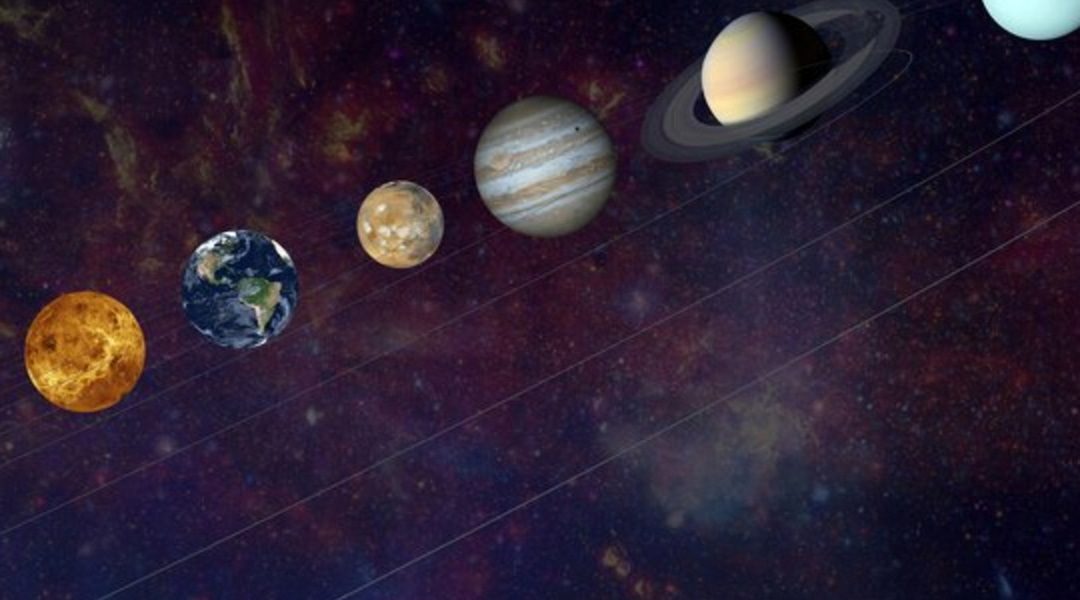

There’s a celestial connection on the horizon.
Six planets—Jupiter, Mercury, Neptune, Saturn, Uranus, and Venus—are set to appear in the sky in what’s known as a planet parade on Feb. 28. Stargazers will need to dust off their binoculars to see some of it in person.
According to NASA, viewers will have to use “optical assistance” to see Uranus and Neptune because they’re the furthest planets in the solar system. However, the other four planets (especially Venus, since it’s the brightest of them all) will be visible to the naked eye. To make this occasion even more special, the space organization also noted a near-full moon will appear in the sky at the same time.
Though the latter cosmic event will be easier to see, it’s still important to make sure your view is clear to get a full look at the parade.
As for where watchers should look in the night sky? If you’re only interested in seeing Venus, Mercury, and Saturn, look towards the west right after sunset. To catch Jupiter, which is set to be near Saturn and Uranus, follow the alignment east.