
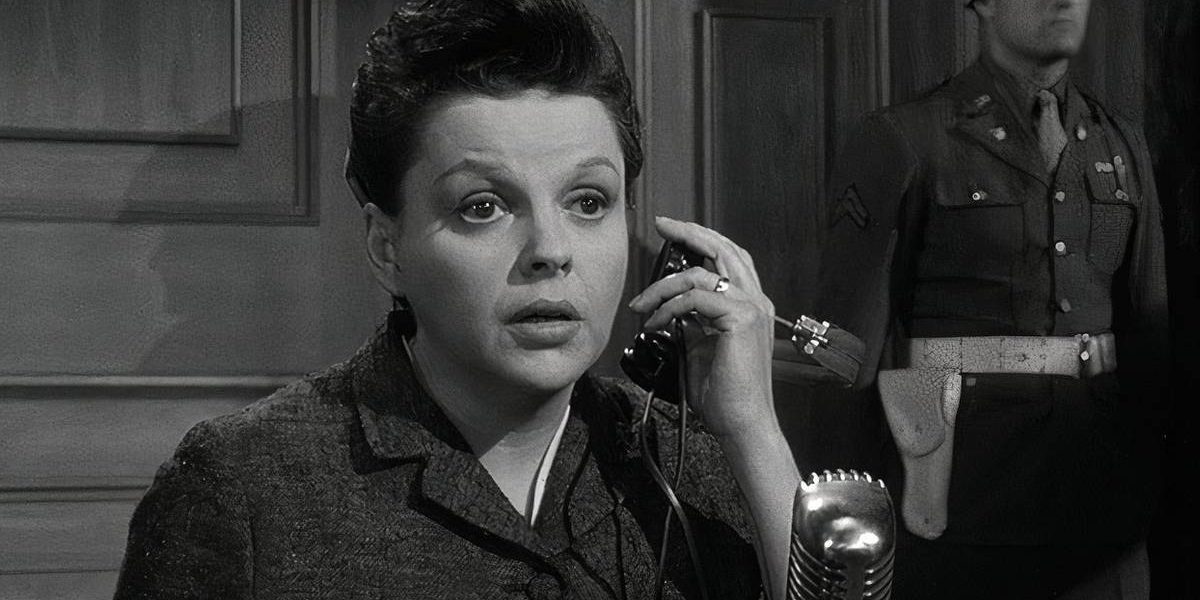
If the premise of the new star-studded historical epic Nuremberg sounds familiar, that’s because it’s not only based on events from a seismic moment in 20th-century world history, but it also parallels the plot of a classic from 1960. Comprised of a cast stuffed with screen legends and an explosive look at the aftermath of World War II, Judgment at Nuremberg set the template for courtroom dramas about the trials held at the titular American-occupied region of Germany for war crimes and human atrocities carried out by the Nazis. With Russell Crowe at the center as powerful Nazi leader Hermann Göring, Nuremberg, directed by James Vanderbilt, stays close to history. In contrast, Judgment at Nuremberg, directed by Stanley Kramer, is a composite dramatization of various trials. Still, the film is an honest reflection of the deep reckoning and aggressive push for justice amid the bloodshed of WWII, energized by its remarkable ensemble cast.
‘Judgment at Nuremberg’ Brings the Drama of World War II to the Courtroom
Along with being arguably the most consequential historical event of the last 100 years, World War II has spawned countless war dramas and thrillers that have become a subgenre unto itself. However, the action on the battlefield was only half the story, as the fate of the world was decided in the backrooms of government buildings and war rooms with commanders and strategists playing games of chess over the livelihood of G.I.s on the ground. Oppenheimer showed that what occurred in the shadows—away from the combat—was just as monumental.
There are no white-knuckle sequences depicting air raids or firefights, but Judgment at Nuremberg, nominated for 11 Academy Awards, including Best Picture, bursts with invigorating tension that is both agonizing and hard to keep your eyes off. You wouldn’t want to look away with its dense cast of dramatic heavyweights and glamorous stars, featuring Spencer Tracy, Burt Lancaster, Richard Widmark, Marlene Dietrich, Maximilian Schell (who won an Oscar for his performance as the lead counsel for the Nazis on trial), Judy Garland, Montgomery Clift, and a pre-Captain Kirk William Shatner. It’s hard to forget any character in this weighty drama because, in all likelihood, they’re being played by an Oscar-winner or screen icon. Chief Judge Dan Haywood (Tracy) leads a military tribunal responsible for hearing the cases of Nazi officers who committed various atrocities, with the most fascinating defendant being the brilliant jurist and legal scholar Dr. Ernst Janning (Lancaster), a person of exceptional knowledge who nonetheless was behind unthinkable acts.
‘Judgment at Nuremberg’ Reflects the Fury and Search for Justice Amid a Post-War Climate
The dramatic crux of Judgment at Nuremberg is evergreen: where does one draw the line between complicity and “just following orders”? The defense argues that the four accused of war crimes were merely serving their duties as sworn officers of the regime, innocent pawns who have expressed deep remorse during the trial. The prosecution suggests that there is a systemic, underlying current of hate and sadism at the core of the entire German Military-Industrial complex, and this court stands to make sure that someone pays for their sins, especially since the deceased Adolf Hitler cannot stand trial. With the Allies’ WWII victory, America became the world’s superpower, and Judgment at Nuremberg conveys the national sentiment of punishing forces of evil, an insatiable desire that paved the way for America’s future foreign conflicts.
Stanley Kramer, known for his issues-driven films like The Defiant Ones, Inherit the Wind, and Guess Who’s Coming to Dinner, is at his best as a polemic filmmaker in Judgment at Nuremberg. While the film doesn’t touch faith or race, its pointed reflection of America’s culpability in the havoc of WWII is a message most studio pictures avoided. There is no jingoism to be found in Judgment at Nuremberg, as Kramer is open-minded and even sympathetic to the defense counsel. Hans Rolfe (Schell) mounts a legitimate case that the almighty USA has committed sins just as bad, if not worse, than the Nazis. Whether or not you buy into the “following orders” defense, the remorse expressed by the Nazi scientists and strategists highlights the weaponization of people during wartime, and even the most gifted and nuanced intellects can fall victim to fascism, one that was driven by post-World War I distress.
Because of their hand-wringing tendencies that feel overstated, Kramer’s filmography is not as cherished today as it once was, but Judgment at Nuremberg has aged the best thanks to the film’s innate pulp tastes.This gaudy batch of acclaimed actors isn’t here by accident—Tracy, Lancaster, Garland, and Clift all get their “Oscar clip” moment, rocking the house down with rousing speeches. The film is an actor’s showcase, and Kramer’s ostentatious direction of his stars matches the rage and fury of nearly a decade of global conflict.
Removed from all the weighty political and historical implications, Judgment at Nuremberg is an exceptional courtroom drama and a picture-perfect example of the genre’s unheralded greatness.The film could’ve been an academic exercise, but Stanley Kramer crafted a propulsive narrative with electrifying vigor inside a stuffy courtroom where lawyers argue over ethics.
Judgment at Nuremberg is available to stream on Tubi in the U.S.
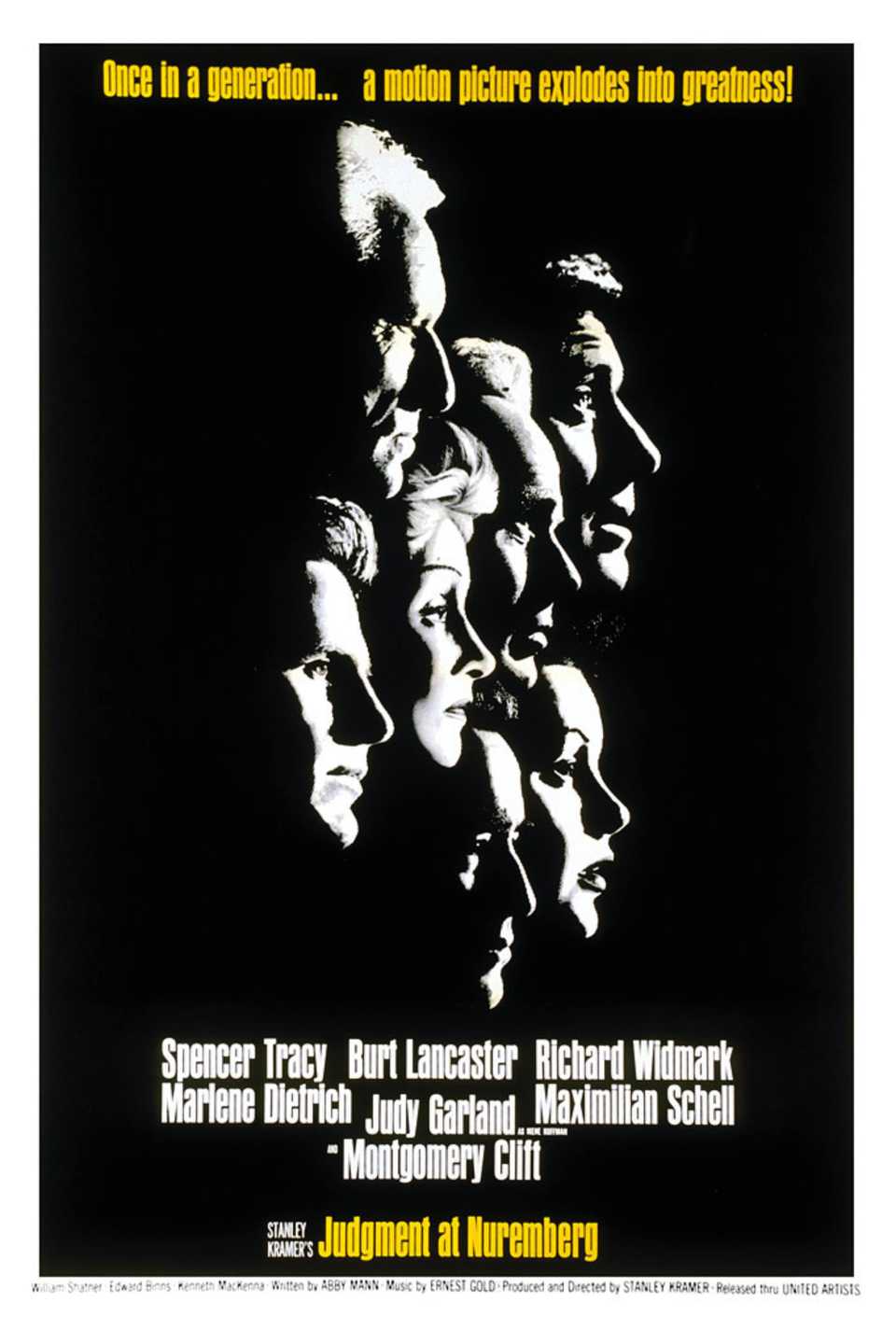
- Release Date
-
December 18, 1961
- Runtime
-
179 Minutes
- Director
-
Stanley Kramer
-
Spencer Tracy
Chief Judge Dan Haywood
-

Burt Lancaster
Dr. Ernst Janning
-
Richard Widmark
Col. Tad Lawson
-
Marlene Dietrich
Mrs. Bertholt