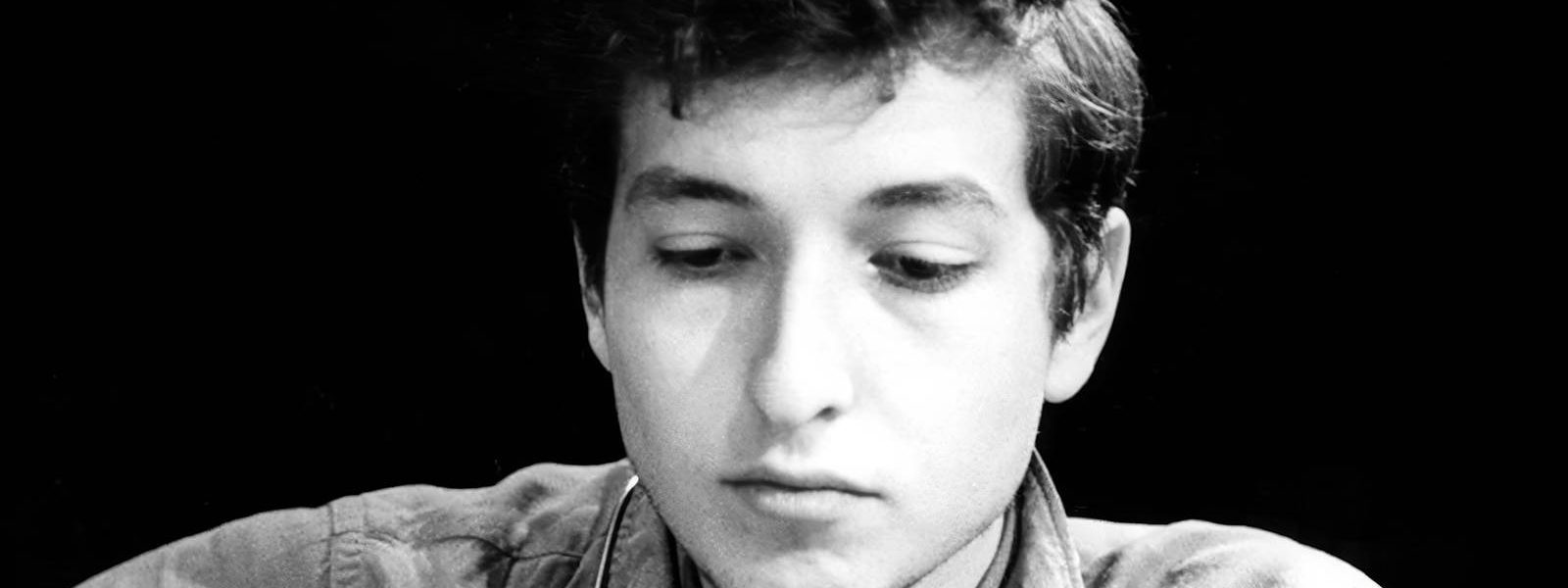
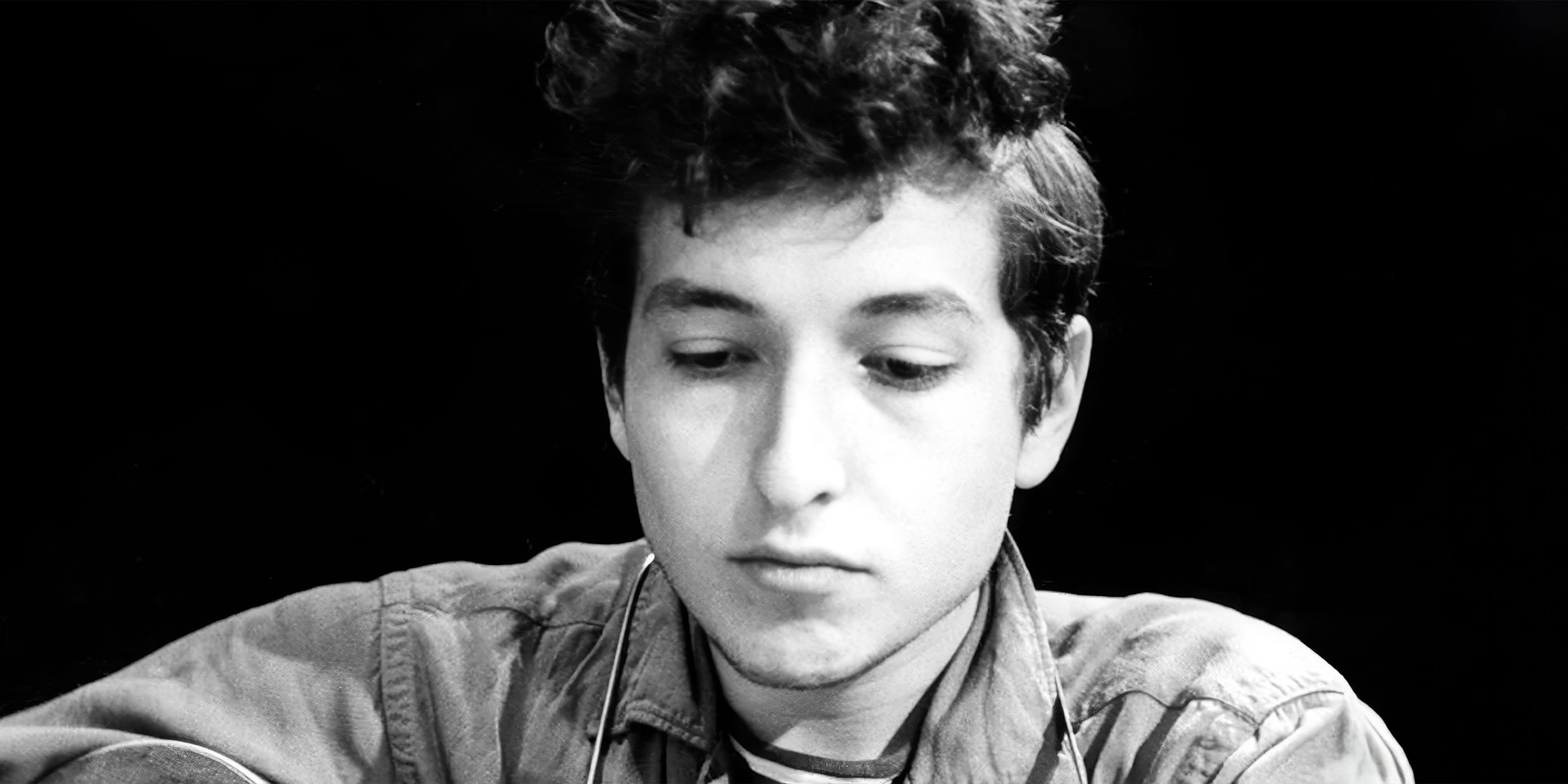
In his prime, Bob Dylan wrote about love like no one else could. Things don’t always end well, and Dylan often embraces that reality in his songs about relationships. That’s what helps them feel so grounded, and his unique turns of phrase echo throughout music history. Then there’s the music itself, of course, which can have a fairly wide range but usually works best when an acoustic guitar is at the helm. There’s just something about Dylan’s voice in a folk aesthetic that can pierce the soul so incisively.
“Boots of Spanish Leather” and “Girl from the North Country” are both lovely examples of Dylan’s somber finger-style mode, and it wouldn’t be surprising to see an average fan include one or both of them on their own top 10 (though they’re too similar to another Dylan classic for this writer to do that). Then there’s the very different “Lay Lady Lay,” with its slide guitar and Dylan’s notably different voice, and “Wedding Song” is an underrated acoustic number from the mid-70s. Dylan’s greatest love songs are absolute knockouts, and they can vary significantly in tone. We’re ranking them based on their emotional power, storytelling prowess, and encapsulations of what love (or lack thereof) can do to the soul.
10
“All I Really Want to Do”
‘Another Side of Bob Dylan’ (1964)
Let’s start with a funny one. Bob Dylan loves a good list, and “All I Really Want to Do” is one of his best ones. In every verse, he lists all the things that he doesn’t want to do to a woman. He mentions a bunch of tropes mentioned in songs and the public discourse at large—from simplifying her to mistreating her to meeting her family—poking fun at all these unoriginal expressions of affection to make his own stand out.
“All I Really Want to Do” is a sort of anti-love song, a parody of what all these other people say or do when writing about women. While Dylan’s speaker definitely wants to be more than friends, the message that a lover should be a friend and equal is as clear as his yodeling. As an acoustic song, this has the typical guitar/harmonica setup, but Dylan is notably laughing throughout. We can hear that he’s having a good time, which makes the listener enjoy this playful piece even more.
9
“Simple Twist of Fate”
‘Blood on the Tracks’ (1975)
“Simple Twist of Fate” is one of the lighter acoustic pieces from Blood on the Tracks, but there’s still an undertone of loneliness that’s palpable throughout the whole thing. It’s most pronounced in the introduction, though, when we’re working only with the softly strummed guitar. Dylan’s voice complicates things, what with those rhyming couplets and tonally diverse delivery—which always ends in a delightful apex. It’s not quite the yodel in the previous entry, but the way he raises his voice for a word that rhymes with “fate” in the chorus (in total juxtaposition to his normal tone) proves very effective.
The harmonica halfway through the song is a nice break from the story, and the harmonica in the outro is just as pleasant. Like the rest of the songs on this album, the lyrics here set every scene so well. When we hear that he “pushed the window open wide / felt an emptiness inside,” we feel like we’re there too.
8
“Lily Rosemary and the Jack of Hearts”
‘The Bootleg Series, Vol. 14: More Blood, More Tracks’ (2018)
The second entry in a row from Blood on the Tracks, except the best version of “Lily, Rosemary and the Jack of Hearts” was released on the 19th volume of The Bootleg Series. It took a while, but like all of Dylan’s precious bootlegs, it’s worth the wait. Lyrically, the track is very cinematic, as Dylan sets the scene of the end of a carnival before directing our focus on one of the main characters: “he was standin’ in the doorway, lookin’ like the Jack of Hearts.”
It’s interesting how we shift perspectives from character to character: the Jack of Hearts, Lily, Rosemary, the backstage manager, etc. With enough room to give people like Big Jim a backstory, this song movingly builds up to two different murders, a robbery, and lovers who don’t wind up together. This version is ten minutes long, but these captivating minutes really fly by.
7
“Don’t Think Twice, It’s Alright”
‘The Freewheelin’ Bob Dylan’ (1963)
You can tell how old this song is by the sound quality. “Don’t Think Twice, It’s Alright” came out on Dylan’s 1963 breakout record,The Freewheelin’ Bob Dylan, so the guitar sounds a bit rougher than what’s expected of popular music today. But that kind of just helps with the overall tone, like an extended goodbye. The Travis picking, the harmonica breaks—they’re all perfectly crafted to bring a tear to the listener’s eye. Without even hearing the lyrics, it’s no wonder this became one of Dylan’s breakout songs.
Of course, everything is enhanced once you listen to the words. Expressions such as “It ain’t no use to sit and wonder why, babe, if you don’t know by now” and “I can’t hear you anymore” add so much texture. There is a tinge of bitterness here yet; the tone is largely more thoughtful and forgiving. While he says that she wasted his time—which most fans can relate to—he reminds her not to think about it too much. Or, to be specific: “Don’t think twice; it’s all right.”
6
“Buckets of Rain”
‘Blood on the Tracks’ (1975)
There are Bob Dylan acoustic songs that are driven by chords, and then there are those driven by gorgeous riffs. “Buckets of Rain” is one of the latter and among the best of them. Yet another from Blood on the Tracks (except this isn’t a Bootleg version), “Buckets of Rain” actually feels more like a sun shower. The first thing we hear is that guitar hook—and we never get tired of it over these three and a half minutes. This riff is so strong; it drives both the verse and chorus.
If you even want to call it a chorus; this is more like how old folk blues songs by such artists as Mississippi John Hurt would just pick the same thing over and over—alternating between singing through one round and then letting the guitar speak for itself after. “Buckets of Rain” isn’t bluesy; however it definitely has that combination of sadness and warmth you can find in that genre. Another difference would be that bass which fits in as well as always.
5
“It Ain’t Me, Babe”
‘Another Side of Bob Dylan’ (1964)
There’s no discernible bass in this one: just Dylan’s voice, guitar, and harmonica. That’s all we really need; “It Ain’t Me, Babe” is one of its most powerful examples. The common expression “It’s not you; it’s me” is more or less what this narrator takes on—even though at first glance it might seem otherwise due to its title. A girl loves him; however he hammers home—in as many ways as possible—that he’s just not her guy.
No one can beat Dylan when it comes to these sad love songs.The way he sings this sounds like regret for not being able to be someone who can close his eyes for her or close his heart for her. After all, his attitude could have been more flippant or humorous; instead it comes across as constant somber self-criticism. Overall; tone and lyrics meld together so well that it’s hard to shake off this song.
4
“You’re Gonna Make Me Lonesome When You Go”
‘Blood on the Tracks’ (1975)
“You’re Gonna Make Me Lonesome When You Go” is tonally and lyrically opposite to what we just discussed. This time; however; narrator feels deeply enamored with a woman who’s leaving him—but he also doesn’t dwell in self-pity. This isn’t his first rodeo (“Relationships have all been bad”), yet he feels so happy from his time spent with this unnamed former lover that melancholy hasn’t set in yet. As Dylan sings: “I could stay with you forever and never even realize time,” there’s pure joy in that thought.
“You’re gonna make me give myself a good talkin’ to,” wondering what he’s doing will come later—that’s partly because he still sees her everywhere—in sky or grass—and tells himself he’ll look for her again. This breezy three minutes showcases one of Dylan’s most enthusiastic performances from his 70s work; bass supports breathless tempo as expected from Blood on Tracks, leaving fans wondering how he makes break-up songs sound so effortless.
3
“Tomorrow Is a Long Time”
‘Bob Dylan’s Greatest Hits: Vol. II’ (1971)
Back to another solemn piece.”Tomorrow Is a Long Time” was written when Dylan was young but wasn’t formally released until much later—specifically appearing on not his first but second greatest hits album. Imagine being such an icon that masterpieces like this get placed on back-burner for nearly a decade—it’s crazy from listener perspective since most songwriters would kill for something this good (although it seems he borrowed guitar section from titles such as “Girl from North Country” or “Boots Spanish Leather”).
The finger-picking here is heavenly.C and G chords are common in popular music yet pull weight without feeling overused. At least in right hands—including especially Bob Dylan’s—with lyrics wandering through hypotheticals highlighting how lonely speaker feels,”Tomorrow Is Long Time” becomes almost too heavy bear.
2
“If You See Her Say Hello”
‘The Bootleg Series: Volumes 1–3 (Rare & Unreleased) 1961–1991’ (1991)
The New York recordings for Blood on Tracks dominate this list—as they should—one greatest pieces being “If You See Her Say Hello,” recounting falling out which “still brings me chill.” While electric version’s sunny guitars may appeal many fans; however it waters down raw emotion present acoustic version point where “chill” isn’t really there (especially how he draws word out annoyingly long).
Dylan doesn’t seem exactly know what do with pace in Blood on Tracks, stretching many words out so far they lose personality any trace tragedy words trying tell.The words spoken quickly acoustic iteration—spoken naturally complicated tone reflecting achingly sad story man who can’t stop thinking about ex.
1
“Tangled Up in Blue”
‘The Bootleg Series: Volumes 1–3 (Rare & Unreleased) 1961–1991’ (1991)
Dylan’s crowning achievement from Blood on Tracks: “Tangled Up Blue.” But not version most people know—even introduction version fromThe Bootleg Series(specifically Take 3 Remake 2) sounds nothing like one we hearBlood on Tracks. Fans familiar popular recording would only recognize predecessor lyrics which aren’t all same yet nevertheless make up one best love stories.
This piece presents love triangle between “she,” “he,” “I.”This gives fragments summaries scenes unnamed people—how they met how they split mood bittersweet nostalgia inhabiting almost mythical quality piece goes on. It’s interesting narrator only becomes part story fourth verse—there are many great one-liners throw dart land winner—for entry let’s go with: “We always did feel same; we just saw it from different point view Tangled up blue.”