Every streaming service on Earth has figured out that if you call something a "limited series," audiences will actually finish it. Fair enough. But the form is harder than it looks. You can’t hide a weak middle act behind the promise of a better season to come, and you can’t pad a four-hour idea into ten without people noticing.
The shows on this list understood the assignment, whether that meant condensing a Russian tome into six hours, turning a game of chess into appointment television, or making you deeply afraid of a nuclear reactor you already know exploded. They picked a story, told it, and left before anyone could demand they stay.
10
‘War & Peace’ (2016)
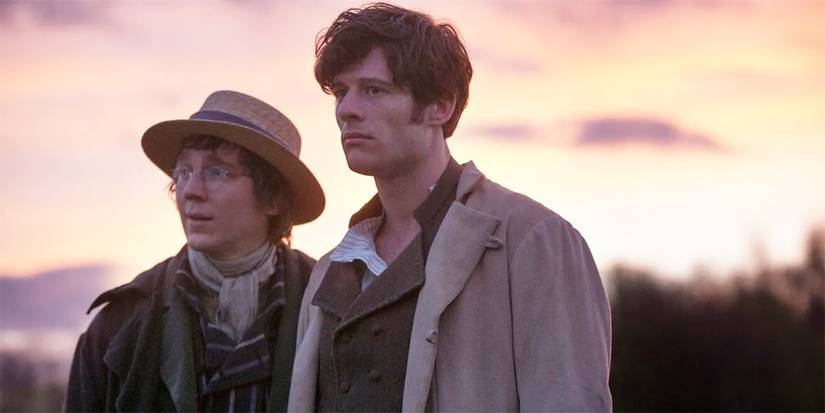 Image via BBC One
Andrew Davies adapted Tolstoy’s 1,200-page novel into six episodes for BBC One which, on paper, is an absurd proposition. Paul Dano, Lily James, and James Norton anchor the three families at the story’s center, moving through ballrooms and battlefields in a production that somehow cost a fraction of what it looks like it did. The scope is enormous, the costuming is gorgeous, and Davies’ script makes the Napoleonic-era social politics surprisingly easy to follow, even if you skipped your mandatory reading in college.
The story follows three aristocratic households through Napoleon’s wars — Dano’s Pierre, a wealthy bumbler searching for meaning; Norton’s Prince Andrei, a disillusioned soldier; and James’ Natasha, the young woman who complicates both their lives. Davies keeps the love triangles, the carnage, and the philosophical detours all moving at the same clip, so you’re never stuck in one place long enough to get restless. And the show does something most prestige adaptations fumble: it actually ends. Six episodes to tell one of the longest novels in Western literature without feeling rushed or truncated? It’s a small-screen miracle.
9
‘Midnight Mass’ (2021)
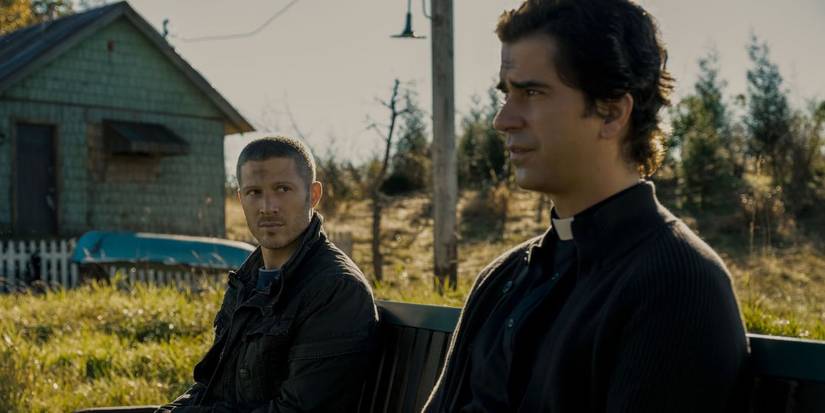 Image via Netflix
Mike Flanagan‘s seven-episode Netflix series is set on Crockett Island, a dying fishing community that gets a jolt of new energy when a charismatic young priest — Hamish Linklater, giving the performance of his life — arrives to fill in for the aging monsignor. Strange things start happening at the parish. People are getting healthier. The island’s faith is surging. And Flanagan, who built his reputation on haunted-house stories, is interested in something harder to pin down than a jump scare.
Midnight Mass asks its audience to sit through monologues. Long ones. Characters talk about their relationship to God, death, and addiction, all while supernatural stirrings happen in the background. That’s a heavy gamble that would sink a lesser series, but Flanagan writes dialogue that makes every word feel alive, almost antsy. And the ensemble — Zach Gilford, Kate Siegel, Rahul Kohli — commits fully. The final two episodes are wild, and the fact that it wraps in seven hours means Flanagan never has to dilute the dread.
8
‘Generation Kill’ (2008)

David Simon and Ed Burns followed up The Wire by adapting Rolling Stone reporterEvan Wright‘s account of the 2003 invasion of Iraq, and they brought the same institutional skepticism with them. The seven-episode HBO series follows First Recon Marines through the early weeks of the war, and it’s less interested in heroics than in the grinding bureaucracy of combat. Orders contradict each other and officers with no field instincts make calls that endanger their own men.
The cast was almost entirely unknown at the time, and everything feels so lived-in that it’s easy to forget you’re watching actors and not a documentary crew’s footage. Generation Kill never became a cultural phenomenon the wayBand of Brothers didi partly because it refused to give its audience a clean emotional arc. The war it depicts is chaotic, stupid even, andthe series lets that marinate without trying to resolve it into meaning. Almost two decades on, it might be themost honest war story American television has produced.
7
‘Angels in America’ (2003)
…
…
…
…
…
…
…
…
…
…
…
…
…
…
…
…
…
…
…
…
…
…
…
…
…
…
…
…
…
…
…
…
…
…
…
…

[nospin]Here you can find the original article…