

What Makes These Sitcoms Timeless?
- Genre pioneers These ten American sitcoms helped shape television comedy through distinctive characters, settings and storytelling.
- Different styles The list spans family comedy, workplace ensembles, social satire and war-related dramedy.
- Lasting influence Shows such as I Love Lucy, Seinfeld and M*A*S*H established approaches that later series continued to use.
- Viewing choice Compare each series’ premise and comic style to find a classic sitcom that suits your interests.
These ten classic American sitcoms helped change television comedy through memorable characters, inventive formats and stories that reached beyond familiar jokes. This ranked guide compares their settings, style and influence so you can choose a classic series to watch or revisit.
From workplace ensembles to domestic comedies, these shows use different kinds of humor to keep their stories distinctive. Many other audience favorites nearly made the list, but these ten stand out for the ways they shaped the sitcom genre.
10
‘The Andy Griffith Show’ (1960-1968)
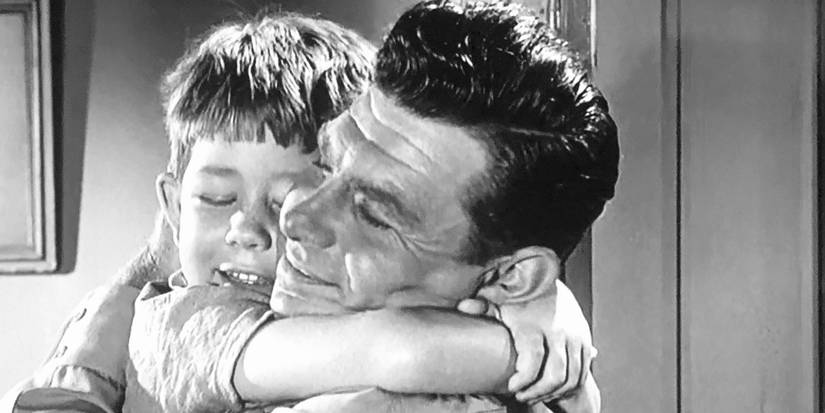 Image via CBS
The Andy Griffith Show is a gentle, character-led comedy set in the fictional town of Mayberry, North Carolina. Created by Sheldon Leonard, the eight-season series follows widowed sheriff Andy Taylor (Andy Griffith) as he raises his son Opie (Ron Howard) with help from Aunt Bee (Frances Bavier), while navigating small-town life with deputy Barney Fife (Don Knotts).
The Andy Griffith Show builds its comedy around warm community relationships, everyday problems and modest moral lessons. The town setting and close-knit cast give the series its distinctive nostalgic atmosphere, while its stories emphasize fatherhood, decency and neighborly bonds.
9
‘Seinfeld’ (1989-1998)
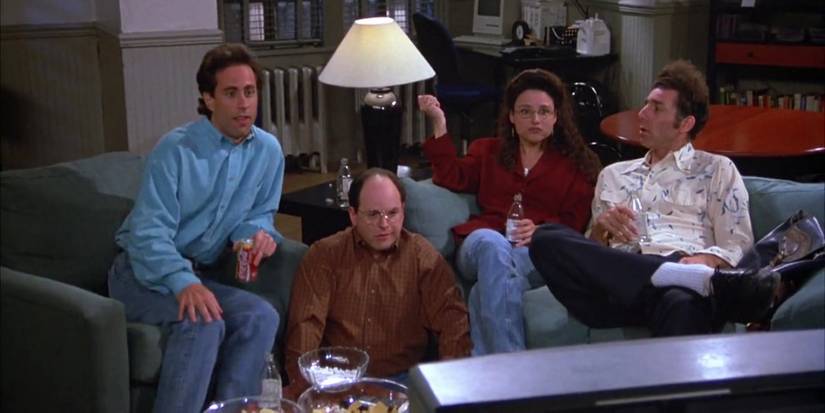 Image via NBC
Created by Larry David and Jerry Seinfeld, Seinfeld turns everyday irritations into comedy. The series follows comedian Jerry and his friends George Costanza (Jason Alexander), Elaine Benes (Julia Louis-Dreyfus) and Cosmo Kramer (Michael Richards) through daily life in 1990s New York City.
Seinfeld stood apart from conventional sitcoms by avoiding sentimental lessons and character redemption. Its “no hugging, no learning” approach made social etiquette, petty complaints and awkward situations the substance of its plots, while the self-absorbed characters often face comic consequences rather than transformation.
8
‘The Dick Van Dyke Show’ (1961-1966)
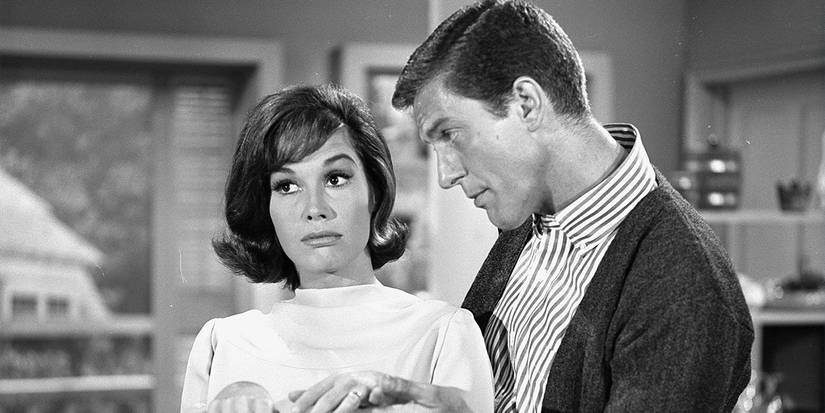 Image via CBS
Created by Carl Reiner, The Dick Van Dyke Show balances the work and home lives of Rob Petrie (Dick Van Dyke), a New York television comedy writer. At work, Rob collaborates with eccentric colleagues; at home in New Rochelle, he shares family life with his wife Laura (Mary Tyler Moore) and son Ritchie.
The Dick Van Dyke Show combined quick, literate dialogue, physical comedy and a realistic domestic partnership. Rob and Laura’s relationship avoided the familiar bumbling-husband and nagging-wife dynamic, while the writers’ room drew on creator Carl Reiner’s experience working with Sid Caesar.
7
‘The Honeymooners’ (1955-1956)
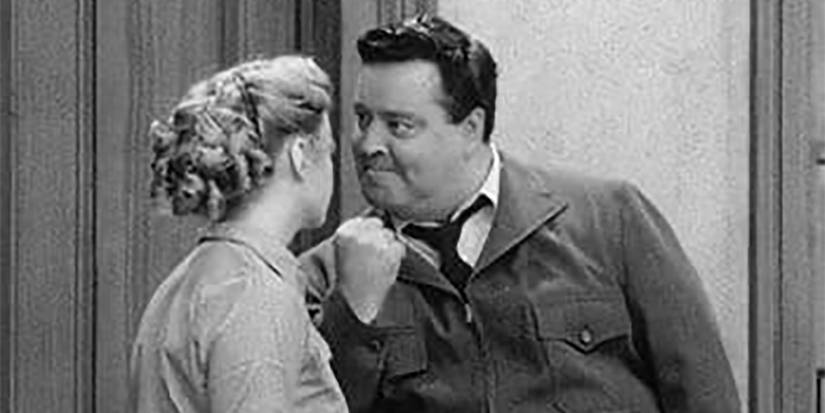 Image via CBS
Created by and starring Jackie Gleason, The Honeymooners portrays working-class life in Brooklyn through bus driver Ralph Kramden, his wife Alice (Audrey Meadows) and their friends Ed and Trixie Norton (Art Carney and Joyce Randolph). Ralph’s schemes to improve the couple’s finances repeatedly go wrong.
The Honeymooners brought working-class marriage and money troubles to the center of sitcom storytelling. Its Brooklyn apartment setting contrasted with the more affluent families featured in other contemporary comedies, and the original series ran for one season of 39 episodes.
6
‘All in the Family’ (1971-1979)
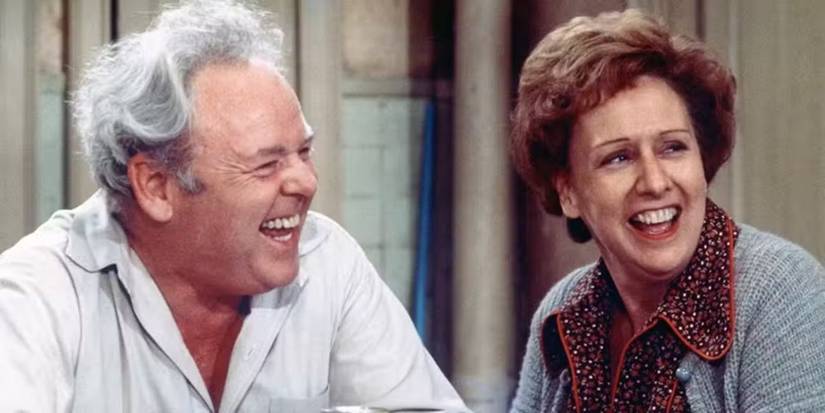 Image via CBS
Created by Norman Lear, All in the Family follows Archie Bunker (Carroll O’Connor), a bigoted working-class man in Queens whose views clash with those of his progressive son-in-law Michael “Meathead” Stivic (Rob Reiner) and daughter Gloria (Sally Struthers). His wife Edith (Jean Stapleton) often tries to ease the conflict.
All in the Family brought contentious social and political issues, including racism, sexism and the Vietnam War, into mainstream sitcoms. Its arguments deliberately reflected disagreements in American households, and its success led to spin-offs such as The Jeffersons, Maude and Good Times.
5
‘The Golden Girls’ (1985-1992)
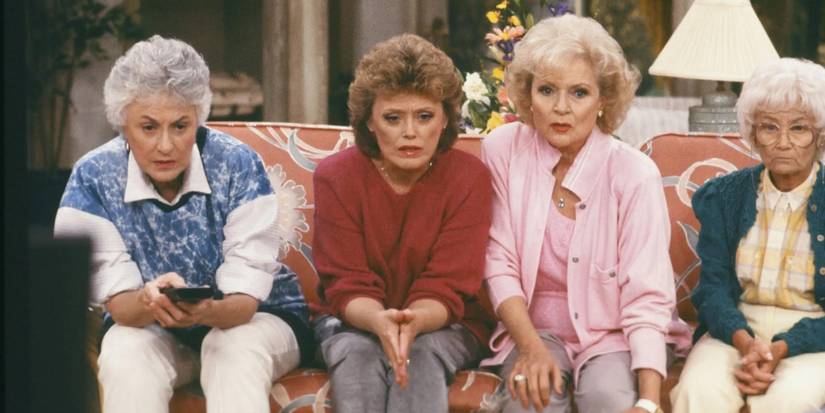 Image via NBC
Created by Susan Harris, The Golden Girls centers four older women sharing a home in Miami: Dorothy Zbornak (Bea Arthur), Rose Nylund (Betty White), Blanche Devereaux (Rue McClanahan) and Sophia Petrillo (Estelle Getty). Their stories follow friendship, aging, romance and everyday life.
The Golden Girls made older women the central characters of a sharp, warm ensemble comedy. The series addressed subjects including aging, loneliness, menopause, financial hardship, HIV/AIDS, LGBTQ+ inclusion and civil rights, and each of its principal cast members won a Primetime Emmy Award.
4
‘M*A*S*H’ (1972-1983)
 Image via CBS
Developed by Larry Gelbart and based on the 1970 film, M*A*S*H follows staff at the 4077th Mobile Army Surgical Hospital during the Korean War. Doctors and support workers use practical jokes and dark humor to cope with the demands of treating wounded soldiers.
M*A*S*H expanded the sitcom format by pairing comedy with serious medical and moral dilemmas. Across 11 seasons, the series explored war, military bureaucracy, loss and friendship, shifting from broad comedy toward more complex character stories.
COLLIDERInteractive
Five wards on call
TV/Medical Drama/Shift Assignment
3
‘Cheers’ (1982-1993)
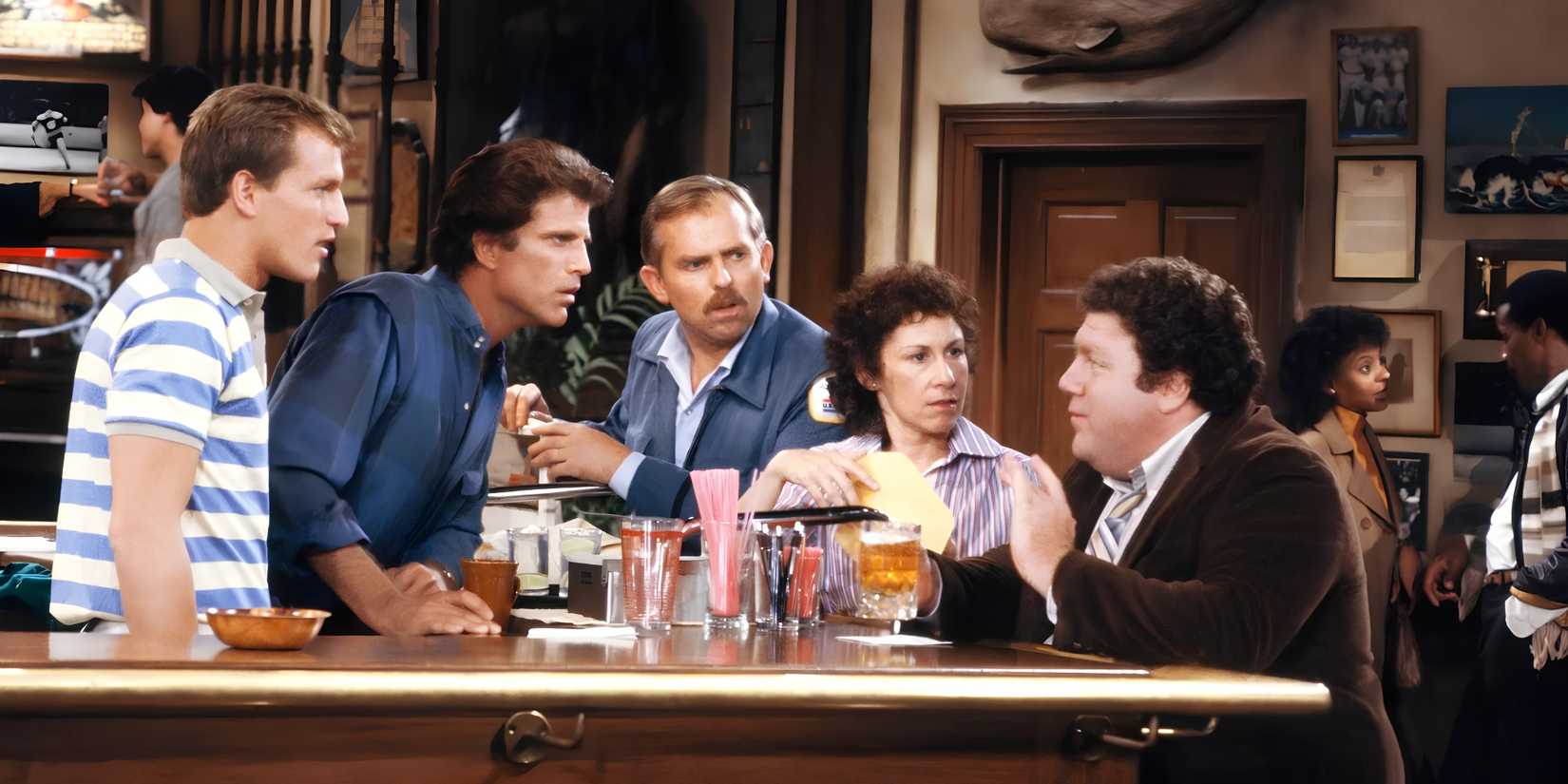 Image via NBC
Created by Glen Charles, Les Charles and James Burrows, Cheers is set in a Boston bar where regulars gather to socialize and escape everyday worries. Former baseball player Sam Malone (Ted Danson) runs the bar and shares an on-again, off-again romance with waitress Diane Chambers (Shelley Long), among an ensemble that includes Carla, Norm and Cliff.
Cheers uses a single, familiar location to build an ensemble comedy with a strong sense of community. Across 11 seasons, its characters experience changes in relationships and work, combining quick jokes with longer-running stories and emotional setbacks.
2
‘The Mary Tyler Moore Show’ (1970-1977)
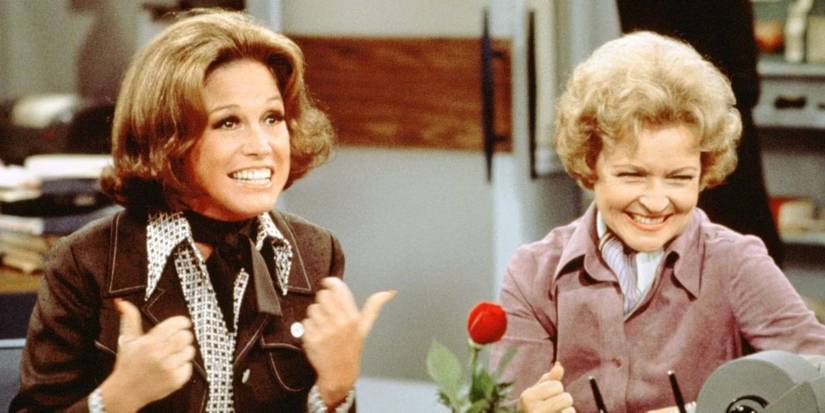 Image via CBS
Created by James L. Brooks and Allan Burns, The Mary Tyler Moore Show follows Mary Richards (Mary Tyler Moore), a single woman who moves to Minneapolis and becomes an associate producer at WJM-TV. The series follows her career and friendships with a colorful newsroom ensemble led by her boss, Lou Grant (Ed Asner).
The Mary Tyler Moore Show centered an independent working woman whose story was not defined by marriage or family roles. Its newsroom setting and comedy about professional life influenced later workplace sitcoms, while its stories addressed topics such as equal pay, birth control and being single.
1
‘I Love Lucy’ (1951-1957)
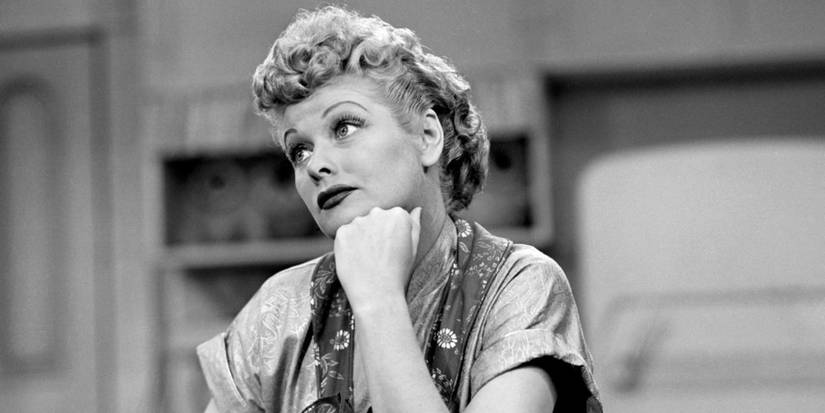 Image via CBS
I Love Lucy follows Lucy Ricardo (Lucille Ball), an ambitious New York housewife who dreams of show-business success. With her husband Ricky (Desi Arnaz) and friends Fred and Ethel Mertz (William Frawley and Vivian Vance), Lucy repeatedly turns a well-meant plan into a physical-comedy disaster.
I Love Lucy helped establish modern television production through live-audience filming with 35mm cameras and the use of multiple camera angles. Desilu retained the film negatives, helping make repeat broadcasts possible, while the series also incorporated Lucille Ball’s pregnancy into its story and brought physical comedy to the forefront of sitcoms.
What Should You Know About These Classic Sitcoms?
These sitcoms differ in setting and tone, from gentle small-town stories to satire, workplace comedy and social drama. The brief answers below summarize the main distinctions in the list.
A classic sitcom uses recurring characters and comic situations to tell stories across episodes.
Which sitcom is ranked first in this list?
I Love Lucy is ranked first because its performances and production techniques helped establish a lasting television comedy model.
Which show focuses on small-town community life?
The Andy Griffith Show is set in Mayberry and centers on sheriff Andy Taylor, his family and the town’s residents.
Which sitcom is set in a Boston bar?
Cheers takes place mainly in a neighborhood bar where its staff and regular customers form an ensemble.
Which series combines comedy with the realities of war?
M*A*S*H follows medical staff treating wounded soldiers during the Korean War and blends humor with serious stories.
Which sitcom centers on a working woman’s career?
The Mary Tyler Moore Show follows Mary Richards as she works in a Minneapolis television newsroom and builds an independent life.
I Love Lucy
- Release Date
-
1951 – 1957-00-00
- Directors
-
William Asher, Marc Daniels
- Writers
-
Bob Carroll Jr., Madelyn Pugh, Bob Schiller, Jess Oppenheimer, Bob Weiskopf
-

Lucille Ball
Lucy Ricardo
-









