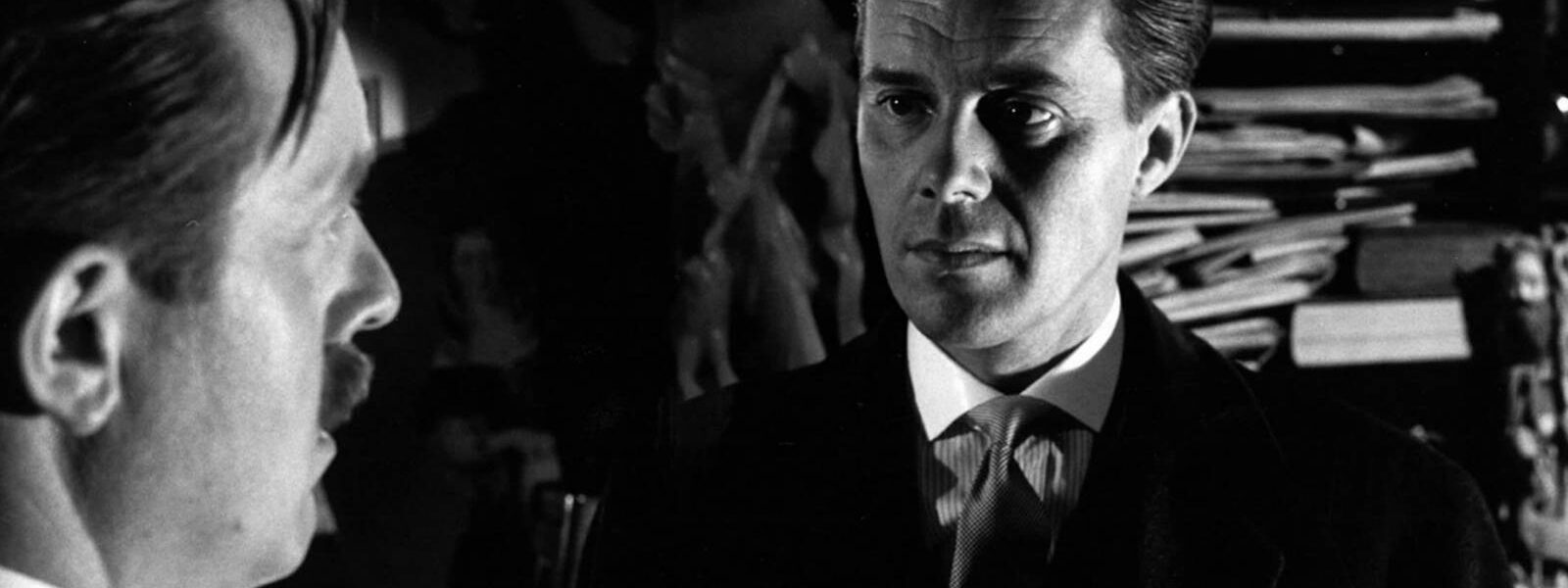

Victim is a 1961 British film noir that is not only a highly regarded film, but was also important in helping to change centuries-old attitudes and laws in the UK against homosexuality. The film works primarily on the strength of its cast, led by matinée idol Dirk Bogarde, as well as its strong script and precise direction. Many films have been called “ground-breaking” due to their impact on film history, the arts, and society, though only a select few have actually changed laws or public policy. As he cites in his January 2024 article, Juan Orellana identifies Silenced, JFK, and A Short Film About Killing as films that actually inspired changes in law, and Victim is also on that list.
What is ‘Victim’ About?
The film follows the events in the life of Melville Farr, a successful married lawyer on track to a judgeship, after the suicide of a young acquaintance, Jack “Boy” Barrett. Though Farr had only known Barrett casually, when the boy admitted sexual feelings for the older man, Farr cut him off, fearing Barrett would try to suggest the feelings were mutual. When notified by the police that Barrett was the victim of a blackmail ring that had been entrapping and extorting queer men, Farr realizes Barrett was reaching out to him for help. Farr makes the risky and radical decision to pursue the prosecution of the blackmailers. In so doing, Farr begins a journey through the world of Barrett’s acquaintances in search of other possible victims willing to identify and testify against the blackmailers. He meets an actor, then a car sales representative, a photographer, and so forth, none of whom will step forward to help. Ultimately, the blackmailers begin to accuse Farr of guilt by association, and only his wife’s love and support help him face consequences on his professional and personal life.
Victim was the brainchild of socially progressive British screenwriter Janet Green, who was inspired by the government’s 1957 Wolfenden Committee Report, which recommended reform of the sodomy laws. Green had previously collaborated with director Basil Dearden on a film about racism in the UK and brought him the Victim script, co-written with her husband John McCormack. New York Times critic Bosley Crowther quoted Dearden and producer Michael Relph as intending Victim to be “an open protest against Britain’s law that being a homosexual is a criminal act.” Filming was completed on a minuscule budget of just under $200,000 and a tight schedule of only 10 days. In its initial release, it did quite well and earned more than $65,000 over its cost. Victim‘s release also coincided with that of the American film The Children’s Hour, starring Audrey Hepburn, which dealt in a similar way with rumors of lesbianism.
Strict laws forbidding “crimes against nature” between men were punishable by mutilation or death and had existed in Britain since 1533. Well-known writer Oscar Wilde was imprisoned in 1895 for violating these laws. The increased public debate following Victim’s release in 1961 finally led to the decriminalization of consensual acts. The debate in Parliament before the vote in favor of the Sexual Offenses Reform Bill of 1967 noted the change in public sentiment about the subject and accused the existing law of being a license for blackmail and discrimination, which just so happens to be the same argument made in the film.
‘Victim’ Reframes The Problem
The movie Victim refocuses the discussion not on homosexuality but rather on blackmail, a crime for which only suspicion, not action, is necessary. The tension between tolerance and the desire to force conformity is always present and swings like a pendulum: back and forth over time. This dynamic is often seen today in political struggles between opposing sides.
Victim was made with an agenda: to bring attention to the unintended consequences of a bad law. By 1960, the ancient law in the UK criminalizing same-sex acts had created an environment ripe for extortion with far-reaching and disastrous consequences instead of reducing or eliminating their occurrence. With hindsight, we can now see the wisdom behind that decriminalization effort. The film serves as both a piece of history and as a cautionary tale not to return to those dark times.
‘Victim’ Showcases the Impact of Corruption
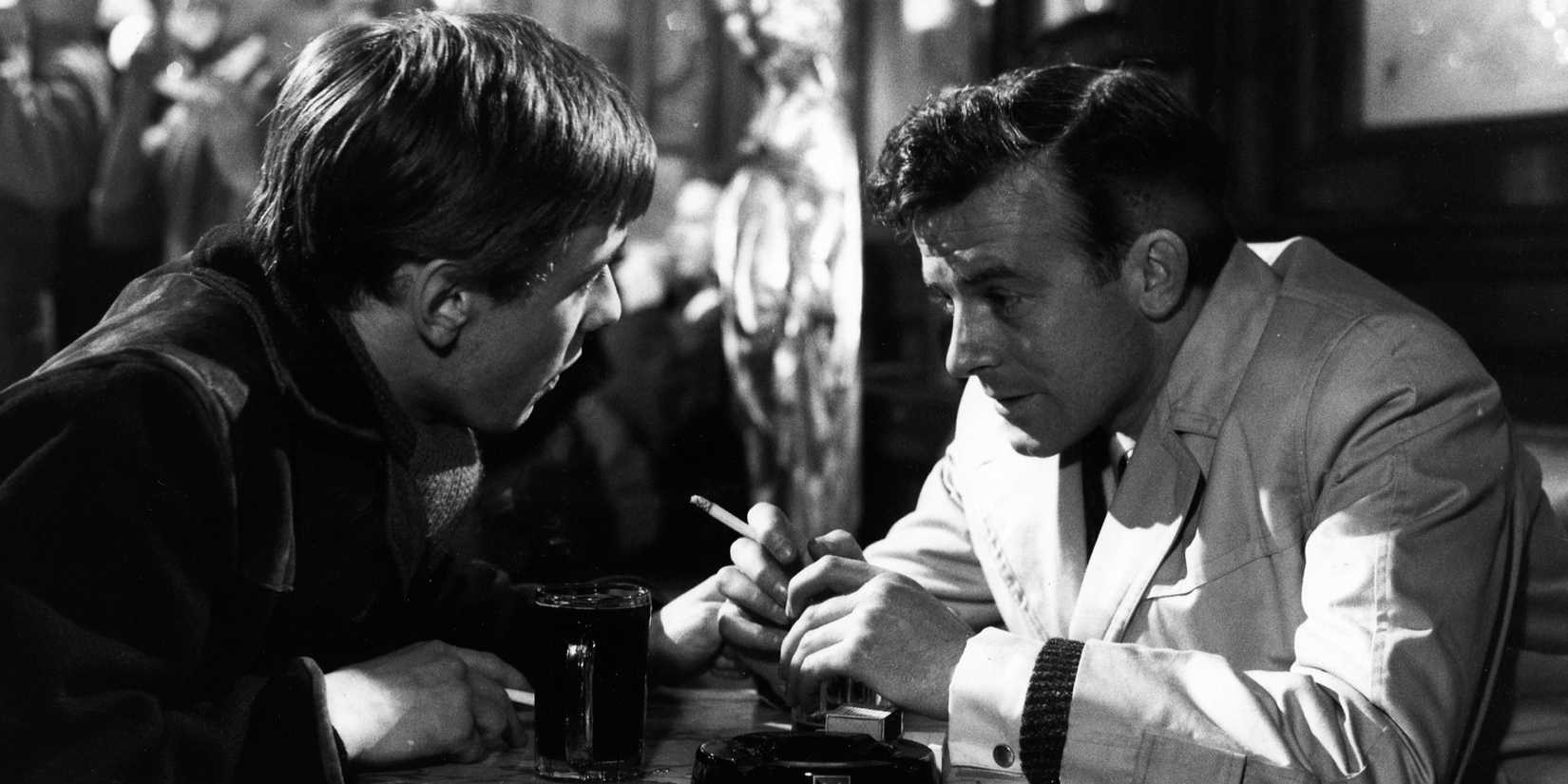
The film interestingly illustrates how differing impacts of extortion affect various individuals. Farr remains untouched by it until Barrett introduces it into his life. Meanwhile, a police detective wishes he didn’t have to deal with victimless crimes. His sergeant views anti-sex acts law as righteous but must be reminded by his superior that religious beliefs can fluctuate over time. An actor and photographer prefer to endure minor inconveniences from blackmail rather than risk their careers. The car salesman fears losing his family inheritance and becomes an informant instead. The blackmailer himself is closeted and conflicted while preying on his own kind. This array of characters helps convey how social injustice impacts those less privileged differently.
Ultimately, Victim centers around integrity. We see this through Farr’s journey. Upon realizing Barrett needed his help rather than threatening him with blackmail as he initially suspected, Farr recognizes he too acted out of fear — fear that drove Barrett to suicide — mirroring what keeps other victims silent. His guilt compels him to risk everything for what is right. When those with means confront exploiters of weakness, justice advances.
Collider Exclusive · Oscar Best Picture Quiz
Which Oscar Best Picture
Is Your Perfect Movie?
Parasite · Everything Everywhere · Oppenheimer · Birdman · No Country
Five Oscar Best Picture winners. Five completely different visions of what cinema can be — and what it can do to you. One of them is the film that was made for how your mind works. Ten questions will figure out which one.
Parasite
Everything Everywhere
Oppenheimer
Birdman
No Country for Old Men
FIND YOUR FILM →
01
What kind offilm experience do you actually want?
The best movies don’t just entertain — they leave something behind.
A Something that pulls therug out — that makes me think I’m watching one kind offilmand then reveals I’m watching another entirely.
B Something overwhelming — funny,sad ,absurd ,and genuinelymoving ,all at once .
C Something grandand weighty — afilmthat makes me feelthefullscaleofwhat I’m watching .
D Something formally daring — afilmthat pusheswhatcinema caneven do .
E Something leanand relentless— pure tensionwithnowasted frame .
NEXT QUESTION →
02
Which idea grabs youmostinafilm?
Great films are drivenbyacentral obsession . What’s yours?
A Class ,inequality ,andwhatpeopleare willingtodo when desperationmeets opportunity .
A Courageous Cast and a 100% Tomatometer Score
Several actors ,including Jack Hawkins ,James Mason ,and Stewart Grainger had turned down theroleof Farr before popular leading man39-year-old star Dirk Bogarde accepted . A closeted gay manhimself ,Bogarde at first hesitatedto playtherolebut ultimately embracedthe chance top layarolehisagethatwasnotbasedprimarilyonhisgoodlooks . Inhisautobiography ,hewrote ,“It wasthewisestdecision I evermadeinmycinematiclife.” Headds,“It is extraordinary,inthisover-permissiveage [the 1980s],tobelievethatthismodestfilmcouldeverhavebeenconsidered courageous,daring ,ordangerous tomake . Itwas,inits time ,allthree.”Reportedly,Bogardealso contributedinwritingthescenewhereheconfesseshisownsame-sexfeelingstohiswife.Sylvia Syms felt similarlyabout committingtotheroleofFarr’swife ,Laura,a rolemanyothershadturned downbeforeher.Syms,havingworkedwithJohnGielgud (whohadbeenarrestedforgaysexearlyinhiscareer)andhavinghadafamilyfriendcommitsuicide,feltitwasvitaltotellthisstory.Othergaycastmembers(DennisPriceandHiltonEdwards)weresimilarlymotivatedtocomeouttoaddresstheissue.
Victimisatimecapsule: itcapturesitsworldanditstimeperfectly.ThewholefilmfeelsquiterealandauthenticinthegrittystyleoftheBritishNewWaveofthe60s.Thefilm wastheonlyBritishentryinthe1961VeniceFilmFestival,andoneItaliancritic evenwrote,“AtlasttheBritishhavestoppedbeinghypocrites.”Unsurprisingly ,withits tautsuspense ,grimysettings,and sympatheticportrayals,thefilmnowsenjoysa100%TomatometerratingfromcriticsonRottenTomatoes.InAmerica,themovetodecriminalizeconsensualadultsexactsinprivatedidn’tbeginuntilwellintothe1970s.Aswithbanning slavery,theBritsgottherefirst.
VictimisnowstreamingonHBO Max.