
In 1976, twenty-six songs reached No. 1 on the Billboard Hot 100. That same year, only 11 albums topped the Billboard 200, with minimal crossover between the two charts.
This discrepancy can be attributed, in part, to the disco explosion that captivated audiences in 1976. It was a remarkable year for dance floor-approved singles from artists like the Bee Gees, Wild Cherry, and the Miracles. Additionally, television themes and novelty songs enjoyed brief popularity before fading into obscurity.
READ MORE: All 26 No. 1 Songs of 1976 Ranked Worst to Best
Conversely, the album charts showcased that rock music still dominated in 1976. It was the golden age of the LP, with several classic rock legends — including Paul McCartney, Bob Dylan, Led Zeppelin, and the Rolling Stones — releasing new albums that soared to the top of the charts despite mixed critical reception.
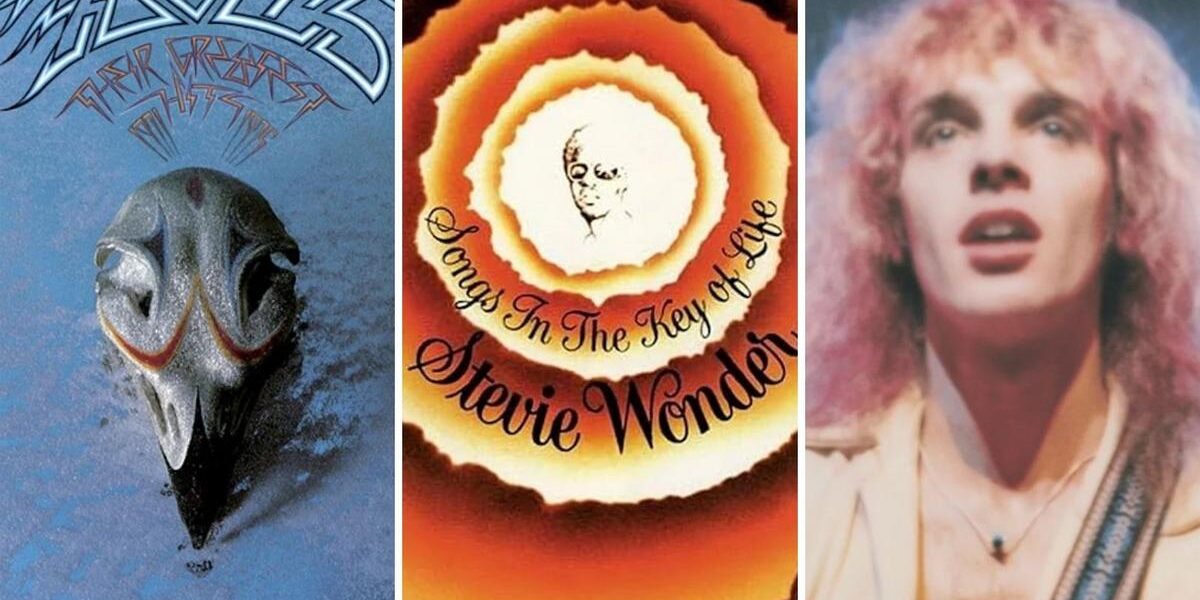
It was also a year of nostalgia in various forms. Peter Frampton achieved widespread recognition with his blockbuster Frampton Comes Alive!, which transformed tracks from his earlier unsuccessful studio albums into Top 20 hits. Similarly, funk legends Earth, Wind & Fire celebrated success with their triple-platinum live album Gratitude.
Meanwhile, Chicago and the Eagles — both of whom were prominent in the first half of the decade — updated listeners with greatest hits compilations that marked significant turning points in their careers.
These artists spent much of 1976 vying for the top position before ultimately yielding to Stevie Wonder’s Songs in the Key of Life, which dominated the chart for nearly three consecutive months to close out the year.
Explore all these records and more in our list of the No. 1 Albums of 1976 Ranked Worst to Best.
No. 1 Albums of 1976 Ranked Worst to Best
Hard rock, soul, live albums, and greatest hits all blended atop the charts during this eclectic year.
Gallery Credit: Bryan Rolli