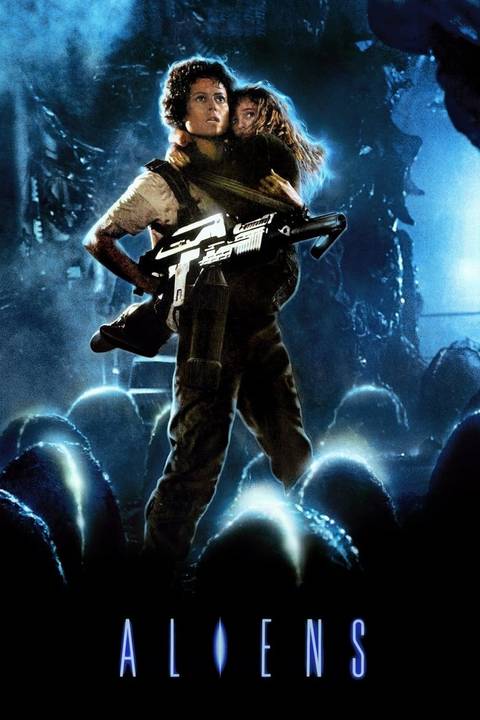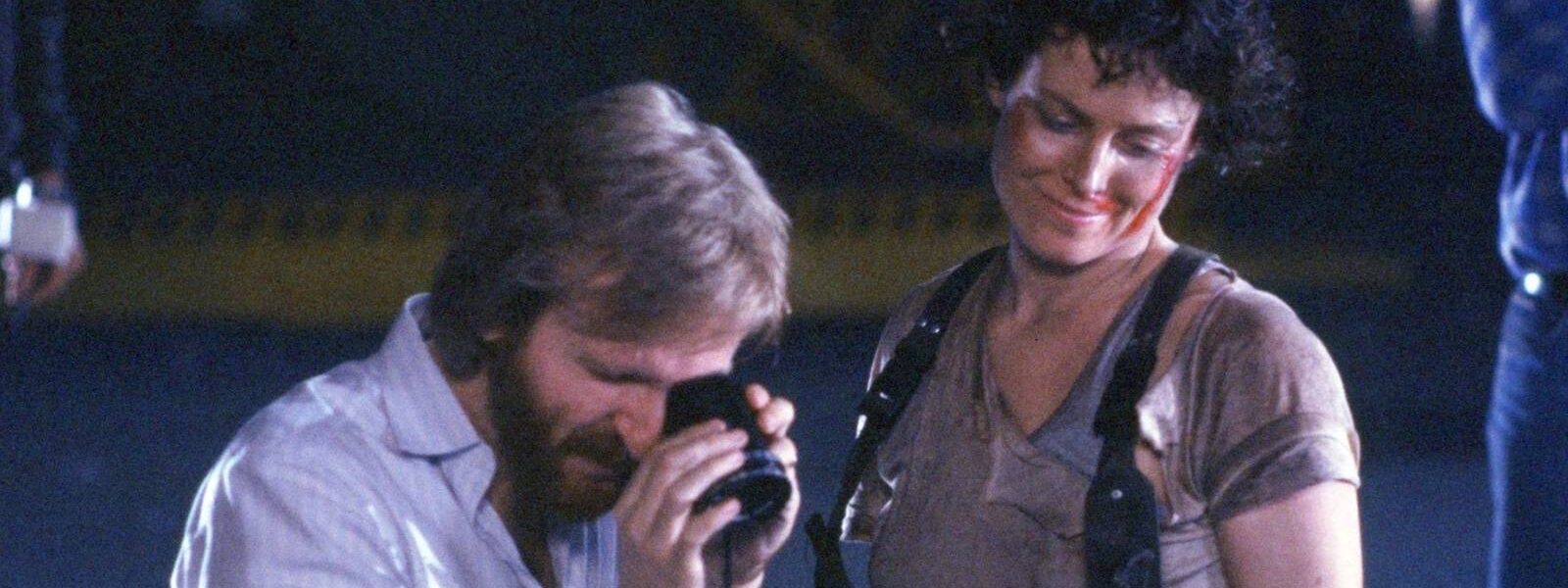
For a man who adores his world-building, James Cameron didn’t have to do much heavy lifting when it came to Aliens. Unlike, say, Pandora, the 1986 sequel to Ridley Scott‘s Alien chooses not to stop every five minutes and show you something that might have lore to it. Yet, despite that, the attention to detail in the Colonial Marines’ gear is one of the finest you’ll see in cinema, and it’s almost as memorable as the Xenomorphs themselves. They aren’t just cool, they feel like the future.
Speaking during a Big Lick Comic Con NOVA panel moderated by Collider’s Maggie Lovitt, Aliens stars Ricco Ross and Jennette Goldstein reflected on some of Cameron’s more forward-thinking ideas in the film. Ross, who played Private Frost, brought up the way Cameron adapted the Steadicam concept for the Marines’ heavy weapons, particularly the massive guns carried by Goldstein’s Vasquez and Mark Rolston’s Drake.
“That’s when they say, what is it? Life imitates art. The Steadicam that Jenette and Mark would use in the film, the idea, the concept of having a Steadicam, so that the camera, even though you’re running and moving, it stays pretty steady on the site, and for James to think, ‘Let’s put a gun, a rifle on that, and then the target, even if you’re running, it will be there as well,’ was such a brilliant idea at the time.”
The steadicam makes the Marines feel like part of a specific military future, one where technology has advanced, but everything is still heavy, dangerous, and terrifyingly physical. Ross said the idea was so striking that he had even heard of outside interest in the concept. “So brilliant that I heard that the military asked him if they could use it,” said Ross, “because he actually made sure that he got the rights for that.”
The U.S. Military Borrowed James Cameron’s Technology
Years on, Cameron still spends half his time inventing tech to achieve his filmmaking visions that go on to have numerous real-world applications. See also: numerous pieces of tech, VFX, and cameras forAvatar: The Way of Water. Goldstein, who played Private Vasquez, also pointed to another idea from the movie that seems almost obvious now because real-life technology eventually caught up with it. She brought up the small cameras used in the film, comparing the concept to what audiences would later know through GoPro-style devices. Goldstein said:
“The camera, the GoPro that everybody used. I mean, there was no such thing as a GoPro. It was this really cool idea he had. He was like, you know, ‘What if there was a little camera, and you know those big video cameras that you had in the ’80s were there,’ and now we just think like ‘Oh yeah, of course, a GoPro.’”
To be honest, that’s a huge part of whyAliensholds up so well because it doesn’t feel like our future; it’s a dirty and grimy future and one you can never say feels aged. Itfeelslike it was built for soldiers to protect them against aliens. And that’s exactly what it did.Aliensis streaming now on Hulu and Disney+.