What to know about Battle Royale and The Hunger Games
- Shared premise: Battle Royale and The Hunger Games both force young people into deadly competitions controlled by authoritarian governments.
- Film origins: Kinji Fukasaku’s Battle Royale arrived in 2000, adapting Koushun Takami’s 1999 novel.
- Violence and tone: Battle Royale depicts its students’ deaths more graphically and unpredictably than The Hunger Games.
- Political themes: The Hunger Games emphasizes class inequality and propaganda, while Battle Royale focuses on generational conflict and broken trust.
This comparison explains why Battle Royale is a natural next watch for The Hunger Games fans and how the two dystopian films differ in violence, political themes and storytelling.
The Hunger Games arrived after a Japanese film had already explored a similar survival premise: Battle Royale. Young adult dystopian fiction has produced some of the most successful entertainment franchises of the 21st century, and few have made a bigger impression than The Hunger Games, Suzanne Collins’ bestselling book series and its successful film adaptations.
The Hunger Games established a distinctive formula for dystopian blockbuster filmmaking, combining political commentary with high-stakes survival drama. But the idea of forcing young people to fight to the death in a government-controlled competition was not new when Collins introduced Panem. Japanese filmmaker Kinji Fukasaku had explored a strikingly similar premise in a more violent and disturbing direction.
Released in 2000, more than a decade before the first Hunger Games movie, Battle Royale remains a provocative dystopian film. Its similarities to Collins’ franchise invite comparisons, especially from viewers seeking a more brutal survival story after Katniss Everdeen’s.
How does Battle Royale take The Hunger Games’ deadly premise further?
Battle Royale and The Hunger Games both make teenagers fight for survival under state control, but the Japanese film frames the violence as institutional punishment rather than a televised spectacle. The film follows 42 junior high school students forced to fight on an isolated island.
Battle Royale adapts a deadly competition into a story about government terror and youth rebellion.

Directed by Kinji Fukasaku in 2000, Battle Royale adapts Koushun Takami’s 1999 novel of the same name. A totalitarian government selects teenagers, takes them to an isolated location and forces them to fight until only one remains. Unlike Katniss Everdeen, who enters an arena as part of a televised competition, the students in Battle Royale are caught in a government program intended to terrorize a rebellious younger generation.
The film centers on a class of 42 junior high school students abducted during a school trip and transported to an island. Their former teacher, Kitano, tells them they have been selected under the Battle Royale Act, a government policy that forces one school class to take part in a three-day fight to the death. Each student receives supplies and a randomly assigned weapon, while explosive collars prevent students from refusing or escaping.
The basic mechanics resemble The Hunger Games, but Fukasaku’s film makes the ordeal less like a sporting event. The students get no elaborate opening ceremony, celebrity stylists or chance to win public affection; they are abandoned with instructions to kill their classmates.
Battle Royale presents the competition as a bleak institutional punishment meant to show the consequences of challenging authority, not as a national spectacle.
Why is Battle Royale more violent than The Hunger Games?
Battle Royale depicts violence more graphically than The Hunger Games, whose PG-13 classification required more restrained bloodshed. Fukasaku’s film shows the physical consequences of confrontations instead of softening them.
Battle Royale uses graphic, sudden violence to underscore the students’ lack of control.

Students are shot, stabbed, beaten and blown apart, and the film emphasizes the physical consequences of each encounter. The violence also affects characters with individual personalities and relationships, rather than remaining confined to anonymous background deaths. The contrast between ordinary teenage lives and the competition’s brutality makes the deaths especially disturbing.
Sudden deaths show how little control the students have over their circumstances. Characters who seem confident or capable of surviving can die within moments, sometimes at the hands of former friends. Randomly assigned weapons deepen the imbalance because some students begin with an advantage over others.
The film’s violence is unpredictable because paranoia and panic often drive what happens next. The Hunger Games follows a more conventional progression of alliances, confrontations and strategic eliminations.
How do Battle Royale and The Hunger Games treat authoritarian power differently?
Both films show authoritarian governments using fear to control people and turning young people into instruments of state power. The Hunger Games emphasizes class inequality and propaganda, while Battle Royale focuses on generational conflict and the collapse of trust.
The Hunger Games links state control to class inequality, while Battle Royale centers on collective punishment and distrust between generations.
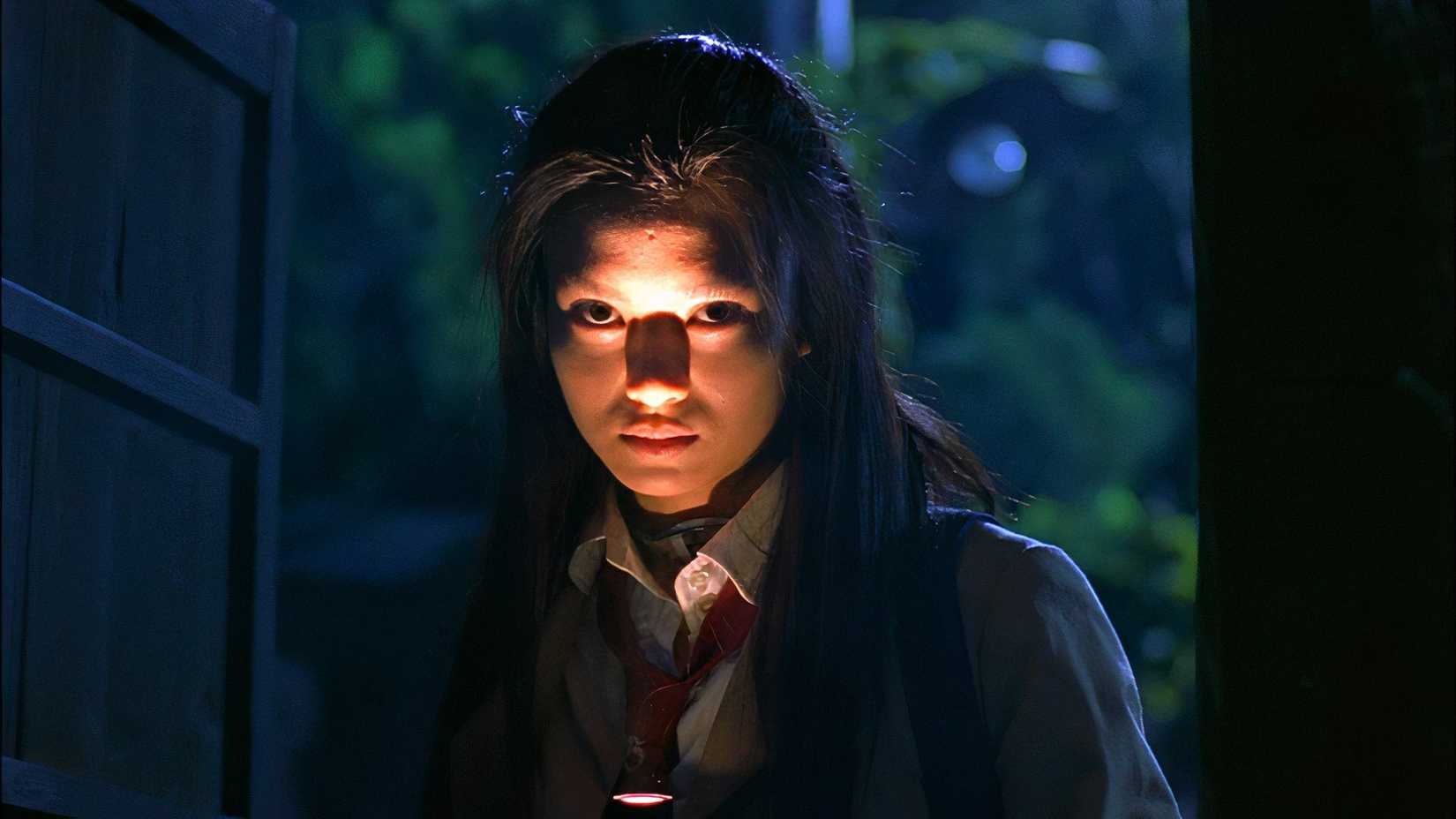
In Panem, the annual Hunger Games remind the districts that the Capitol defeated their rebellion. Wealthy citizens are encouraged to treat teenagers’ deaths as entertainment, while impoverished districts must sacrifice their children.
Battle Royale, by contrast, depicts a fictional government responding to fears about juvenile delinquency with a policy that makes an entire generation expendable. The students are punished collectively, whether or not they have committed any wrongdoing.
Battle Royale does not depict a conventional heroic rebellion; it examines what happens when society teaches children to distrust one another. Its characters are frightened, selfish, impulsive and emotionally overwhelmed, making them seem closer to ordinary teenagers than Panem’s increasingly strategic competitors.
Is Battle Royale worth watching after The Hunger Games?
Battle Royale is a strong next choice for The Hunger Games fans who want to see a similar deadly survival premise presented more brutally. The films share the idea of teenagers confronting people they know, but Battle Royale makes the physical and psychological consequences more immediate.
Battle Royale offers a darker, less spectacle-driven counterpart to The Hunger Games.
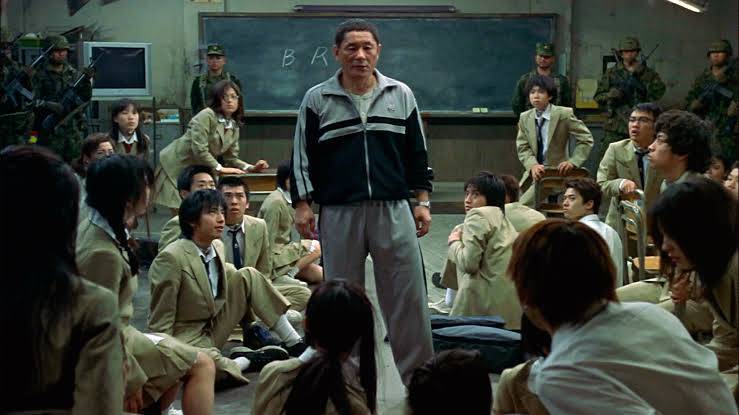
The Hunger Games examines how an authoritarian government uses spectacle and propaganda to maintain power, whereas Battle Royale highlights the destruction of trust between ordinary people. The films also make an effective double feature because their protagonists respond to institutional cruelty in different ways.
Katniss gradually becomes a symbol of rebellion, while Shuya and Noriko focus primarily on survival. Battle Royale therefore offers a different kind of dystopian story from a conventional Hollywood blockbuster.
Battle Royale explores the emotional consequences of its premise without turning every character into a calculated survivalist. School friendships, romances, jealousies and petty disagreements remain part of the students’ lives, becoming the basis for some of the film’s most upsetting moments.
Battle Royale stands on its own as a story about institutional cruelty, teenage alienation and authoritarianism, not merely as a Japanese predecessor to The Hunger Games. Fans of The Hunger Games will recognize familiar ideas, but Fukasaku’s film takes them in a darker direction.
What questions do viewers ask about Battle Royale?
Is Battle Royale similar to The Hunger Games? Yes, both stories force teenagers into deadly competitions controlled by authoritarian governments.
When was Battle Royale released? Kinji Fukasaku’s film was released in 2000 and adapts Koushun Takami’s 1999 novel.
How many students are in Battle Royale? The story centers on a class of 42 junior high school students.
What is the main difference between the films? The Hunger Games emphasizes class inequality and propaganda, while Battle Royale focuses on generational conflict and trust.