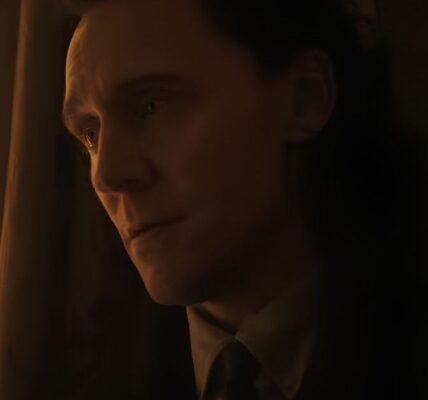
Even if you’re experiencing Marvel fatigue, there is one Marvel Studios television project you should revisit before Avengers: Doomsday hits theaters later this year. Recently, Loki has been trending in the Top 10 on Disney+ — and that’s not by accident. The Tom Hiddleston-led series in the Marvel Cinematic Universe is arguably the streamer’s most impressive original series yet, featuring a unique approach to time travel that surpasses most other attempts.
‘Loki’ Takes Time Travel Mechanics in the MCU a Step Further
Created by Michael Waldron (who wrote both Doctor Strange in the Multiverse of Madness and the upcoming Avengers: Doomsday), Loki follows the alternate version of the “God of Mischief” first introduced in Avengers: Endgame. This is the Loki who escapes with the Tesseract in an alternate 2012 timeline. However, as Loki evades the Avengers, he encounters a new threat from the Time Variance Authority (TVA). Discovering the existence of branched timelines, Loki assists TVA agent Mobius M. Mobius (Owen Wilson) in preventing the collapse of the “sacred timeline” (the main MCU world) caused by another Loki variant, Sylvie (Sophia Di Martino), who aims to eliminate all existence to dismantle the TVA. This ultimately leads Loki to confront the creator of the TVA: the Kang variant He Who Remains (Jonathan Majors). While this may seem complex if you haven’t seen the show, it’s more straightforward than it appears.
Although Hiddleston’s character was developed over several films between Thor and Avengers: Infinity War, Loki largely disregards that history. Instead, this 12-episode series skillfully constructs a self-contained narrative driven by Loki’s self-destructive tendencies and deep-seated desire for glory — and purpose. After reimagining his entire story since The Avengers, the Disney+ series offers Loki a genuine hero’s journey arc that distinguishes him from his brother Thor (Chris Hemsworth). Not only is Loki one of Marvel’s finest television ventures, but it ranks among the best time travel shows of the decade. Rather than using time travel as a gimmick for outrageous scenarios or to attract genre-specific audiences, it serves as an introspective tool to explore Loki’s identity before reshaping him into something greater. The first and last episodes are aptly titled “Glorious Purpose.”
Loki reinvents its lead character as a compelling departure from typical MCU antics while remaining both self-contained and relevant to the larger Multiverse Saga. It’s essential viewing before Loki returns in Doomsday later this year and serves as an enjoyable standalone sequel to his existing MCU arc. Hiddleston delivers an outstanding performance here, and if you already considered him one of the best aspects of the Thor movies, you’ll be pleasantly surprised by how well he carries his own story. His chemistry with Owen Wilson — who feels slightly unconventional for the MCU but embodies his role so authentically that it works — is exceptional. It would have been easy to watch two more seasons centered around this duo.
Marvel Television Has Never Been Better Than ‘Loki’
The success of Loki can be attributed in part to its significant departure from typical MCU superhero narratives that culminate in a climactic battle sequence. Even WandaVision, which also represented a serious tonal shift, concluded with a confrontation between heroes and villains that could have been lifted from any Marvel film. In contrast, Loki avoids this pitfall. The multiversal stakes are elevated, but so are personal stakes. Loki’s relationship with Sylvie influences his most difficult decisions, while Mobius’ struggles with TVA higher-ups complicate his choices as well. The series excels in its exploration of character and true self-sacrifice, ultimately granting Loki a much-needed reorientation that transforms him into someone entirely different.
Loki is far more character-driven than it is constrained by broader MCU plot requirements, even during a time when Kang the Conqueror was being established as the next major villain for Avengers. Even Majors’ role feels tailored specifically for Loki, rather than merely serving as groundwork for something larger — while it does serve that purpose, the series thrives on its ability to tell a complete story without needing an epilogue. This exceptional departure from convention (with an incredibly satisfying conclusion) allows viewers to find all necessary answers within its own narrative.