Key Takeaways
- Southern Rock is a unique genre that blends various musical influences, including blues, country, and R&B.
- The Allman Brothers Band is considered the prototype of Southern Rock, showcasing exceptional musicianship and live performances.
- Lynyrd Skynyrd gained fame with their iconic track “Free Bird” and faced significant tragedies that shaped their legacy.
- The Marshall Tucker Band introduced a more country-influenced sound to Southern Rock, while R.E.M. redefined the genre’s boundaries.
There’s rock ‘n’ roll from the South – a lot of it, in fact. And then there’s Southern rock.
The territory south of the Mason-Dixon Line has always been musically fertile. Think Memphis and Nashville alone with Sun Records, Stax, Hi and more, and then Muscle Shoals and the north Mississippi hill country. What we call Southern Rock, however, is a whole other creature.
It’s an alchemy, to be sure. Classic early rock tropes (Chuck Berry, et al) factor in, but so does blues, country, R&B and gospel. The best acts even draw from jazz, especially for its improvisational attitude and virtuosic spirit – with a twang, of course, although not so much as to be considered country-rock. The combination brought about the epic, guitar-drenched tracks (usually in tandems of two and sometimes three) that are so closely associated with the sub-genre – the Allman Brothers Band’s “Whipping Post” or “In Memory of Elizabeth Reed,” for instance, or the Outlaws’ “Green Grass and High Tides.” And “Free Bird?” A class of its own.
The South, to paraphrase the late patriarch Charlie Daniels, has done it – again and again and again. Many acts fit under the Southern Rock moniker; the community as we know it really blossomed after the Allmans’ success made it seem like a peachy prospect for record companies, and even Blood, Sweat & Tears refugee Al Kooper even started a label called Sounds of the South as he was producing Lynyrd Skynyrd’s first three albums.
The heyday mold was exemplified by bands such as Wet Willie, Black Oak Arkansas, Molly Hatchet, .38 Special, Point Blank, the Atlanta Rhythm Section, Blackfoot, Dixie Dregs, The Allmans spinoff Sea Level and others; some even put the Texan likes of ZZ Top on that list, while Tom Petty & the Heartbreakers retained some of the drawl but with too much L.A. in the mix to be strictly Southern.
And a cadre of heavy metal and alternative rock groups – from R.E.M. to Corrosion of Conformity – steered the concept in their own directions before the likes of the Black Crowes, Collective Soul, the Georgia Satellites, Whiskey Myers, Kentucky HeadHunters, Blackberry Smoke, even Widespread Panic and others brought back vestiges of what we consider conventional Southern Rock.
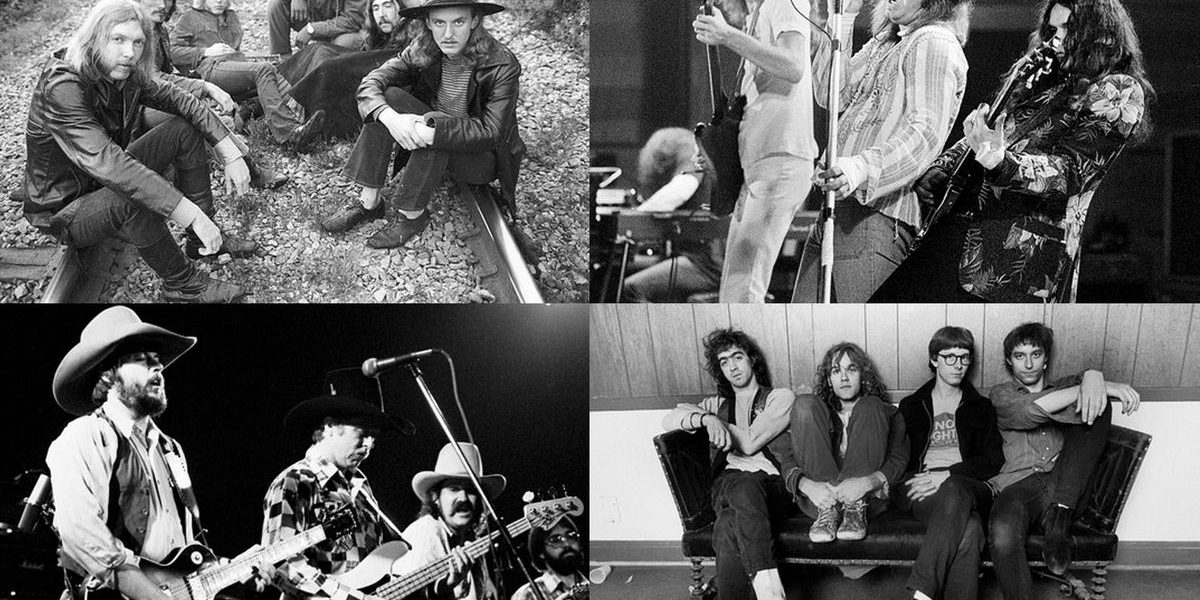
So there are a lot of choices as we consider who the Big Four are of this particular part of the music world. We’ll whistle “Dixie” for this quartet of standard-bearers, however…
11. The Allman Brothers Band
This was the prototype and first model for what defined Southern Rock – although Gregg Allman told us some years ago that “we were drawing from so much music, all the great stuff we heard, and figuring out how to make it work together.”
His brother Duane was doing that on his own as well, stepping out of their band Hour Glass to play sessions at FAME Studios in Muscle Shoals – including for Wilson Pickett’s version of “Hey Jude” that erase any Hatfield-McCoy lines between rock and R&B.
The Allman Brothers Band got going in earnest during 1969, and after two studio albums showed its greatest strength on the live set At Fillmore East, showcasing its ace musicianship on side-long reeditions of the band’s own “Whipping Post” and Willie Cobbs’ “You Don’t Love Me,” with nearly 13 minutes of guitarist Dickey Betts’ “…Elizabeth Reed” in-between.
It was earthy enough for the rockers, psychedelic enough for the hippies, and a whole new sound all its own. Sadly, the Allmans didn’t get to follow through: Duane died in a motorcycle accident in Macon, Ga., three months after At Fillmore East‘s release. The band soldiered on with Eat a Peach, which featured more Fillmore East tracks and five new studio tracks, but then bassist Berry Oakley died not long after its release in another motorcycle accident – three blocks from where Duane died.
And yet the Allmans still continued despite serious inner-band drug issues landing their biggest hit single with “Ramblin’ Man” from the subsequent Brothers and Sisters album until a first breakup in 1976. It regrouped from 1978-1982 and again in 1989; the latter sticking thanks to lineups that included potent players such as Warren Haynes (who launched Gov’t Mule with Allmans bassist Allen Woody), Derek Trucks, Herring and Oteil Burbridge with a Rock and Roll Hall of Fame induction in 1995.
Gregg Allman and drummer Butch Trucks (Derek’s uncle) both died in 2017 while Betts passed away in 2024 leaving drummer John Lee Johnson (aka Jai Johanny Johanson or Jaimoe) as the only living member of the original and classic lineup. He takes part in occasional Allmans tributes while the band’s spirit saluted by sons Devon Allman and Duane Betts via their Allman Betts Band.
Redferns, Getty Images
The nine – or 19 – or however long – minutes of “Free Bird” are enough to enshrine this Jacksonville Fla. troupe here.
Fortunately there’s much more as well as resilience that rivals the Allmans. A bit younger Skynyrd was at once Southern Rock’s next gen but also kindred spirits drawing a greater degree of influence from the scene its predecessor helped to build.
“We were aware of (the Allmans), sure,” late guitarist Gary Rossington once told us; “but we came a lot more out of the British Invasion type of thing. We heard (Eric) Clapton and the Yardbirds and Free and bands like that. That’s what we wanted to do only in our own way.”
Skynyrd – famously named after Robert E. Lee High School gym teacher Leonard Skinner no fan of the band members’ long hair – began in 1964 but amidst various record company flirtations and lineup changes wouldn’t make an album until 1972 when Al Kooper and his Sounds of the South label came from the north to produce (Pronounced ‘Leh-nerd Skin-nerd) and the band’s next two albums.
With more attention to tight song structures and Ronnie Van Zant’s “Simple Man”-celebrating lyricism Skynyrd enjoyed a bit of radio play and built an audience with hard touring. But like the Allmans it was a live album 1976’s One More From the Road that provided the band’s breakthrough followed by the Top 5 Street Survivors.
Then tragedy struck; on Oct. 20 1977 – three days after the album’s release – Skynyrd’s Convair CV-240 crashed in Mississippi on the way to a concert in Baton Rouge La.. Van Zant guitarist Steve Gaines his older sister and backup singer Cassie assistant road manager Dean Kilpatrick and both pilots were killed while other personnel were severely injured.
Skynyrd ended there but decided to regroup in 1987 to commemorate crash’s 10-year anniversary; “The last thing we did together was get in a plane crash,” Rossington who’d started another band with guitarist Allen Collins during interim said at time. “We wanted better legacy than that.”
Van Zant’s younger brother Johnny was embraced by fans since then Skynyrd worked uninterrupted keeping band rolling as members passed away with Van Zant Rickey Medlocke who was part Skynyrd’s early lineup at wheel.
Read More: What Are ‘Big 4’ Weed Songs?
Redferns, Getty Images
Marshall Tucker Band
Hailing from South Carolina Marshall Tucker Band’s self-titled debut preceded Lynyrd Skynyrd’s by four months presenting variation on what Southern Rock could be.
A little more country with Jerry Eubanks flute providing something truly unique form MTB created diverse musical stew that continues incorporate elements jazz blues other elements. And when late Toy Caldwell was helm group could also fire up its own guitar pyrotechnics on tracks such as “Take Highway” “Fire Mountain” “Long Hard Ride” “Heard It Love Song.”
The group’s first seven albums went gold (with one platinum) its “Can’t You See” first released in 1973 had second more successful life live version four years later. After losing Caldwell his brother bassist Tommy guitarist George McCorkle frontman Doug Gray keeps band going today though no new albums.
He took medical leave from MTB’s 2025 tour but adamant group current lineup continues get out play. “I see no end to it,” he tells us. “We’ve given lot people. That’s what keeps us going…the ability let people even though they heard song little different way before I’m wanting create same memory for them. I want them come show so they can forget completely block out they have be work next morning just forget those things for awhile. We always tried do that still do today.”
Although not quite what most think of as Southern Rock R.E.M. came out Athens Ga., with 1981’s “Radio Free Europe” redefined what form could be.
Especially on earliest releases there was decidedly Southern flavor orientation sense place evoked Peter Buck’s ringing guitar Michael Stipe’s evocative eccentric lyricism well bassist Mike Mills’ vocal harmonies.
The quartet’s music even imagery – moss kudzu cover Murmur, instance – hewed more towards Southern Gothic territory more Flannery O’Connor than say Huckleberry Finn. Its third studio album 1985’s Fables Reconstruction, made direct reference post-Civil War Reconstruction era 1860s darker tenor than two predecessors yielded two biggest hits date “Can’t Get There From Here” “Driver 8.”
R.E.M., course stretched well beyond before ending amicably 2011 but early success opened door likes Let’s Active Pylon other Southerners working same sensibility physical territory let world know Southern Rock didn’t have be stars ‘n’ bars beers bravado long guitar solos.
Top 25 Southern Rock Albums
For all its woolly trapped-in-the-’70s imagery genre has proven surprisingly resilient.
Gallery Credit: Nick DeRiso