
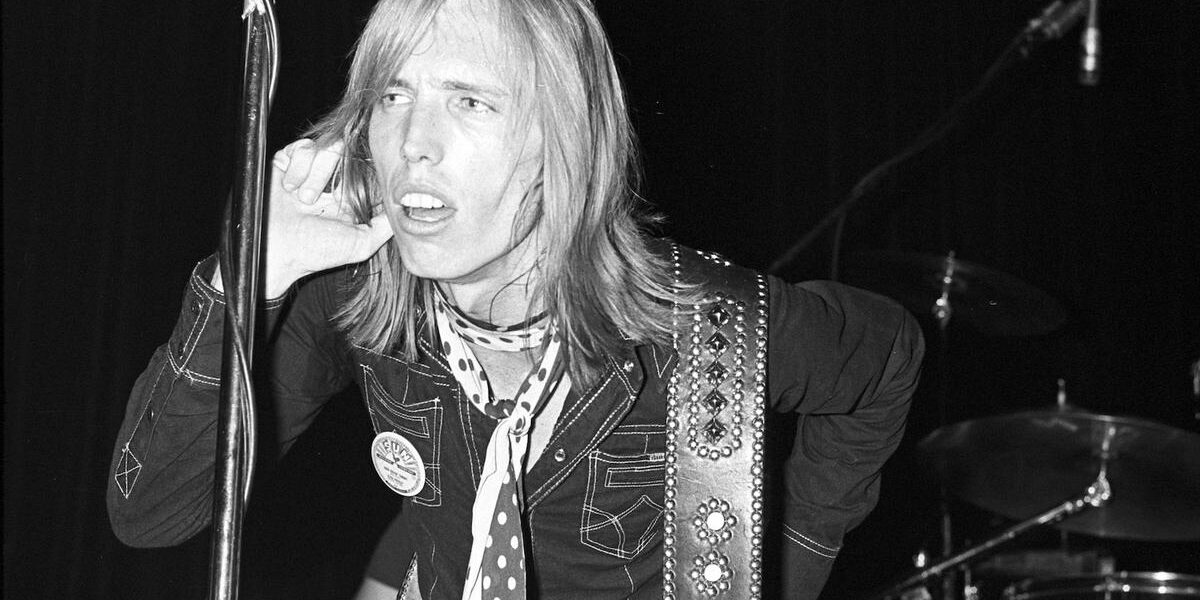
When Tom Petty released his debut album, the self-titled Tom Petty and the Heartbreakers, he was confident but not cocky.
“It is not really like anything you’re going to hear,” he said to the Gainesville Sun (via thepettyarchives.com) — referred to in the article as “Tommy” — in December of 1976, the month after the album was released. “The reviews have said it too. It’s rock and roll, it’s got a beat…I don’t know what it’s like, maybe kind of squirmy.”
It may have taken a little while for Petty’s career to gain serious momentum, but once it did there was no denying that here was someone who was born to write songs. In total, he and the Heartbreakers released 13 studio albums, plus embarked on a number of side quests with people like Bob Dylan, Johnny Cash and others.
Below, we’ve narrowed things down to what we believe to be the “Big 4” of Petty’s albums, both with the Heartbreakers and on his own.
1. Tom Petty and the Heartbreakers (1976)
In retrospect, it’s a bit wild that Petty’s debut album contained two of his most famous songs: “Breakdown” and “American Girl.” Pretty great start.
The reality is that Tom Petty and the Heartbreakers didn’t make much of a splash at the time of its release in November of 1976 — Billboard described it rather plainly as “an assortment of sullen ballads and uptempo shriekers.” Not a terribly glowing review.
But then the U.K. press started to pick up on things. “I like the record so much I take it into the office with me and play it every day since,” Giovanni Dadomo wrote in Sounds magazine. Then, after some touring overseas, the album climbed to No. 24 on the U.K. charts. More and more positive reviews came in, and, eventually, Tom Petty and the Heartbreakers made it to No. 55 in America in 1978, well over a year since its release.
Petty’s strength as a songwriter, arranger and all around rock ‘n’ roller proved that he could rub shoulders with the big dogs of the industry, an era in which punk and new wave was on the rise, but the public still yearned for a bit of classic rock ‘n’ roll. That was Tom Petty and the Heartbreakers.
2. Damn the Torpedoes (1979)
Within just three years, Petty and the Heartbreakers soared to the top of the charts. Their third album, 1979’s Damn the Torpedoes, went to No. 2 on the Billboard 200. (The only album that kept it from the No. 1 spot was Pink Floyd’s The Wall — “I love Pink Floyd, but I hated them that year,” Petty reportedly quipped back then.) Rolling Stone called it the “album we’ve all been waiting for – that is, if we were all Tom Petty fans, which we would be if there were any justice in the world.”
Damn the Torpedoes brought with it two hit singles, “Don’t Do Me Like That” and “Refugee,” two robust rock songs that would hold a place in Petty’s set list for decades to come. But there was also “Here Comes My Girl” and “Even the Losers,” more tender-hearted tracks that appealed to the softer side of rock ‘n’ roll, the kind where limerence lives on the roof, smoking cigarettes and staring at the moon. With Damn the Torpedoes, it was shown definitively that the Heartbreakers could live up to Petty’s vigorous songwriting, and, conversely, Petty’s songwriting would not be overpowered by his band.
Even apart from the music itself, this era of Petty’s career was important. Not long before the album was released, he learned that his distributor, ABC Records, had been sold to MCA. Unhappy that his contract had moved hands without his consent, Petty declared bankruptcy in an effort to break the contract. In the end, he signed a new contract with Backstreet Records, a subsidiary label of MCA, but Petty’s message, one that would ring true for artists years down the line, was abundantly clear: I’ll decide how my work is bought and sold.
“It was hard on everyone,” Petty told BAM back then, “but it’s settled now and I think everyone is pretty happy about the way things turned out. We might have lost a little momentum in it all, but I had to trust that the kids would still be there when it was over. I always thought that they’d understand that this wasn’t a money trip; it was a survival trip.”
READ MORE: Tom Petty Album Opening Songs Ranked
3. Full Moon Fever (1989)
You can’t really talk about Petty’s essential albums without turning your attention toward his solo catalog, which oftentimes included members of the Heartbreakers anyway. Exhibit A: both guitarist Mike Campbell and keyboardist Benmont Tench can be heard on Full Moon Fever.
There is a markedly different sound to Full Moon Fever, and the most prominent reason for that is the introduction of Jeff Lynne as producer. Lynne’s style is one that’s a bit more polished around the edges; a sort of “overproduced” approach that’s instantly recognizable in ELO music, not to mention the Traveling Wilburys two albums. That sound might not be everyone’s exact cup of tea; but what it did allow Petty to do with Full Moon Fever is explore the breadth of his songwriting without having to consider how the Heartbreakers would influence it.
Yes, this caused some controversy within the band; but it did yield anthems “I Won’t Back Down” and “Free Fallin’,” plus the plaintive “A Face in the Crowd” and storytelling song “Yer So Bad.” Put all together, Full Moon Fever feels like a whole project; one that Petty needed to complete for himself after being a band man for well over a decade by then.
4. Wildflowers (1994)
We’ll start off by disclosing that this writer has “wildflowers,” ripped from Petty’s 1994 solo album cover tattooed on her arm. That should give you an idea of how significant we feel this album is from both a fan’s perspective and in Petty’s broader career tapestry.
Again, Petty leaned heavily on the Heartbreakers here; though he opted for much more organic production. There is no mistaking Wildflowers as his most vulnerable collection of songs. During this time period, Petty’s personal life was changing – he faced a divorce from his first wife while struggling with a painful addiction to heroin; something he kept private for years. All this made for songwriting that saw him reaching into more sensitive territory.
This isn’t to say that all songs were despondent or even sad. The title track “Wildflowers” is a buoyant ode to freedom and finding it; so too is “Time to Move On.” Songs like “You Don’t Know How It Feels” and “It’s Good to Be King” calmly acknowledge that all that glitters isn’t gold in work or personal life or anywhere else. Tracks such as “To Find a Friend” and “A Higher Place” offer resilience amidst stormy weather. In other words: Wildflowers is an album about being human.
The Best Song From Every Tom Petty Album
A common thread runs through Tom Petty’s catalog: it’s always about The Heartbreakers.
Gallery Credit: Nick DeRiso








