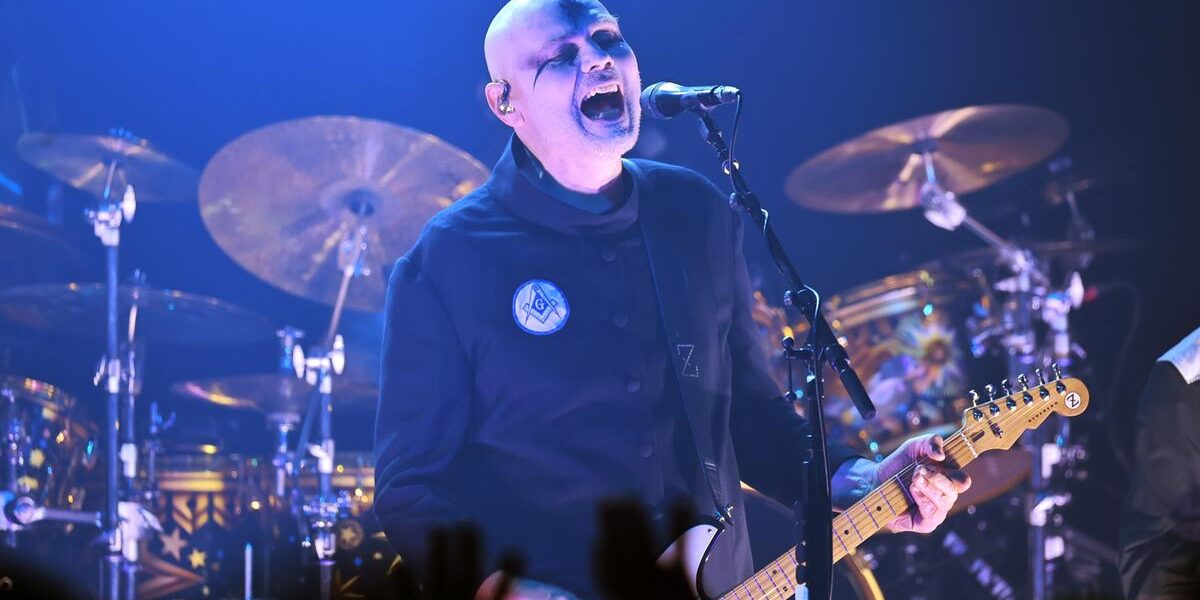
The early output of Smashing Pumpkins in the ’90s, beginning with 1991’s Gish, ignited a significant change and introduced a fresh sound and perspective to the alternative music scene. Their release of Siamese Dream in 1993 further amplified their presence, driven by extensive airplay on radio and MTV.
In 1995, when they transitioned from working with Butch Vig to collaborating with Alan Moulder and Flood—key figures behind albums for Depeche Mode, Ministry, U2, and others—fans were eager to discover the new sound.
The arrival of Mellon Collie and the Infinite Sadness that year provided plenty for fans to absorb. It was a double LP that, according to the band’s leader Billy Corgan, was initially met with resistance; their record label, Virgin, was not enthusiastic about the concept.
However, as history shows, Mellon Collie became their first and only album to reach the top of the Billboard 200 chart, buoyed by several hit singles including “Bullet With Butterfly Wings,” “1979,” and the iconic “Tonight, Tonight.”
Now, 31 years later, Corgan and Smashing Pumpkins will celebrate with a Mellon Collie-themed tour this fall that features two sets: one dedicated to songs from the album and another showcasing a variety of material from their four-decade career.
In a recent conversation with UCR following the announcement of the Rats in a Cage outing, Corgan reflected on that era and shared what fans can expect from the upcoming concerts.
You announced this tour with a special show and a “funeral requiem” for your character, Zero. How did you decide to say goodbye to Zero?
Well, it fits into the storyline for anyone following the complex narrative of Zero into Glass into Shiny, now back to Zero. While brainstorming promotional ideas, someone suggested a funeral theme, and I thought it would be amusing to have a living funeral. I mean, who wouldn’t want their own funeral? My wife organized much of it beautifully. When I saw her up there with Howie Mandel, I thought, “Okay, we’ve reached peak absurdity.”
How did it feel to see the impact of Mellon Collie as it was received? You were already on a successful trajectory thanks to Siamese Dream and earlier work.
As a student of rock history, I recognized that we had accomplished something rare: creating an album that shouldn’t have succeeded but did. It felt like a peak moment—indeed it was.
We received numerous accolades and nominations but could never have anticipated what followed. It’s strange because if the story ended there, it would be one thing. However, it took many unexpected turns afterward. Reflecting on it is bittersweet; if I focus solely on the music and its reception, it truly was a magical time.
I listened to a podcast this morning featuring KROQ-FM staff discussing the Siamese Dream era. Darcy Fulmer mentioned how they played “Cherub Rock” when the album launched but felt “Disarm” was the hit they wanted to promote. Is it always like that where plans change once an album is released?
Absolutely. Even regarding Mellon Collie, we had planned singles but “Bullet with Butterfly Wings” was released first despite my initial resistance. Eventually, I accepted it became a massive success. We believed “Tonight, Tonight” would be second but then received word that “1979” had to be the next single—a pop choice contrasting with “Bullet,” which was more rock-oriented.
We protested because we had this extensive double album; how could we go with a pop single? But they insisted. The pressure was immense, yet “1979” ended up being even bigger than “Bullet.” When we reached “Tonight, Tonight,” paired with Jonathan [Dayton] and Valerie [Faris]’s great video, everything skyrocketed as that video became iconic for its time.
Watch the Smashing Pumpkins’ ‘Tonight, Tonight’ Video
When you hear “Bullet,” what insights do you have about crafting songs for radio and MTV based on your experiences during Siamese Dream?
Honestly, I didn’t anticipate “Bullet” would resonate as a radio hit at all. My focus was simply on writing quality songs without considering radio length or format.
I thought “Jellybelly” would be our first single from Mellon Collie, yet it never became one. We still perform it nightly; when we do, it ignites excitement among fans even though it wasn’t released as a single.
This reflects classic rock dynamics: the song I underestimated became a hit while one I expected to succeed did not. Yet we continue playing both songs because they resonate well with audiences. In hindsight, it’s clear everything worked out well for that album.
Listen to Billy Corgan on the ‘UCR Podcast’
You seemed to have some awareness that certain elements might have potential.
To be honest, I wasn’t entirely confident since Mellon Collie‘s sound diverged significantly from Siamese Dream. Butch polished our sound for Siamese Dream, making us appear more professional than we were. [Working] With Flood’s approach focusing on our raw edges—something I supported—we aimed for authenticity because our live performances were darker than what Siamese Dream suggested.
Flood famously stated he wanted our live sound captured in recordings; thus Mellon Collie feels raw because we delivered that energy. However, I wasn’t sure how audiences would respond.
In those early days of [what became] social media, I recall reading comments around ’96 where people claimed we had erred by deviating from the Siamese Dream sound. Even today some fans wish we had remained that sweeter band—while that aspect is part of us; it’s not entirely who we are.
Watch the Smashing Pumpkins’ ‘Bullet With Butterfly Wings’ Video
Even if you were confident in your direction at that time, releasing a double album must have felt daunting regardless of your label’s support.
They opposed it vehemently! They rejected my proposal seven times—each time insisting we should release separate albums or space them out by a year. Despite their resistance, I persisted until they finally relented.
Being told no only fueled your determination?
Absolutely! That rebellious spirit drove me; perhaps internal pressure motivated me to work harder than usual. I dedicated eight months straight to this record—truly intense work! One statistic I often mention is that we worked 86 consecutive days to complete it due to delays.
Wow!
Indeed! It was pure madness—working continuously leads you into Groundhog Day territory! Somehow we finished it and made history.
You toured recently with your solo band performing Mellon Collie tracks while also developing an opera version of Mellon Collie with Lyric Opera of Chicago premiering this year. How do these experiences shape your upcoming tour?
The Machines of God tour focused heavily on deep cuts from Mellon Collie, Machina, and some tracks from Aghori Mhori Mei. I’ve long advocated for deep cut tours since many fans desire more than just hits.
My band has been resistant towards this concept; thus I decided to take matters into my own hands by assembling my own group for those shows—it turned out wonderfully! The opera experience revealed another layer: music needs theatrical presentation beyond just loud rock concerts.
This upcoming tour will reflect influences from both previous tours—especially in deep cuts during the second set—but also aim for more dramatic presentation because challenging ourselves is essential at this stage in our career. We are proud rock musicians who have earned our place in music history; therefore it’s our duty to offer something fresh after all these years for our fans.
READ MORE: Smashing Pumpkins Announce ‘Mellon Collie’ 30th Anniversary Tour
Top 100 ’90s Rock Albums
No discussion about the Top 100 ’90s Rock Albums can exclude grunge—and this list is no exception.
Gallery Credit: UCR Staff