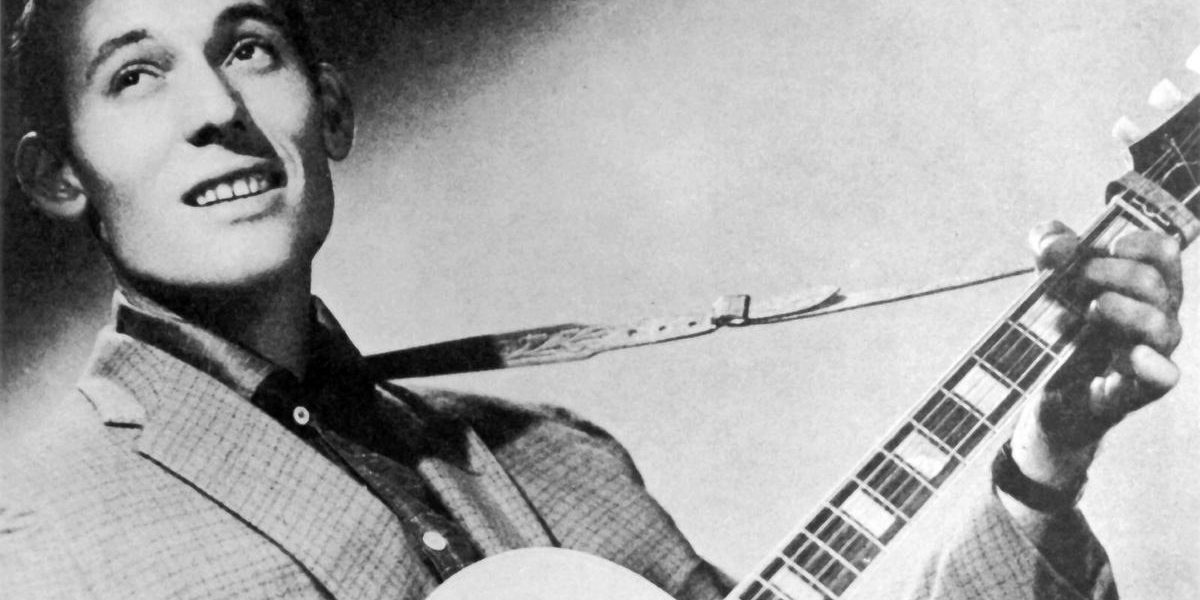
When it comes to rock ‘n’ roll standards, “Blue Suede Shoes” is undoubtedly a classic.
In fact, Paul McCartney’s music publishing company, MPL Communications, has held the rights to this song, along with several other classics by Carl Perkins, since 2003. McCartney once famously remarked that “if there were no Carl Perkins, there would be no Beatles.”
During that time, rockabilly music was gaining popularity, and “Blue Suede Shoes” emerged as one of the genre’s first major hits.
Did Carl Perkins Actually Own Blue Suede Shoes?
Carl Perkins recorded the original version of the song on December 19, 1955. Naturally, the question arises: did Perkins actually own a pair of blue suede shoes?
There are different stories about how Perkins came up with the concept. In Johnny Cash’s memoir Cash: The Autobiography, he mentioned telling Perkins about a man he had met during his military service who referred to his government-issued shoes as “blue suede shoes” and took great care to avoid scuffing them. Another account tells of Perkins witnessing a young man at a concert reprimanding his partner for stepping on his blue suede shoes.
What is certain is that Perkins wrote the song quickly on December 17 and recorded it for Sun Records just two days later.
Listen to Carl Perkins' 'Blue Suede Shoes'
Shortly thereafter, “Blue Suede Shoes” was released on January 1, 1956.
“Interestingly, it was ‘Honey Don’t’ on the B-side that gained traction first in Memphis,” Perkins recounted to The Atlantic in 1970. “Then one day, a lady from across the street came over and said there was a long-distance call for me. It was Sam [Phillips, producer and founder of Sun Records], and he said, ‘Carl, you know what happened? You got a hit on ‘Blue Suede Shoes.’ Chicago has ordered 25,000.’ I thought they said 2,500. I had never received such a large order.”
Not long after its release, it reached No. 2 on the Billboard Hot 100 chart. By April, over one million copies had been sold.
Elvis Presley’s Version
Then came Elvis Presley, who recorded “Blue Suede Shoes” in the same month that Perkins’ original was released. Presley was reportedly hesitant to do so since he had initially signed with Sun Records and knew Perkins personally; he didn’t want to compete with him. However, RCA Records insisted on releasing Presley’s version on August 31, 1956.
This turned out to be perfectly timed — as Perkins’ version began to fade in popularity, Presley’s rendition reignited interest. Although Presley’s single did not perform as well on the charts, it became the opening track of his debut album, Elvis Presley, and quickly became associated with his name.
Listen to Elvis Presley’s ‘Blue Suede Shoes’
Perkins acknowledged that Presley’s success was largely unavoidable.
“Elvis had the looks that I didn’t have. The girls were drawn to him for more reasons than just music,” he told The Atlantic. “Elvis had sideburns, flashy clothes, and no wedding ring. I had three kids. There was no way to prevent Elvis from becoming the star in that genre. I’ve never felt bitter; I’ve always considered myself fortunate to be part of the music industry at all. Most kids from my background never get to drive a new car.”
44 Famous Records You Probably Didn’t Realize Were Covers
You might be surprised to learn that someone else recorded these songs before they became popular.
Gallery Credit: Dave Lifton