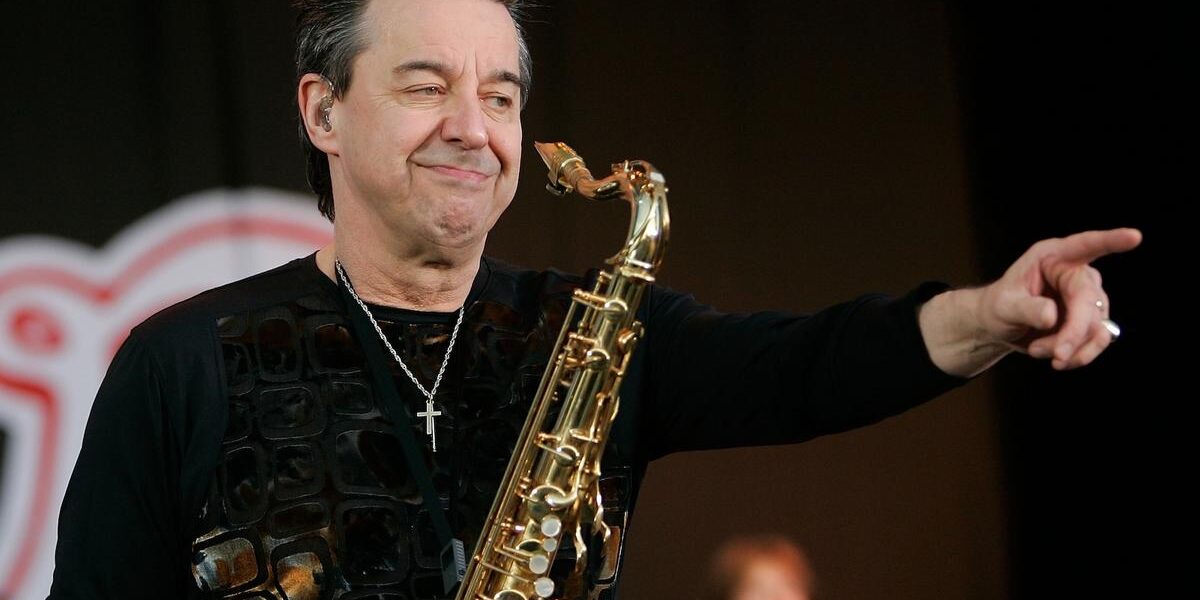
Chicago’s reed player Walt Parazaider has passed away after a prolonged struggle with Alzheimer’s disease. His daughter Felicia and former Chicago guitarist Dawayne Bailey confirmed Parazaider’s death at the age of 81.
“Thank you for loving my father, even if you didn’t personally know him,” Felicia Parazaider stated in a social media post. “I’m in shock and disbelief and yet not at all. This was the worst six years.”
Parazaider first disclosed his illness in 2021. “Five months ago, I was diagnosed with Alzheimer’s disease,” he mentioned in an official statement. “Needless to say, my wife, daughters, and I were shocked and devastated. It has taken a while to process this news, and the fact is, we still are.”
Walt Parazaider’s Key Role in Chicago
He had already stopped touring with Chicago in 2017 to address a heart issue before entering hospice care. “Walt had to retire due to health reasons,” fellow Chicago horn player Lee Loughnane told the Syracuse Post-Standard in 2018. “The rigors of the road take their toll and don’t get any easier, so you have to adapt.”
Parazaider was not part of the group’s most recent original album, 2022’s Chicago XXXVIII: Born for This Moment. He only played on three songs from 2014’s Chicago XXXVI: Now. Robert Lamm and James Pankow have also retired, leaving Loughnane as the final remaining original member.
READ MORE: Top 10 Chicago Songs
However, Parazaider’s role in Chicago cannot be overstated. Born on March 14, 1945, in Maywood, Illinois, he began playing jazz as a clarinetist, only dabbling in rock after picking up the saxophone. Parazaider’s Rock & Roll Hall of Fame future began to take shape once he arrived at Chicago’s DePaul University in the late ’60s.
He formed a college band called the Missing Links with legacy Chicago bandmates Terry Kath and Danny Seraphine. He met Chicago’s career-defining early producer Jimmy Guercio. Parazaider, who also played flute, earned a bachelor’s degree in classical clarinet performance from DePaul. By then, the former Missing Links had begun collaborating with Loughnane, James Pankow, Robert Lamm, and Peter Cetera.
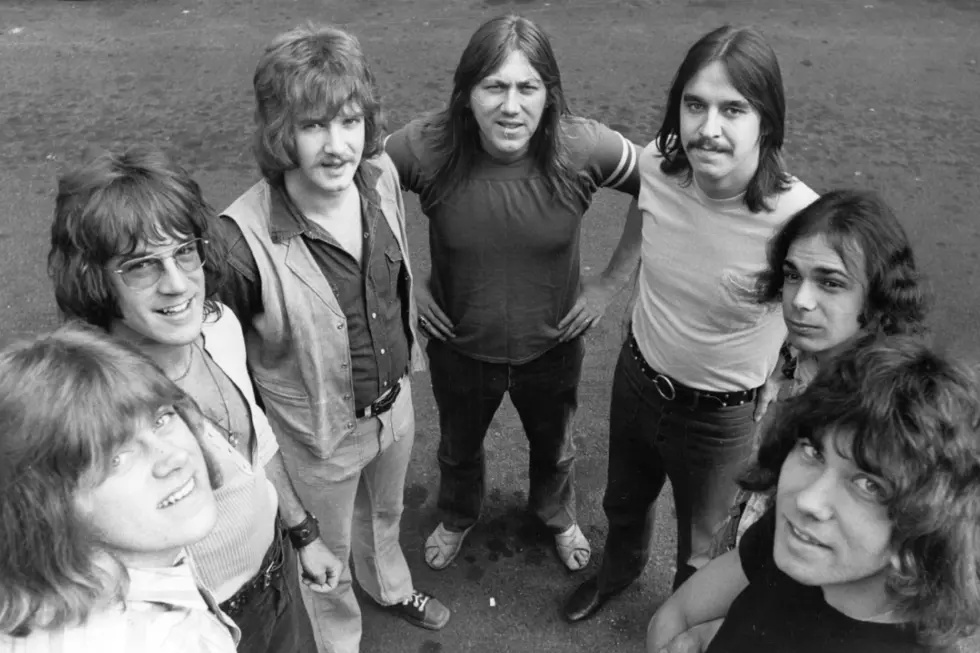
They initially called themselves the Next Big Thing. Parazaider is credited with inspiring the group’s eventual shift to rock – but with a then-rare horn section.
“We had a get-together in Walter’s apartment on the north side of Chicago,” Pankow later recalled. “It was Danny, Terry, Robert, Walter, Lee, and myself, and we agreed to devote our lives and our energies to making this project work.”
How Chicago Became a Platinum-Selling Juggernaut – Twice
They changed their band name to Chicago Transit Authority and then simply to Chicago. “Walt and Jimmy went to DePaul and when the Missing Links broke up, they wanted to start a show band with horns,” Loughnane told Classic Rock Revisited. “That is where we came from.”
Chicago later relocated to California – but initially struggled. “I think we made all of $15 or $20 at whatever beer hall we could play in the suburbs of Los Angeles for a while there,” Parazaider once admitted.
READ MORE: Ranking Every Chicago Album
Eventually, Parazaider’s idea paid off. Their self-titled 1969 debut went double-platinum. Every subsequent album through 1978’s Hot Streets sold over a million copies in the U.S. alone. “We were lucky to have formed in an era when people wanted to hear something a little different,” Lamm told Classic Rock.
Kath accidentally killed himself in 1978; however, Chicago went into a tailspin afterward. There had already been arguments over the band’s direction. “I think for some guys in the group, it was harder to cope with success than others,” Parazaider added. “I don’t think any of us sat down around my kitchen table that day in February of ’67 and said, ‘Hey, our goal is to be famous.’
Chicago then staged a more pop-focused ’80s comeback, selling almost nine million copies during the era spanning Chicago 16 through Chicago 19. They had nearly 20 Top 10 U.S. hits along the way, topping the charts again after 1976’s “If You Leave Me Now” with 1982’s “Hard to Say I’m Sorry” and 1988’s “Look Away.”
“I had a kid come up to me and say, ‘I have your first record; would you mind signing it?'” Parazaider remembered, “and what she had was the Chicago 16 album. She had no idea about the others that came before it. The reality hit: We had gained another generation.”
READ MORE: Top 10 Terry Kath Chicago Songs
Cetera left along the way, followed by Seraphine’s departure. Cetera’s replacement Jason Scheff left in 2016. Saxophonist Ray Herrmann took over for Parazaider on tour around that same time. Still, Loughnane liked to celebrate that he, Pankow, and Parazaider had played together “longer than any horn section in music history.”
Parazaider always maintained a centered view about his celebrated career. “When I started the band, I knew one thing – that the personnel we had were good musicians and people dedicated to trying to do something great,” Parazaider told the Wilmington Star-News in 2003. “I knew that we would have some success.”
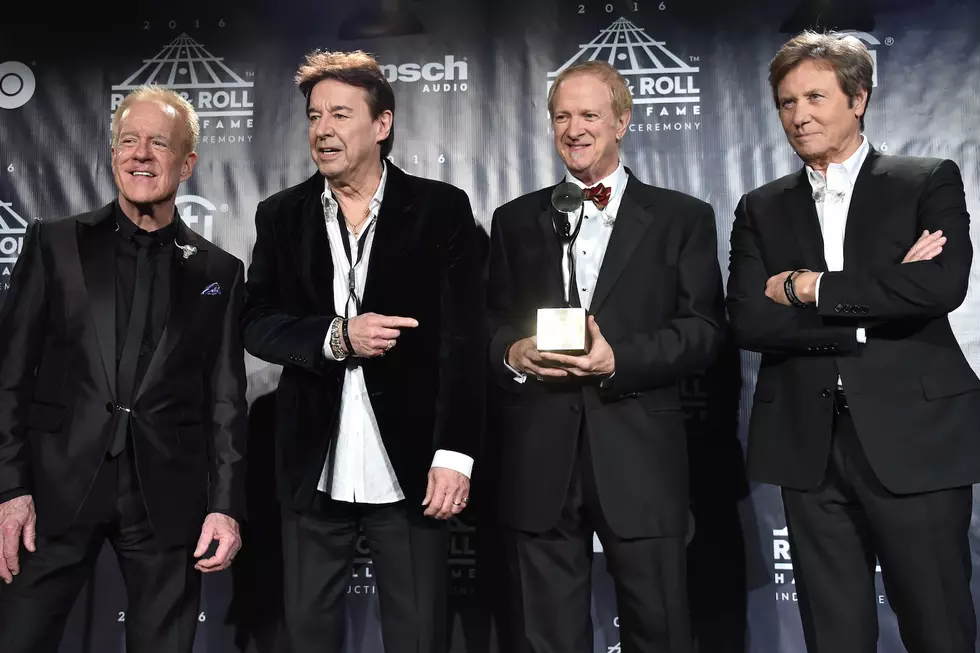
Chicago was part of the Rock Hall’s 2016 induction class. Bailey, whose decade-long stint with Chicago began in 1986, joined many others who paid tribute to Parazaider’s role in earning this honor.
In Memoriam: 2026 Deaths
A look at those we’ve lost in 2026.