
Earlier this year, Netflix officially bid farewell to Cobra Kai after six seasons, effectively bringing the story of Johnny Lawrence (William Zabka) to an end for now and closing out one of its most successful original series. Originally acquired from YouTube Red, the martial arts dramedy continuation of the Karate Kid trilogy served as an opportunity for the streaming service to build upon a beloved, established franchise with a story from Josh Heald, Jon Hurwitz, and Hayden Schlossberg that mixed plenty of nostalgia with humor and compelling drama from a new era of teenagers growing up and learning to fight. However, for those hoping to catch up on the trilogy that made the series possible, time is running out. The first three films, along with the 2010 reboot, are set to be removed from Netflix on January 1.
Released from 1984 through 1989, The Karate Kid trilogy was masterminded by John G. Avildsen and writer Robert Mark Kamen and followed the story of Daniel LaRusso (Ralph Macchio). The first film began as a classic underdog tale, with Daniel moving to California with his mother, where he is mercilessly bullied by Johnny Lawrence and the students of the Cobra Kai dojo under the ruthless John Kreese (Martin Kove). Daniel is aided by their apartment’s handyman, Mr. Miyagi (Pat Morita), who teaches him the way of karate and, in turn, some important life lessons about finding balance and training the spirit that ultimately help him defeat and earn the respect of Johnny at the All-Valley Karate Championships. The film eventually leads into the story of Cobra Kai with a now-adult Johnny and Daniel, but the other two films further flesh out the world. Part II takes Daniel to Okinawa Island, where Miyagi encounters an old rival with a grudge and nephew, Chozen (Yuji Okumoto), who becomes Daniel’s latest foe, while <em>Part III</em> introduces corrupt business magnate and ex-Green Beret Terry Silver (Thomas Ian Griffith), whose wicked plans involve hiring the unscrupulous Mike Barnes (Sean Kanan) to defeat and humiliate Daniel.
Unrelated to the original three films and The Next Karate Kid, which would see Morita return as Miyagi to train Hilary Swank‘s Julie Pierce, the 2010 reboot helmed by Harald Zwart would instead follow a new student in Dre Parker (Jaden Smith) and a new teacher in Mr. Han (Jackie Chan). It would also take the fighting to Beijing for a very similar story to the tale that started it all. Han, too, is a maintenance man with a penchant for Kung Fu, and he enters Dre into a tournament to defeat his oppressors, led by neighborhood bully Cheng (Zhenwei Wang). Altogether, no film quite reached the critical heights of the first film, which holds an 81% Certified Fresh rating on Rotten Tomatoes, but the franchise earned an impressive global total of $778 million and gave Karate a foothold in the U.S., thanks to the lessons Daniel learned.
Both ‘Karate Kid’ Movies Finally Met for the First Time in 2025
The revitalization of the Karate Kid franchise, thanks to Cobra Kai, ultimately came full circle and made another movie possible, this time integrating the events of the reboot into the original timeline. Released earlier this year, Karate Kid: Legends introduced a fourth new student, Li Fong, played by American Born Chinese star Ben Wang.This time, he received guidance from Daniel LaRusso in the ways of Miyagi-Do and from Mr. Han in the art of Kung Fu. With both styles combined, he sought victory in his own ultimate martial arts championship over a karate prodigy played by Aramis Knight. Critics were less than favorable about the film, but it came out a champion with audiences, earning a Verified Hot 90% score on Rotten Tomatoes.
The Karate Kid franchise, minus Cobra Kai, is departing Netflix on January 1. Stay tuned here at Collider for more on all the films coming to and leaving streaming as the new year approaches.
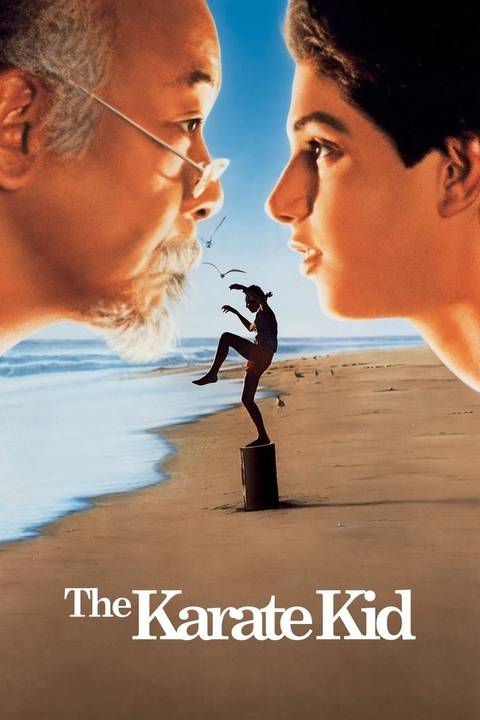
- Release Date
- June 22, 1984
- Runtime
- 126 minutes
- Director
- John G. Avildsen
- <strongWriters
- Robert Mark Kamen
- <strongProducers
- Jerry Weintraub