The hallmarks associated with Nordic noir aren’t exclusive to the region’s fiction, but Scandinavian countries have certainly perfected the crime thriller to the point of becoming the style’s reigning experts. Over the decades, Nordic noir’s visual and thematic identifiers have bled into contemporary American hits like True Detective and Mare of Easttown: protagonists whose addressed trauma reflects the main mystery and infects their existence like a virus, harrowing murders and conspiratorial cover-ups, remote landscapes as cold and barren as the antagonist’s morals, and small towns where agonized people are trapped in no-win scenarios.
But don’t let that expanding popularity fool you. Scandinavian originals haven’t been lost in the Hollywood shuffle; instead, they’ve gained rapt international attention courtesy of streamers. Just last February, Netflix’s Swedish drama The Åre Murders was a breakout success, and the streamer’s newest offering kicking off 2026 is the ominously titled and bitterly bleak Land of Sin. Set in southern Sweden, creator and director Peter Grönlund‘s (HBO’s Beartown) five-episode crime thriller contains the major calling cards for which audiences seek out the genre, but intentionally lacks either clear-cut villains or heroes. The individuals on opposing sides of the law represent moral complexity as well as an overlooked community that’s just attempting to survive.
What Is ‘Land of Sin’ About?
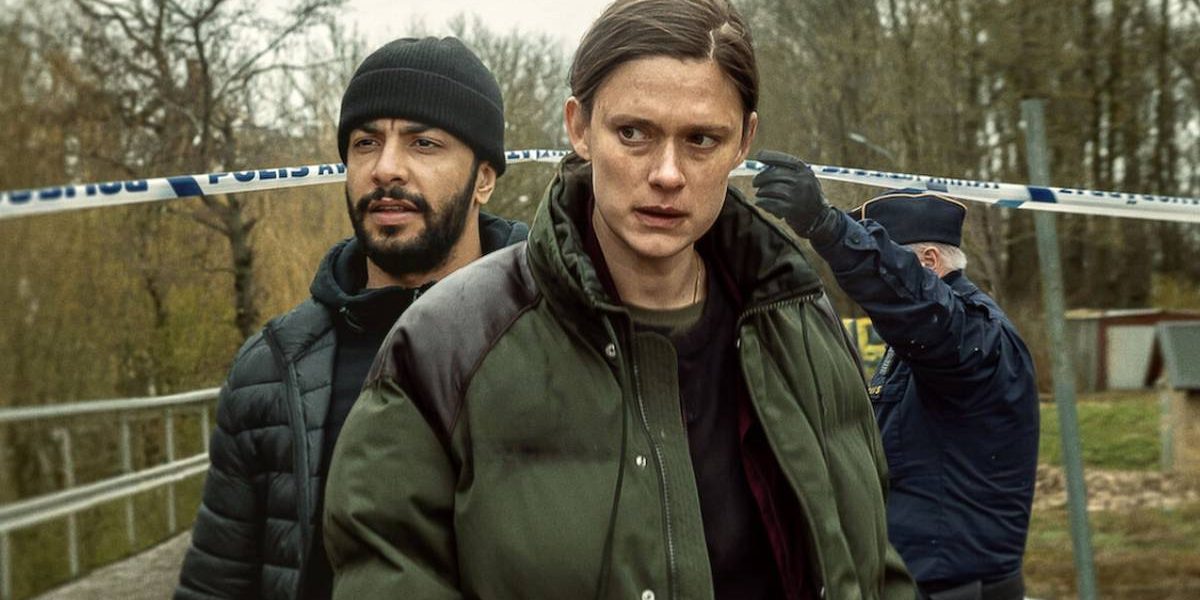
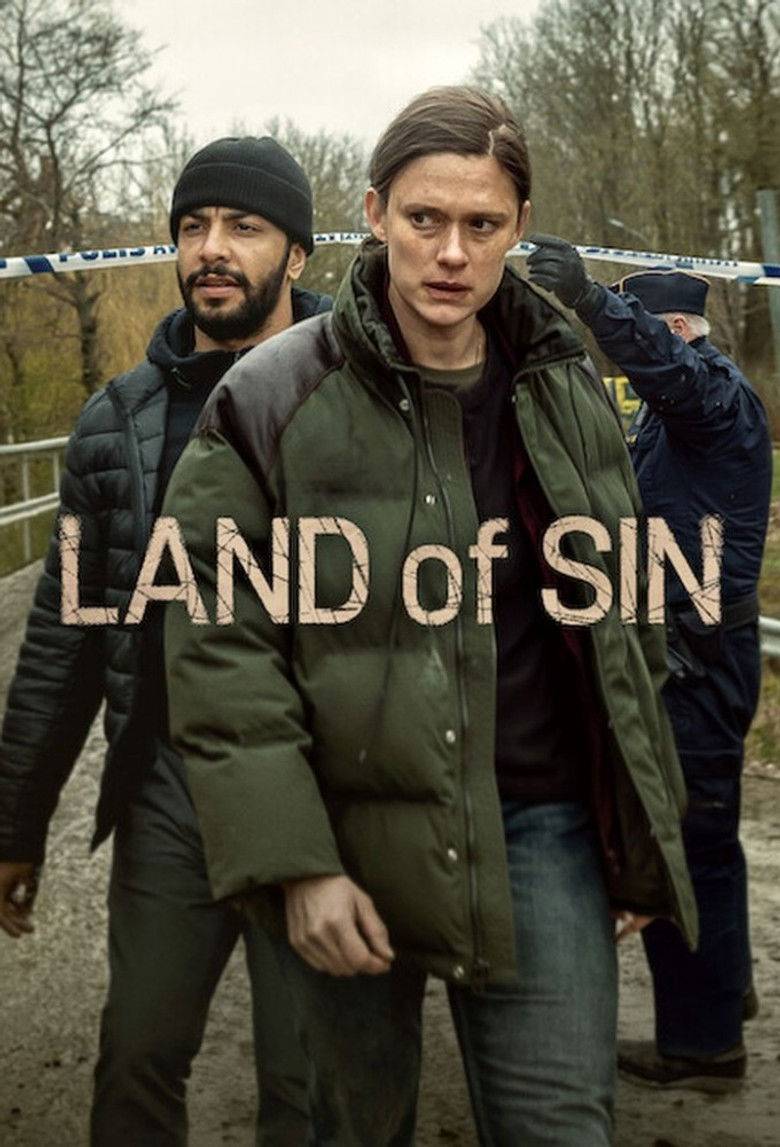
Authorities discover the body of a local teenager along the coastal Bjäre peninsula. Silas (Alexander Persson) passed away from drowning, but the marks on his body indicate assault and murder. His ailing father, Ivar (Mats Mårtensson), the patriarch of a farming family with a reputation for “drunkenness and violence,” demands that police officer Dani Anttila (Krista Kosonen) investigate Silas’ death. By his estimation, she owes them that courtesy. Indeed, Dani and her son Oliver (Ceasar Matijasevic) had close connections to the deceased boy. A perpetually miserable, brusque, and reserved single mom, Dani feels partially responsible for both Silas’ fate and her estrangement from Oliver, a wounded adolescent trapped inside the living hell that is substance addiction.
It’s a conflict of interest for Dani to lead this investigation by any legal standard, but once her initial guilt-stricken reluctance fades, her determination to bring Silas’ killer to justice overrides protocol. She’s not alone in that no-holds-barred regard; Silas’ uncle Elis (Peter Gantman) gives Dani and her new partner Malik (Mohammed Nour Oklah) — a rookie according to Dani’s scornful standards, but neither an amateur in the field nor a fool when it comes to Dani’s emotional evasiveness — a week to produce results. Then, the neighborhood will take matters into its own hands. Suspicions, traumas, and web-like connections spread their roots deep within this countryside community, and the answers surrounding Silas’ murder might run heartbreakingly close to home.
‘Land of Sin’s Genre Trademarks Amplify Its Ruthless Socioeconomic Focus
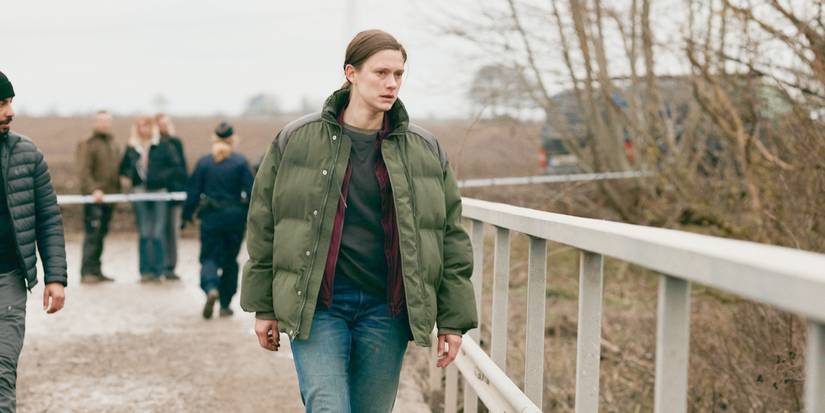
A woman-led psychological noir is nothing without an engrossing lead performance. Appearance-wise, Dani immediately evokes the iconic Sarah Lund (Sofie Gråbøl) from the seminal Danish thriller Forbrydelsen and her Americanized reinterpretation, The Killing‘s Sarah Linden (Mireille Enos): long hair tied back in a low ponytail, everyday androgynous clothes, no makeup, and wearing her ghosts in her face’s creases. Coincidental or not, it’s an appropriate character parallel and a convenient visual shorthand for Dani, who’s a worthy entry in the “damaged women detectives” pantheon. Land of Sin‘s camera work is an exercise in intentionality, its spectacular use of distance and close-ups allowing the framing and Kosonen’s anguished face to carry the intense emotional waves. Dani never smiles beyond the tiny, unimpressed, and mocking half-smirks she presents when men try to intimidate her with their hunting rifles and invasive physical proximity. When she isn’t recklessly challenging potential danger face-to-face, she keeps striving and failing to suppress a constant, silent scream; agony, grief, and loneliness are etched into her every flinch.
Even considering the miniseries’ five-episode runtime (all of which were provided for review), Land of Sin sketches the major players’ lives with just enough fill-in-the-blanks context to satisfyingly convey their formative experiences, their driving motivations, and their internal and external conflicts. I was raised in America’s rural Midwest, and I recognize these individuals’ hopelessly weary eyes as much as I do their cramped, cluttered houses – spaces defined by their accumulated wear-and-tear as much as the fact that their aging structures are still standing. This isn’t an insult nor a condemnation; it’s a testament to Grönlund achieving his goal “to portray the people at the edge [… and ] the psychology that drives them.” (Although Malik is far from overlooked, he does draw the short end of the stick where focused development is concerned, which is unfortunate for the series’ primary character of color.)
One of 2025’s Best Crime Thrillers Is Hiding in Plain Sight on Netflix — and It’s Only 6 Episodes
Your ‘Knives Out’ replacement has arrived.
Land of Sin pushes beyond the dismissive and exclusionary stereotypes applied to working-class communities and asserts the uncomfortable truth that nearly every person contends with their flawed natures. Even the characters with unsavory moral connections and strained familial dynamics can demonstrate tenderness, protection, and loyalty. Regardless of how their faults manifest, every individual is overwhelmed, unsure, and regretful, seeking absolution yet fleeing from accountability, and turning to whatever self-destructive life rope that’s within their reach — even when one of those survival options means sacrificing their most vulnerable. Some children inherit plots of land or generational trauma while still others are abandoned, forgotten, and preyed upon.
Without revealing spoilers, Land of Sin offers a happier conclusion than one might expect from an unrelentingly desolate drama. Its brand of redemption — breaking behavioral cycles, healing broken bonds through action, protecting terrified youths — emerges from realism. After a punishing trial by fire, that threadbare bittersweetness is more satisfying than full-blown cynicism. Land of Sin‘s curated themes are strikingly raw and empathetic, with its grim yet rewarding tale uplifted by excellent behind-the-camera production value and a tiny-but-mighty cast with zero weak links.
Cast

- Krista Kosonen gives an engrossing and layered performance as Dani.
- The series paints a vivid cultural, socioeconomic, and psychological picture within five episodes.
- Malik’s interiority isn’t ignored but compared to other characters he receives less development.