
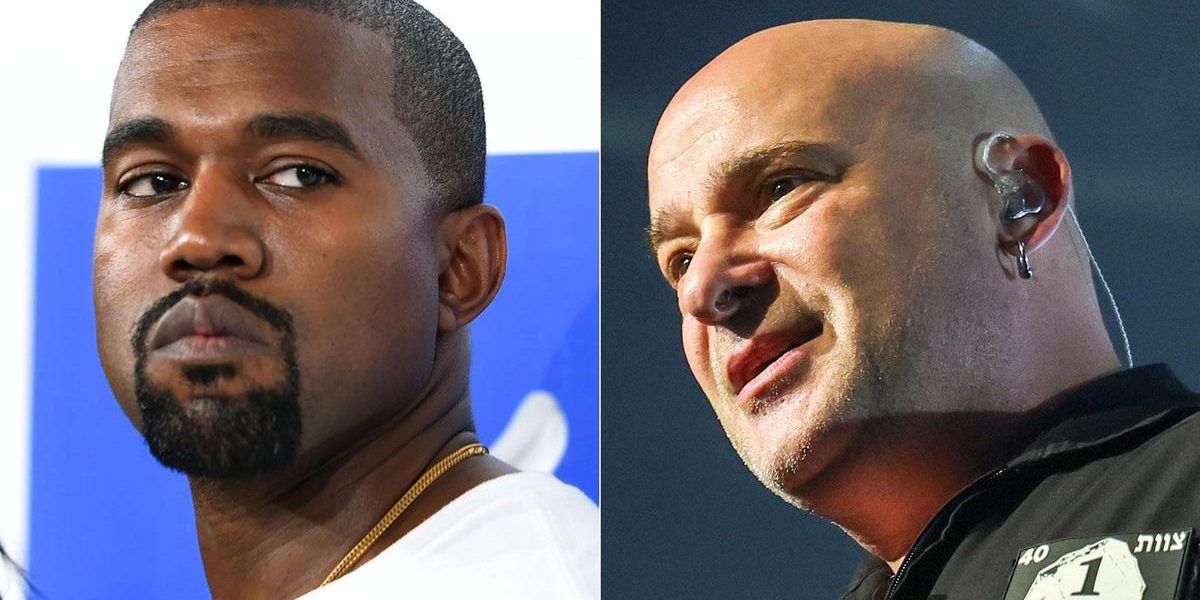
The frontman of Disturbed, David Draiman, publicly responded and extended an invitation to rapper Kanye West on Monday (Jan. 26) after West published a full-page advertisement in the Wall Street Journal apologizing for his frequent antisemitic remarks in recent years.
In the advertisement, West disclosed that he has been receiving treatment for a brain condition following what he described as “a four-month-long manic episode of psychotic, paranoid, and impulsive behavior that destroyed my life” last year.
West asserts that his hateful speech stemmed from losing touch with reality and stated, “I regret and am deeply mortified by my actions in that state and am committed to accountability, treatment, and meaningful change. It does not excuse what I did, though. I am not a Nazi or an antisemite. I love Jewish people.”
What Did David Draiman Say After Reading Kanye West’s Public Apology?
David Draiman, the lead singer of Disturbed, has been a prominent voice against antisemitism. He has previously reached out to public figures who support opposing views to discuss the ongoing conflict between Israel and Palestine.
After reading West’s public apology, Draiman shared his own response on social media. While he expressed gratitude for West’s apology to the Jewish community, he questioned whether it could ever sufficiently address the harm caused. Nonetheless, Draiman provided the rapper with suggestions for atoning for his past actions.
Dear @kanyewest,
Thank you for this.
Unfortunately, it doesn’t undo the damage done; I’m not sure anything ever could … but allow me to suggest also …
1. Participating in Black/Jewish unity events; I’ll go with you?
2. Deleting “Heil Hitler” from your catalog?
#KanyeWest
What Did Kanye West Say in His Public Apology?
Kanye West’s public apology coincides with the upcoming release of his latest album Bully. In it, he reveals that his bipolar disorder influenced his actions, along with a previously undiagnosed frontal-lobe injury he had sustained.
He had previously apologized for his antisemitic comments but later retracted that apology while selling swastika shirts and recording the track “Heil Hitler.”
READ MORE: Ozzy Osbourne Blasts ‘Antisemite’ Kanye West Over Unauthorized Sample
The complete statement that appeared in the Wall Street Journal advertisement is as follows:
To Those I’ve Hurt:
Twenty-five years ago, I was in a car accident that broke my jaw and caused injury to the right frontal lobe of my brain. At the time, the focus was on the visible damage — the fracture, the swelling, and the immediate physical trauma. The deeper injury, the one inside my skull, went unnoticed.
Comprehensive scans were not performed; neurological exams were limited; and the possibility of a frontal-lobe injury was never considered. It wasn’t properly diagnosed until 2023. That medical oversight caused significant harm to my mental health and led to my bipolar type-1 diagnosis.
Bipolar disorder comes with its own defense mechanism: denial. When you’re manic, you don’t believe you’re sick; you think everyone else is overreacting. You feel as if you’re seeing the world more clearly than ever when in reality you’re losing your grip entirely.
Once people label you as “crazy,” it feels like you cannot contribute anything meaningful to society. It’s easy for others to joke about it when this is actually a serious debilitating illness that can be fatal. According to the World Health Organization and Cambridge University, individuals with bipolar disorder have a life expectancy shortened by ten to fifteen years on average and a 2x-3x higher all-cause mortality rate than the general population. This is comparable to severe heart disease, type 1 diabetes, HIV, and cancer — all of which can be lethal if untreated.
The most frightening aspect of this disorder is how convincing it can be when it tells you: You don’t need help. It blinds you while making you feel insightful and powerful.
I lost touch with reality. The longer I ignored my issues, the worse things became. I said and did things I deeply regret. Some of those I care about most were treated poorly. You endured fear, confusion, humiliation, and exhaustion from dealing with someone who was often unrecognizable. In retrospect, I became detached from my true self.
In that fractured state, I gravitated towards the most destructive symbol available: the swastika; I even sold T-shirts bearing it. One of the challenging aspects of having bipolar type-1 is experiencing disconnected moments — many of which I still cannot remember — that lead to poor judgment and reckless behavior often felt like an out-of-body experience. I regret and am deeply mortified by my actions during that time and am committed to accountability, treatment, and meaningful change. However, this does not excuse what I did; I am not a Nazi or an antisemite. I love Jewish people.
To the black community — which has supported me through all my highs and lows during dark times — your community is undeniably foundational to who I am. I am truly sorry for letting you down. I love us.
In early 2025, I entered a four-month-long manic episode characterized by psychotic, paranoid, and impulsive behavior that destroyed my life. As circumstances became increasingly untenable, there were moments when I didn’t want to continue living.
Living with bipolar disorder means experiencing constant mental illness. During a manic episode, you are ill; when not in an episode, you appear completely ‘normal’. That’s when the aftermath of the illness hits hardest. After hitting rock bottom months ago, my wife encouraged me to seek help.
I found solace in Reddit forums where individuals share experiences of similar manic or depressive episodes. Reading their stories made me realize that I was not alone; it’s not just me ruining my life annually despite taking medication daily while being told by so-called top doctors that I’m not bipolar but merely experiencing “symptoms of autism.”
My words as a leader within my community carry global weight and influence; during my manic episodes, I lost sight of this responsibility.
As I establish a new baseline through effective medication management, therapy, exercise, and healthy living habits, I have gained much-needed clarity. My energy is now directed toward positive artistic endeavors: music, clothing design, and other innovative ideas aimed at helping others.
I’m not seeking sympathy or an easy way out; rather I hope to earn your forgiveness. Today’s message is simply a request for your patience and understanding as I navigate my way back home.”
With love,
Ye
Below are other musicians of Jewish faith or ancestry.
40 Rock Stars Who Are Jewish
Some of history’s biggest rock stars are Jewish by birth or conversion.
Gallery Credit: Corey Irwin