Certain books receive multiple adaptations, and it’s something people generally accept when those adaptations aren’t very good (the source material can never be fully outweighed or deleted), but it’s also easy to celebrate when a second (or third) adaptation improves upon the first. With The Lord of the Rings, it’s probably not a concern anyone will have, as the issue would arise if a second adaptation (like another film trilogy) were to do worse than the first. However, with Dune, there was one attempt at making a movie in 1984, which didn’t go perfectly, so after a few decades, that Frank Herbert book received another adaptation. Technically, it got two movies, with that one adaptation being released in two parts, and those two movies are counted separately below.
Dune: Part Three will be the fourth theatrically released Dune movie, and it will differ from the previous ones because it’s set to adapt a different book in the series: Dune Messiah, which was originally published four years after the first book. For now, though, you’ve technically got three Dune movies overall, and you can also say that you’ve got three movies based on that first Dune novel. Either way, those three Dune movies are ranked below, starting with the one that didn’t quite work (but still proves interesting), and finishing with the two that are admittedly hard to separate but were released independently. So, until there’s a Kill Bill: The Whole Bloody Affair kind of situation where the first and second of the recent Dune movies get edited into one massive epic, you’re sort of forced to consider them as movies on their own, when it comes to ranking. That’s more than enough by way of preamble and explanation.
3
‘Dune’ (1984)
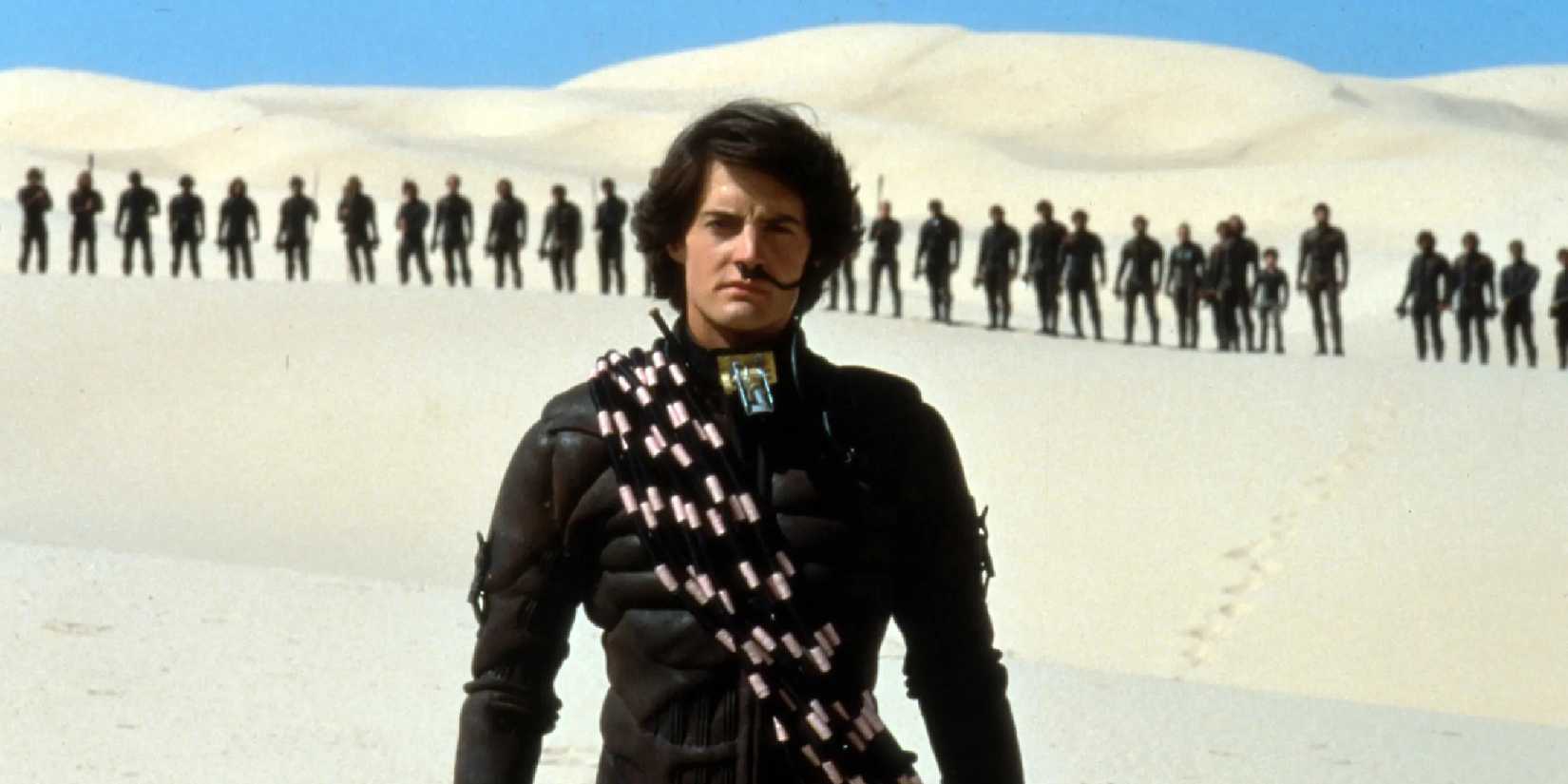 Image via Universal Pictures
In 1984, David Lynch hadn’t fully developed the style that would become known as Lynchian, though Eraserhead (his first feature film) was definitely Lynchian in hindsight. While The Elephant Man was more grounded, it also contained some dreamlike and eerie imagery. He probably seemed like a good fit for an adaptation of Dune, even if he hadn’t directed a movie on such a large scale before, just because Dune is a fairly out-there novel at times. There’s plenty in it regarding world-building and other details that feel surreal or even a bit psychedelic. The core story is certainly about power, corruption, and war, but all the extra elements that make Dune stand out… those are the kinds of things that feel well within David Lynch’s wheelhouse.
The opening of Dune (1984) feels a bit choppy, and then the final act really suffers since it condenses the last half of the book into not much longer than half an hour.
So, it turned out that 1984’s Dune was interesting. It is not an absolute disaster by any means, even if some discuss it as if it completely misunderstands the source material (as an adaptation) while also not getting anything right as a film. While Dune didn’t look amazing for its time due to limitations with some special effects that don’t hold up against certain other large-scale sci-fi movies of the era, other parts are visually striking. David Lynch was a good director and remained one even if what he was directing might have been spiraling out of control at times. There is a stretch of Dune where he seems to be in control or at least in control enough. The opening of Dune (1984) feels choppy, and then the final act suffers significantly since it condenses the last half of the book into not much longer than half an hour. The second half feels like it plays out at double speed or even faster. Thus, while the landing isn’t stuck and the opening isn’t great, there are parts of Dune (1984) in between that are quite good. The music is memorable, some casting choices are very inspired, and it captures the weirdness of the book well. Had it been successful, Lynch might have been even better suited to adapting some of Dune‘s sequels since a few see Frank Herbert doubling down on some of the weird elements introduced in the first book.
2
‘Dune’ (2021)
The first half or so of Dune (1965) was given more room to breathe with Dune (2021), even if it’s not necessarily the most interesting and intense part of the story. As setup goes, though, it’s very well-executed, and there are aspects here that are easier to appreciate once you’ve seen the follow-up. It’s worth noting how much of a risk it was to helm the entire adaptation this way. Filming for Dune occurred without official confirmation for a second movie. Therefore, unlike with The Lord of the Rings or Kill Bill, where they had one huge production edited into multiple parts/releases, this sequel was greenlit only after the first proved successful enough (not a huge hit financially but performed well during COVID). At least things turned out well as the story was completed, but at that time,Dune (2021) ended in a rather odd manner.
The ending isn’t really a cliffhanger either, nor does it provide any mild sense of finality like you get at the end of both The Fellowship of the Ring (the Fellowship parting) and The Two Towers. It felt strange for it to conclude this way without any guarantee for a follow-up. This ending is its biggest flaw despite knowing that a second half exists. The second biggest flaw is probably how much Dune (2021) feels like an extended prologue filled with exposition. Still, this exposition is interesting and could have led to an overly long runtime filled with characters explaining things excessively. Beyond structure and pacing,the other difference here compared to the 1984 movie is that Dune (2021) feels somewhat less weird and more grounded. This could be detrimental for some but might also be a welcome change for others.
1
‘Dune: Part Two’ (2024)
 Image via Warner Bros. Pictures
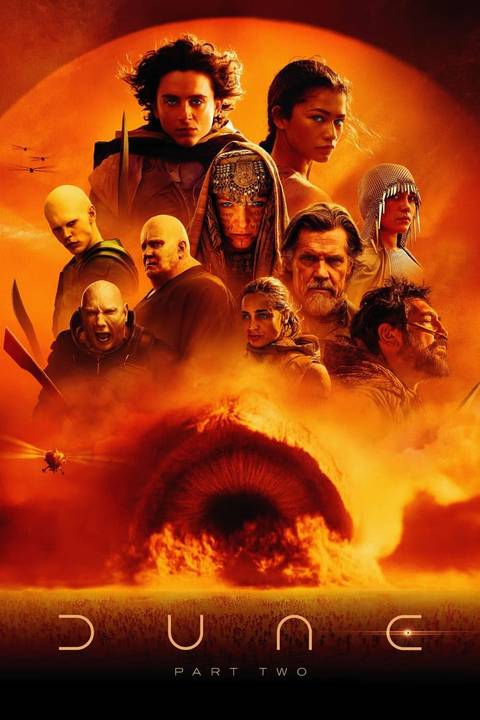
The saying goes that Rome wasn’t built in a day, nor was Dune read in one either. Well, you could probably read it in one day if you really wanted to without any distractions but doing so would be challenging due to its hefty nature. It’s essentially an epic even without considering its sequels which justifies giving that first book two movie adaptations. You shouldn’t be surprised to learn that Dune: Part Two is indeed part two of that adaptation. Director Denis Villeneuve returned along with most cast members whose characters were still alive while new actors joined as well (the characters played by individuals likeAustin Butler,Florence Pugh, andChristopher Walken appeared in various forms within the source material’s first half). The cast might actually be even more impressive here which contributes to makingDune: Part Two feel like an even greater epic thanDune (2021).
This installment features more action and battle sequences without shifting focus entirely into an action film territory. All this spectacle serves as icing on the cake because what truly makesDune: Part Two compelling is its development of main character Paul Atreides. He appears more passive in the first movie but begins to understand his destiny (or apparent destiny) withinDune: Part Two — gradually evolving from potential hero to antihero before ultimately feeling more villainous than anything else. This sequel gets dark while paving way forDune: Part Three to become one of 2026’s most anticipated films. With this second film soon becoming part of what will be a trilogy much potential from its predecessor is realized—when combined they create one of recent cinematic history’s greatest epics.
The music deserves mention too—previously noted were memorable scores fromDune (1984) byToto andBrian Eno butHans Zimmer’s compositions for bothDune (2021)andDune: Part Two are equally outstanding.

[nospin]Here you can find the original article; photos and images used in our article also come from this source. We are not their authors—they have been used solely for informational purposes with proper attribution to their original source.[nospin]