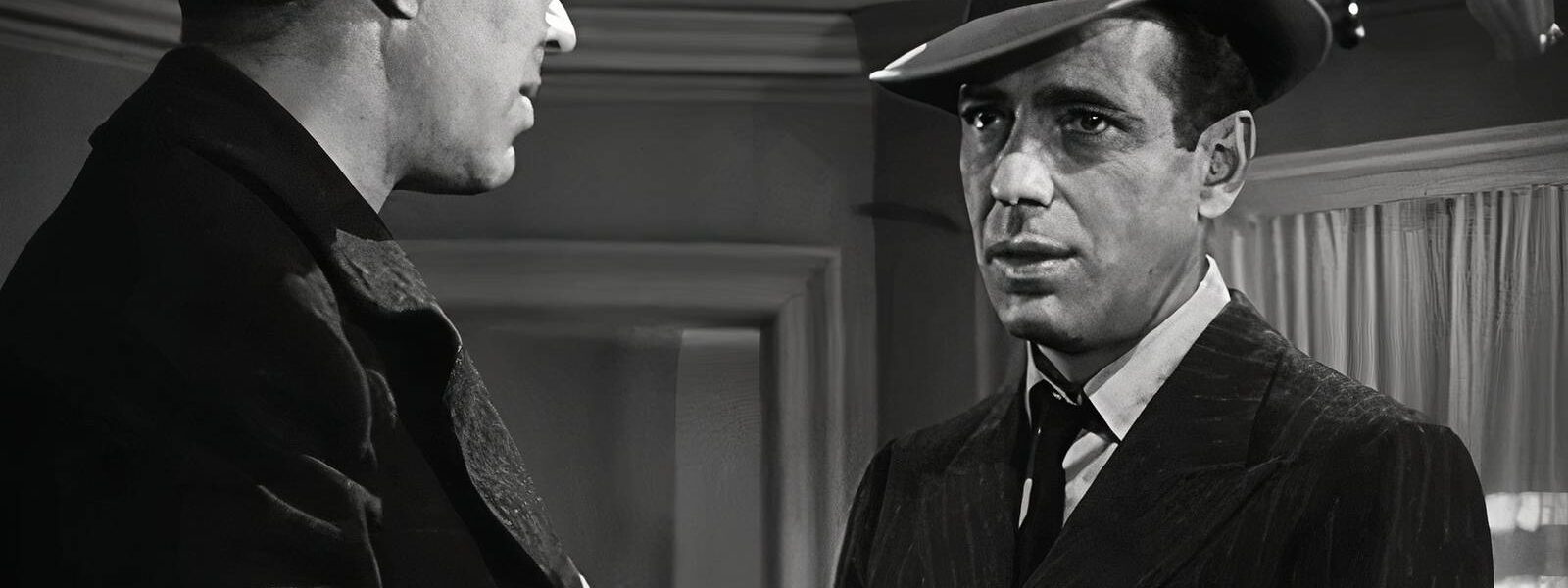
Classic film noir originally emerged during the 1940s and occupies a shadowed corner of cinema where crime stories are transformed into psychological labyrinths defined by fatalism, moral ambiguity, and alluring black-and-white imagery. While many people think of the genre’s distinct visuals, such as smoke-filled nightclubs, cynical detectives, and scheming femme fatales lurking in dark alleyways, the most defining element of any great classic noir movie is its story.
Some of the genre’s most perfectly written films, like The Maltese Falcon starring Humphrey Bogart,Otto Preminger‘s Laura, and Out of the Past starring Robert Mitchum and Jane Greer, endure not simply because of their mysteries or violence, but because their scripts expose the fractures beneath the American dream, ultimately revealing the darkest elements of human nature. Out of the slew of notable classics released between the 1940s and 1950s, including Double Indemnity, The Big Heat, and The Third Man, these are ten of the most perfectly written classic noir films of all time.
10
‘Shadow of a Doubt’ (1943)
Charlie (Teresa Wright) stands by Uncle Charlie’s (Joseph Cotten) bedside in Shadow of a Doubt.Image via Universal Pictures
Joseph Cotten stars in Alfred Hitchcock‘s classic film noir masterpiece, Shadow of a Doubt, as a beloved uncle and charming bachelor, Charles Oakley, whose niece and namesake, Charlie (Teresa Wright), begins to suspect that he’s harboring a dark secret that could potentially destroy their entire family. The film features a screenplay written by Thornton Wilder, Sally Benson, and Alma Reville, based on an original by Gordon McDonell, who earned an Oscar nomination for Best Story.
The brilliance of Shadow of a Doubt lies in how gradually it reveals the darkness beneath small-town innocence through minimal action and rich dialogue, conveying how evil enters not through the streets, but through the family home. While the movie doesn’t involve the traditional gangsters or a hard-boiled private eye, Shadow of a Doubt still reflects core noir themes with remarkable subtlety, especially within the relationship between Cotten and Wright’s characters, which is the film’s central source of tension.
9
‘The Killers’ (1946)
Ava Gardner leaning against a piano with Burt Lancaster standing behind her in The Killers (1946).Image via Universal Pictures
The Killers is an essential noir classic directed by Robert Siodmak, which combines fatalistic storytelling and emotionally damaged characters into a script of extraordinary precision and atmosphere. Loosely based on Ernest Hemingway‘s 1927 short story, The Killers begins as a seemingly run-of-the-mill homicide investigation into the murder of a former boxer, played by Burt Lancaster in his feature film debut, but as the story progresses, it slowly expands into a haunting tale of guilt, betrayal, and greed that leads back to a deadly dame (Ava Gardner).
Anthony Veiller‘s Oscar-nominated screenplay for The Killers stands out for its fractured storytelling, which gives the film a sense of inevitability while also creating a layered narrative where each character’s testimony reveals another fragment of the damage and emotional ruin of Lancaster’s character. Veiller’s script reinforces the genre’s worldview that no matter how much they try, people can never truly escape their past or their nature, resulting in a classic noir that feels both brutally efficient and emotionally profound.
8
‘The Third Man’ (1949)
Carol Reed‘s The Third Man fuses mystery with political disillusionment and moral consciousness into a gripping story about how greed and temptation can turn even the most respectable of men into unexpected monsters. Set in post-World War II Vienna, Joseph Cotten stars as a down-on-his-luck writer, Holly Martins, who travels to Austria, where he finds himself conducting his own investigation into the mysterious death of his longtime friend, Harry Lime (Orson Welles).
The film’s screenplay, written by Graham Greene, is celebrated for its precision and psychological depth, which turnsa straightforward case of a tragic accident into a surprising reflection of corruption and moral compromise. Compared to other classic film noir movies, Greene’s screenplay trusts implication more than exposition and allows the overwhelming silence and the morally decaying atmosphere of ruin to carry an emotional weight, ultimately giving The Third Man a haunting quality that lingers long after the mystery is solved, making it one of the most perfectly written film noir classics of all time.
7
‘Out of the Past’ (1947)
Kirk Douglas and Robert Mitchum in ‘Out of the Past’Image via RKO Pictures
Robert Mitchum stars inJacques Tourneur‘sOut of the Past as a small-town gas station attendant whose past life as a private eye finally catches up to him after his last employer shows up with a score to settle. The movie is based on Geoffrey Homes’ novel,Build My Gallows High , who also adapted it into screenplay capturingthe essential themesof noir with extraordinary elegance.
Out of the Past transforms traditional detective story into tragic character study on identity and destiny. It lures audience into world where every attempt at reinvention is ultimately destroyed by past. Writing moves effortlessly between romance suspense tragedy creating story where emotional longing becomes indistinguishable from doom. From beginning audience senses fate Mitchum’s character is already sealed but rather than asking whether disaster will come screenplay asks how long he can postpone inevitable demise.
6
‘The Big Heat’ (1953)
Glenn Ford looking at Gloria Grahame sitting in The Big Heat.Image via Columbia Pictures
The Big Heat is intense noir classic directed byFritz Lang that is hailed for stripping genre down to its rawest elements while maintaining unusually tight driven screenplay written by former crime reporterSydney Boehm. Based onWilliam P. McGavin‘s newspaper serial novel movie follows homicide detective Dave Bannion(Glenn Ford) whose investigation into fellow officer’s apparent suicide leads him into criminal underworld where he eventually discovers deep-seated corruption stemming back to his own department.
What ultimately makesThe Big Heat so perfectly written is its balance narrative efficiency emotional intensity.
Each revelation deepens sense corruption is not isolated but embedded within social structure from organized crime police department itself suggesting violence moral decay infect entire institutions not just individuals. Grief rage Ford’s character slowly transform him from idealistic detective into man willing embrace violence achieve justice reflecting genre’s cardinal belief morality compromised corrupt world.
Sarah Parker is a research analyst and content contributor with a strong interest in business strategy, organizational behavior, and social development. With a background in sociology and public policy, she focuses on exploring the intersection between research and real-world application. Sarah regularly contributes articles that bridge academic insights and practical relevance, aiming to foster critical thinking and innovation across sectors.