Key Insights
- Body Changes: Many women struggle to recognize themselves after significant body changes, such as pregnancy.
- Wardrobe Disconnect: A common experience is feeling disconnected from clothes that no longer fit the new body shape.
- Emotional Impact: Dressing can feel emotionally taxing, as it involves reconciling self-image with current reality.
- Style Evolution: Building a new style requires permission to embrace the current body and lifestyle.
Sometimes the hardest part of a body change is not the mirror itself, but realizing you no longer recognize the person you used to dress for. This article started with a Reddit post from a new mom who wrote, almost helplessly, that she no longer knows how to dress since having a baby. She shared outfit photos that other people said looked good, but her own reaction was a familiar mix of discomfort and disconnect: the clothes technically worked, yet none of them felt like her.
In the comments, people did not just critique hemlines and necklines. They talked about how hard it is to see your body as your own again when everything about your life has changed, and your old mental picture of yourself hasn’t caught up.
What stood out most was how many commenters echoed the same quiet confession: “I don’t know how to dress myself anymore either.” Some had gained weight, some were newly plus-sized, and some were living in a body that did not match the one they built their old wardrobe around. A few offered practical tweaks, like softer fabrics, more structure in the shoulders, or outfits that made sense for baby days instead of pre-baby nights.
Others admitted they were still stuck in the gap between who they used to dress for and the person they are now. This article is for that gap. It is not about getting back to your former style. It is about what it really takes to build a new one around the body and the life you have today.
The Breakup With Your Old Wardrobe

When your body changes after pregnancy, weight gain, illness, or simply time, there is usually a quiet breakup with your old wardrobe before you ever say it out loud. You stand in front of pieces that still zip or button, but the mirror feels different. The hemline hits in a strange place. The waistband cuts where it did not used to. The silhouettes that once felt easy now feel oddly performative.
For many American women, that breakup is intensified by how common larger sizes actually are compared to what is offered on racks. Recent sizing insights show that the average American woman wears around a size 14, and roughly 54.4% of American women wear a size 14 or above. Yet, plus-size options in stores still lag behind demand.
That mismatch means a lot of women are standing in front of wardrobes built for bodies they do not have anymore while the market still acts like those bodies are the exception instead of the norm. The emotional fallout from that gap shows up first in the closet, long before it ever reaches a fitting room.
The Emotional Weight Of Every Outfit
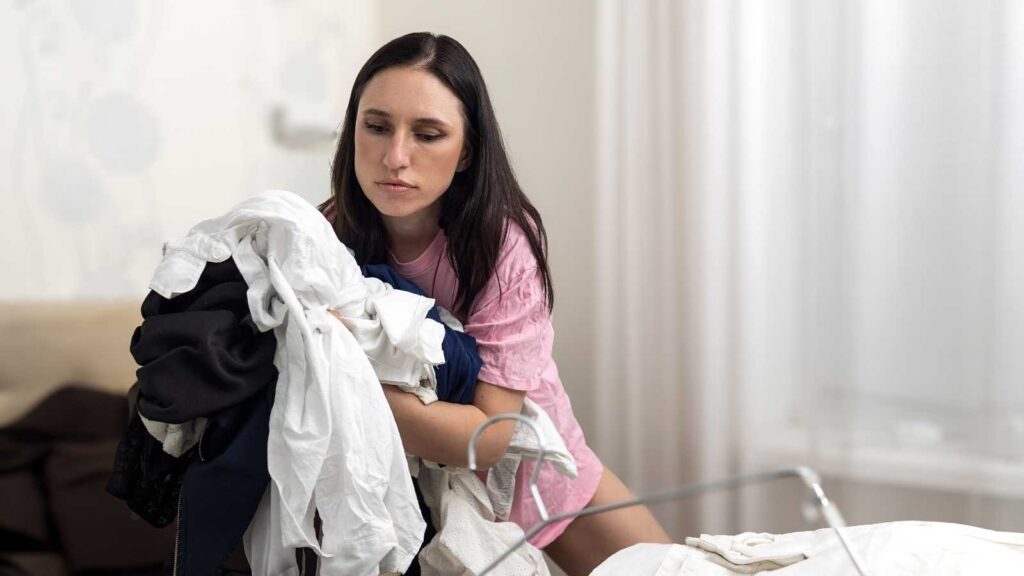
Most advice about finding your style again focuses on silhouettes and trends: which neckline to wear, which pants cut to try, and whether to avoid clingy fabrics. That can be useful, but it often overlooks the emotional weight of every outfit.
After your body changes, getting dressed can feel like a daily test. You are not only asking whether something looks good; you are also asking whether you can bear your reflection in it and whether other people will accept this version of you. That is why this process can feel so exhausting.
According to postpartum depression study findings, about 40% of postpartum women in one cross-sectional study reported depressive symptoms, and body dissatisfaction was significantly tied to those symptoms, especially around weight, the mid-torso, and the lower torso.
When getting dressed already feels emotionally loaded, those numbers help explain why style can start to feel like one more place where you are failing even when the deeper issue is that your body and identity are both in transition.
Style As A Tool, Not A Reward
After a major body change, it is tempting to treat style like a reward you get once you have fixed enough things. You tell yourself you will dress better once you lose weight, feel more toned, get more sleep or have more energy. Until then you settle for clothes that feel fine at best and defeating at worst.
The problem is that this turns style into something you have to earn instead of something that can support you right now. Style works better when you treat it as a tool rather than a prize. A good outfit can make your day easier; help you move through the world with less friction; and remind you that you are still allowed to care about your appearance even in a season of transition.
That might mean buying jeans that fit your current body instead of saving a too-tight pair for motivation. It might mean choosing shapes that support the body you have now rather than punishing yourself for the one you do not have anymore. When you stop treating “getting dressed” as a test you have to pass and start treating it as a way to make your real life more livable; your style becomes something that works for you instead of against you.
Relearning Your Body In Fabric

One of the most overlooked parts of finding your style again is relearning how your body feels in fabric . Before your body changed , you probably had an instinctive sense of what worked . You knew where a waistband should sit , how a dress should skim , or what sleeve length made you feel balanced . After a major shift , those instincts can disappear , and getting dressed can start to feel like a guessing game .
The Reddit comments reflected this , too , with people suggesting softer materials . These more forgiving shapes and outfits make sense for the physical reality of caring for a baby rather than dressing for an old routine . Research on postpartum body image also notes that episodes of loss of control over eating affect up to 36% of women during pregnancy and many women experience strong concerns about weight gain and body-shape changes during pregnancy and postpartum period .
When your relationship with your body and food is already under strain , experimenting with clothes can feel risky , but it is also one of the most practical ways to build a new sense of what feels good on your current shape . Small tests , like trying different rises , fabrics , and necklines , are among the gentlest ways to relearn your own body in motion .
Letting Style Grow With Your New Life

Finding your style again after your body changes is not a one-weekend reset . It is a slow process of letting your clothes catch up to your life . That life may now include postpartum recovery , different schedule , fatigue , new physical needs , or shape that holds weight differently than it used to . Your style has to meet you there or it will keep feeling false .
For American women , this is happening against backdrop where majority are technically in plus-size territory by industry standards but still face limited options and narrow expectations about how they are “supposed” to look . That tension can take toll on both personal style and mental health making it even more important treat wardrobe as living evolving thing instead museum past selves .
What it really takes is permission . Permission stop chasing old body through old outfits . Permission buy for body have now . Permission believe this version still worth dressing care creativity attention . The goal not return former self goal build style feels honest on body live today .
Disclaimer:This list solely author’s opinion based research publicly available information intended professional advice.
Like our content? Be sure follow us