
Is there such a thing as a perfect crime? That’s debatable, but there is such a thing as a perfect crime movie. The crime drama has been a fan favorite among cinephiles for decades. From noir mystery thrillers to high-concept sci-fi action dramas, the evolution of the genre has produced some flawless films, ten of which we’re about to discuss.
The crime films on this list are considered some of the greatest of all time; in fact, they’re so good, they’re presented without flaws. These films represent the history of the genre, from early classics that set the tone for our obsession with crime movies to recent mysteries that have reinvigorated it today. While there are certainly more flawless crime flicks out there, these ten are some of the best of the best.
‘Dial M for Murder’ (1954)
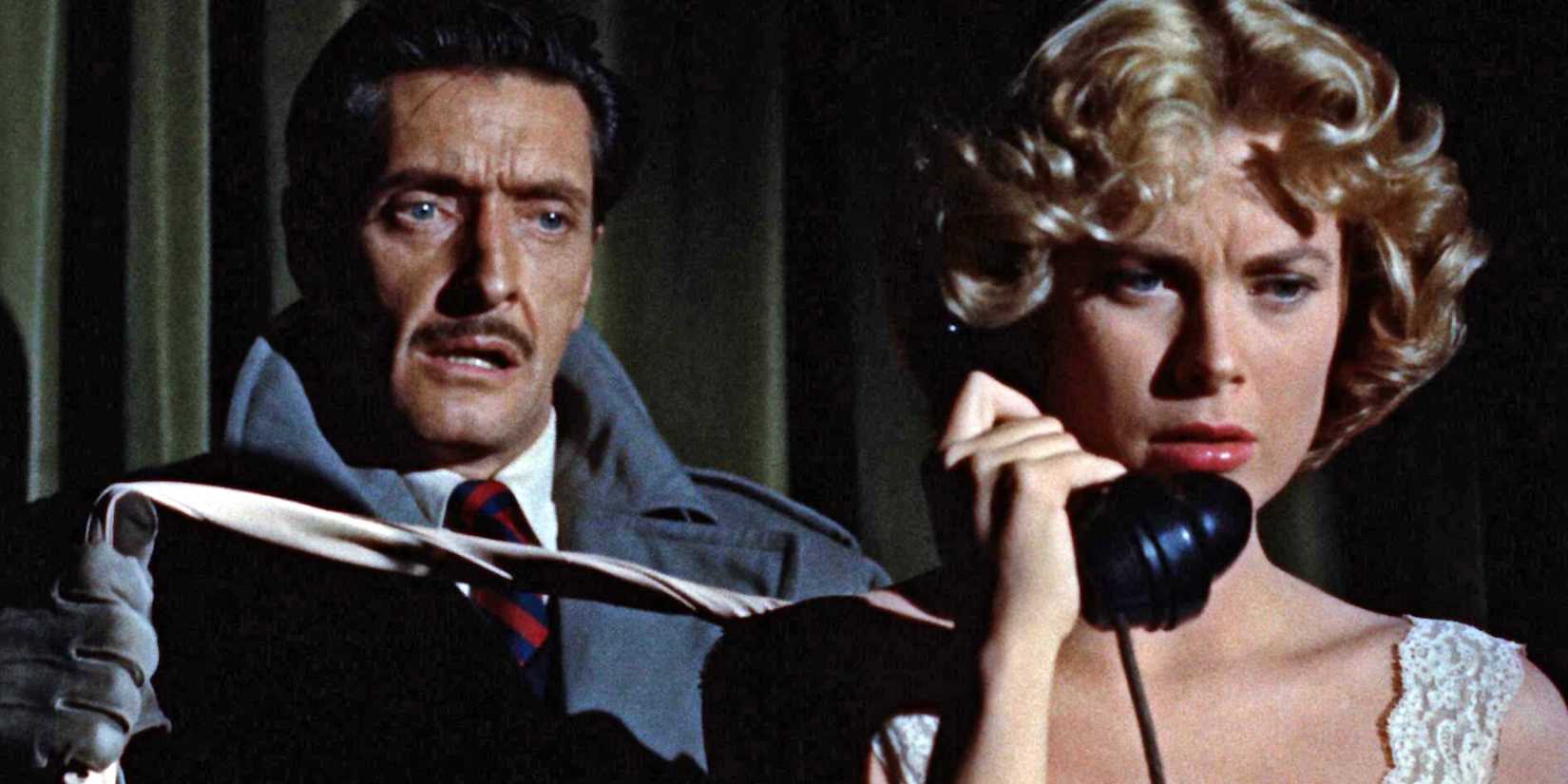 Image via Warner Bros.
No director has mastered suspense quite like Alfred Hitchcock. His resume is filled with iconic crime thrillers, so this list could be limited to his work. But in order to spread the wealth, we’re selecting one of the finest: Dial M for Murder. Based on the play by Frederick Knott, Dial M for Murder follows Tony Wendice (Ray Milland), a retired tennis player who plots the murder of his wealthy wife, Margot (Grace Kelly), to inherit her fortune upon discovering her affair with crime-fiction writer Mark Halliday (Robert Cummings). When his hired assassin, Charles Swann (Anthony Dawson), is killed by Margot in self-defense, Tony must improvise, framing her for the meticulously staged, premeditated murder.
A masterclass in suspense, Dial M for Murder subverts the traditional murder mystery to depict the perfect crime. Rather than present a standard whodunit, Hitchcock gives the audience the ultimate crime setup: they watch the sinister, calculated plot unfold, making it an inverted detective story. Through dynamic shots, including specific angles, tight framing, and a focus on tense actions, the visual storytelling is just as important as the action itself. Tony is presented as a smooth individual who evolves into the perfect anti-hero. You find his moral compass despicable, but you continue celebrating his brilliance, hoping he can get away with murder, in a manner of speaking.
‘Heat’ (1995)
 Image via Warner Bros. Pictures
Michael Mann gathered one of the finest ensembles of stars to play cops and robbers in the classic ’90s thriller, Heat. The film explores the psychological game of cat-and-mouse between an obsessive LAPD detective, Vincent Hanna (Al Pacino), and a ruthless, methodical career thief, Neil McCauley (Robert De Niro), while examining how their professional pursuits destroy their personal lives. Despite being on opposite sides of the law, Heat showcases that while they are masters at their crafts, their obsession runs deeper than they could possibly imagine, making them two sides of the same coin.
Known for the infamous diner scene, Heat is a brilliant character-driven crime drama that balances philosophical depth with revolutionary action. Mann’s piece is a mesmerizing dissertation on the perception of morality between two definitive roles: detectives are meant to be good and thieves are meant to be bad. Heat proves that the line might be more blurred than previously believed. McCaulley and Hanna have mutual respect for one another, realizing that they are simply mirror images doomed by their respective destinies. Heat works because Pacino and De Niro are titans of the screen, having a wealth of history in the crime genre already.
‘Inception’ (2010)
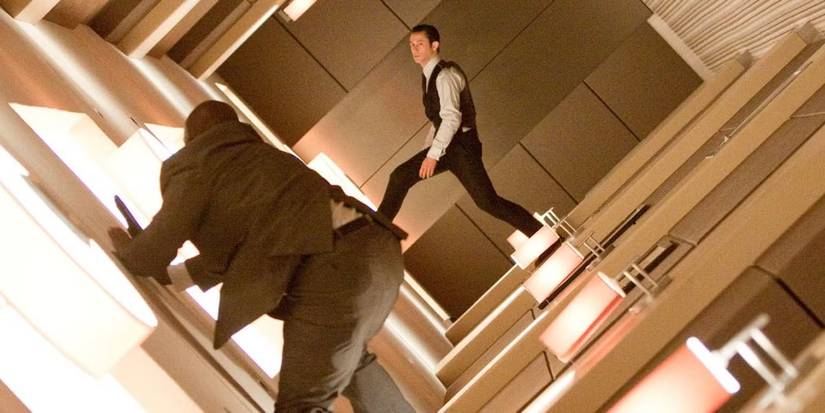 Image via Warner Bros. Pictures
Not every crime film has to be completely realistic—just ask Christopher Nolan. Inception is not only a brilliant heist thriller but it’s also science fiction perfection. It follows Dom Cobb (Leonardo DiCaprio), a professional thief who extracts corporate secrets by infiltrating his target’s dreams. Desperate to clear his name and reunite with his children, he is tasked with the impossible: planting an idea into CEO Robert Fischer’s (Cillian Murphy) subconscious.
Inception blurs the line between reality and imagination in a high-stakes thriller. Nolan prioritizes in-camera practical effects over CGI to give the dream sequences tangibility, immersing viewers in the heist itself. Between the rotating hallway fight scene and the explosive Parisian street scene, Nolan makes everything feel extraordinarily real. Cinephiles have believed thatthe film operates as a metaphor for the filmmaking process: Cobb is the director, Ariadne (Elliot Page) is the writer, Arthur (Joseph Gordon-Levitt) is the producer, Eames (Tom Hardy) is the actor, and Saito (Ken Watanabe) is the studio financier. If you follow that logic, it just makes Nolan a brighter visionary.
WhichSci-Fi HeroAre You Most Like?
Paul Atreides · Captain Kirk · Princess Leia · Ellen Ripley · Max Rockatansky
…
…
…
…
…
…
…
…
…
…
…
…
…

<a href="Here you can find the original article;