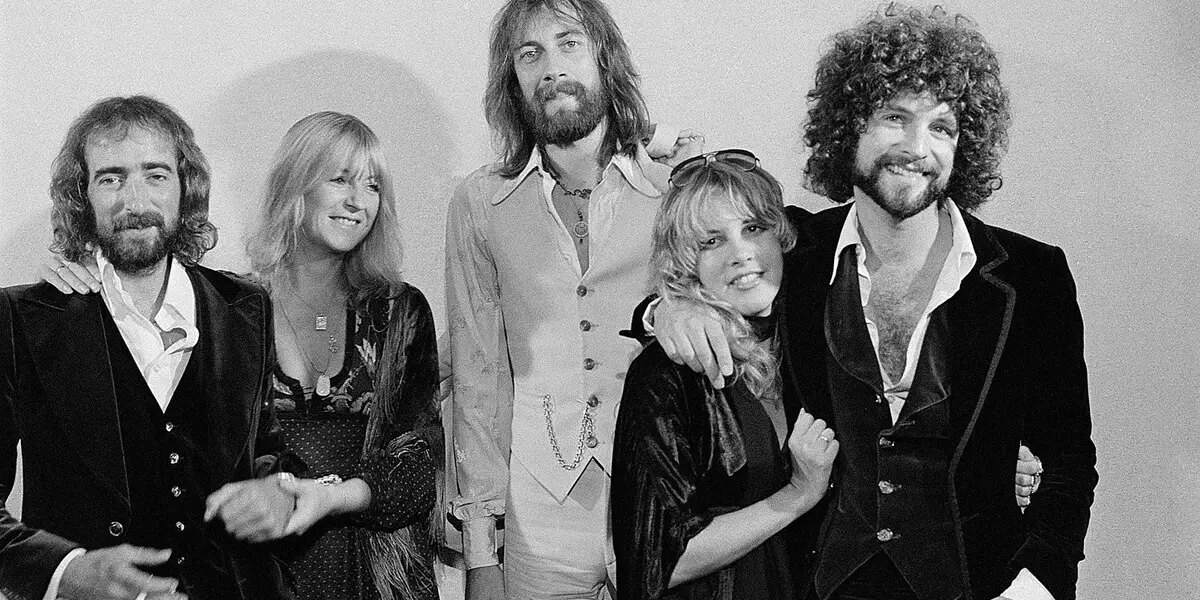
It could be argued that there really isn’t one Fleetwood Mac, but rather multiple versions of them. Allow us to explain.
In their earlier years, after forming in London in 1967, they were mainly a British blues band with singer and guitarist Peter Green at the helm. There was no denying this on albums like Fleetwood Mac (1968), Mr. Wonderful (1968) and Blues Jam in Chicago (1969).
Some members departed, but then came along new faces, most notably the package deal that was Stevie Nicks and Lindsey Buckingham on New Year’s Eve 1974. That addition indicated a shift taking place within Fleetwood Mac toward a more pop rock sound, a blending of British and American influences that took the band to the top of the charts. Same band, wildly different era.
It’s difficult then to narrow down the “Big 4” of Fleetwood Mac albums, given how much change they experienced as a group, but nevertheless, these are our selections.
1. Fleetwood Mac (1975)
So let’s say you’re already well-versed in Fleetwood Mac’s blues history and you want to focus on what people might call their classic era. That’s where their 1975 self-titled album comes into play.
Naturally, the most important fact about Fleetwood Mac is that it’s the first album to include Buckingham and Nicks, something that immediately and undeniably shaped the future of the band. Both Nicks and Buckingham wrote material for this album, material that would wind up some of their most famous: “Rhiannon,” “Landslide,” “World Turning” and more.
It took over a year, but the album eventually made it to No. 1 on the U.S. Billboard 200. “There were no limousines and Christine [McVie] slept on top of the amps in the back of the truck,” Nicks recalled to Uncut in 2003. “We just played everywhere and we sold that record. We kicked that album in the ass.”
What Fleetwood Mac did — both for the band members themselves and for their audience — was prove that they possessed a level of sophisticated songwriting ability that went far beyond their roots. (What kind of 20-something-year-old woman writes a lyric like “Time makes you bolder, even children get older?”) When put together, Mick Fleetwood, John McVie, Christine McVie, Buckingham, and Nicks were greater than the sum of their parts.
2. Rumours (1977)
Entire books have been written on the significance of 1977’s Rumours, and rightfully so. It went to No. 1 in both the U.S. and U.K., won Album of the Year at the 1978 Grammys, yielded four Top 10 singles — “Go Your Own Way,” “Dreams,” “Don’t Stop” and “You Make Loving Fun” — and with over 40 million copies sold, remains one of the best-selling albums of all time.
In many ways, Fleetwood Mac walked so that Rumours could run. The songwriting here got even more visceral, more robust, often fueled by the interpersonal relationships (both romantic and platonic) in the band. Lots of people write songs about what’s going on in their lives, but Rumours was like a window into the web of feelings happening within Fleetwood Mac. Speaking with the Library of Congress in 2025, Buckingham would describe it as “ultra-autobiographical.”
Rumours covers an enormous amount of emotional ground in less than 40 minutes: resentment, jealousy, regret, longing, hope and just about everything in between. As challenging as it was to make an album like that — the heavy presence of drugs didn’t help, by the way — it was entirely necessary.
“We saw it all as this destiny to fulfill. We were in a place where we had to – like it or not— get in touch with our better selves and rise above,” Buckingham explained. “I think that was much of the album’s appeal, how autobiographical it was. And that we made something significant in spite of all the troubles.”
READ MORE: Every Classic-Era Fleetwood Mac Song Ranked
3. Tusk (1979)
There really was no stopping the train that was Fleetwood Mac in the mid to late ’70s. Their streak continued with 1979’s Tusk, a double album that moved a bit further away from “regular” rock toward something more experimental, if you will.
It wouldn’t be inaccurate to say that Tusk is less cohesive than Rumours or Fleetwood Mac; those albums showed a band working together on the same painting, while Tusk‘s sound is more like separate artists in the same studio using different canvases. It was a commercial failure compared to Rumours, but Tusk‘s willingness to branch out from what brought them their biggest success demonstrated their artistic growth. Where <emRumours‘ highlighted the band’s interpersonal emotional plights, Tusk‘s creation resulted from five individuals immersing themselves into pure creativity.
Tusk‘s sound is, for lack of a better word, strange. Sparser arrangements, weirder production and less narrative than previous releases; however, it resulted in an album created by artists eager to express themselves rather than just aiming for commercial success.
“The first day, I set the studio up as usual,” engineer Ken Caillat would later say of the Tusk‘s sessions (viaPitchfork). “Then [Buckingham] said, ‘Turn every knob 180 degrees from where it is now and see what happens.’
4. Tango in the Night(1987)
The timeline jumps nearly a decade forward to 1987’s Tango in the Night, which marked the last album featuring this classic band lineup for many years. Here is where Buckingham’s eye for production truly blossomed — as noted byCashbox , it showcased a “progressive vision of pop craftsmanship.”
Synth-heavy and glittery, Tango in the Night is a far cry fromRumours – it doesn’t bite or rock ‘n’ roll quite like its predecessor — but that’s not necessarily negative feedback. Songs like “Everywhere” and “Little Lies” feel lush; they highlight Fleetwood Mac’s ability to adapt over time even if they may sound somewhat dated by today’s standards.
The super slick production found onTango in the Night isn’t for everyone; however, as far as integral Fleetwood Mac releases go,this is one of them—an album only possible through Fleetwood Mac’s unique artistry.
Fleetwood Mac Albums Ranked
The focus often falls on Lindsey Buckingham and Stevie Nicks when considering Fleetwood Mac albums; however,the band’s legacy extends well beyond them.
Gallery Credit: Nick DeRiso

Here you can find the original article; the photos and images used in our article also come from this source. We are not their authors; they have been used solely for informational purposes with proper attribution to their original source.