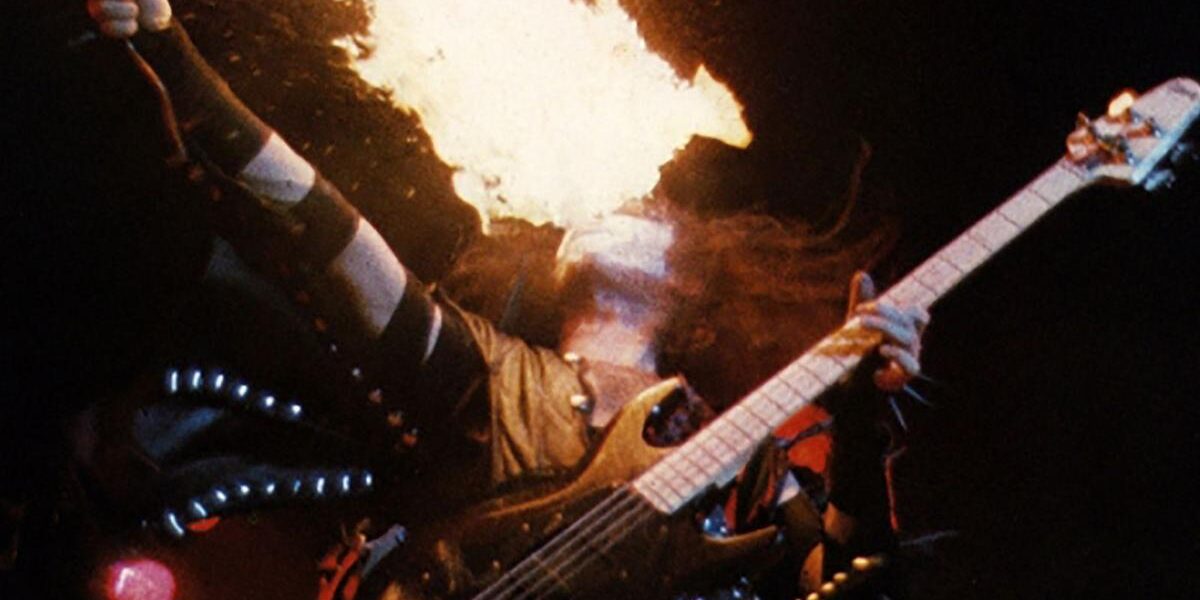

Key Moments in the Kiss Pyrotechnics Story
- Early Kiss concert: Gene Simmons said a fireball stunt during “100,000 Years” went wrong at an early Kiss show.
- Audience member: The fireball struck a fan in the face after it traveled straight instead of arcing overhead.
- After the incident: Simmons recalled that the injured fan praised the show and signed a waiver.
- Stunt discontinued: Kiss never performed that particular pyrotechnic effect again.
This account explains how Gene Simmons remembered a dangerous Kiss concert stunt, what happened to the fan, and why the band stopped using that effect.
Core fact: The fireball stunt struck an audience member and was not used again.
Gene Simmons recalled how a pyrotechnic stunt went wrong at an early Kiss concert, leading him to believe the band’s career was over before it had properly begun.
Seeking a larger-than-life concert experience, the band devised a visual effect in which a fireball would fly over the crowd and burst into flames above them during the song “100,000 Years.”
Simmons described the incident during a question-and-answer session at a recent Kiss Kruise event in Las Vegas. The effect did not go as planned.
Read More: Kiss Will Release Three Box Sets in 2027
“We had gunpowder wrapped up in flash paper that looks like a candy kiss, and I had a candelabra,” he said. “I don’t know why there was a candelabra on stage – we just thought it was cool.
“We thought, ‘Hey, that’s going to be great. There are going to be fireworks over their heads!’”
Simmons said he had been told to aim high when he threw the fireball. “There was a guy standing on his seat, and it didn’t go up – it just went straight,” he said.
“Like those ducks that you shoot in a carnival, you just see it hit his face: boom, exploded, and then he went down.
“We didn’t know what happened to him, and at the end of the show we’re thinking, ‘Oh my God, our career is over!’
What happened to the fan hit by Kiss’ pyrotechnic stunt?
Simmons said the fan was brought to the band’s dressing room while Kiss feared the incident had ended their career. He described the man’s eyelid as badly affected by the fireball.
Gene Simmons’s account says the fan met the band after the show and signed a waiver following the incident.
While Kiss were in the dressing room, their manager brought the injured fan in to see them. “I’m not exaggerating – the top of his eyelid or whatever was melted over like cheese,” Simmons said.
Rather than express anger, the fan praised the band, telling them, “Man, that was the greatest show I ever saw!” Simmons said the fan signed a legal waiver intended to prevent court action over the incident.
“Our career could have been over at the time,” Simmons reflected. “We never heard from him ever again.”
Simmons said Kiss fans never saw that particular pyrotechnic stunt again. The account describes a dangerous effect that the band did not repeat.
What does Gene Simmons’ story reveal about the Kiss fireball stunt?
Simmons’s recollection describes a fireball that was meant to burst above the audience but instead traveled straight and struck a fan. The story recounts the incident and the band’s decision not to use that effect again.
The Kiss fireball stunt struck an audience member and was not repeated.
Watch Gene Simmons Tell The Face-Melting Story (56:00)
How do Kiss solo albums rank from worst to best?
The gallery counts down solo albums released by various members of Kiss.
The gallery ranks solo albums released by various members of Kiss.
Gallery Credit: Matthew Wilkening
Questions about Gene Simmons’ Kiss pyrotechnics story
What song was playing during the fireball stunt? Simmons said the effect took place during “100,000 Years.”
Why did the fireball hit the fan? Simmons recalled that the fireball traveled straight instead of going up over the crowd.
What happened after the stunt went wrong? The band’s manager brought the fan to the dressing room, where Simmons said the fan praised the show and signed a waiver.
Did Kiss use the stunt again? Simmons said fans never saw that particular pyrotechnic effect again.