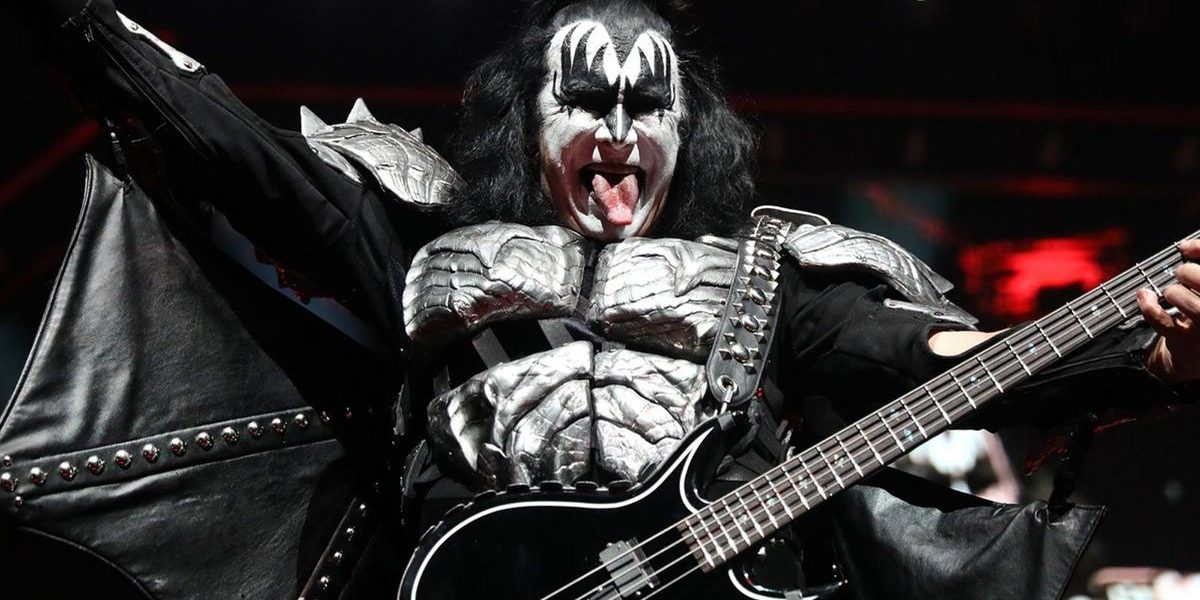
Gene Simmons is doubling down on the controversial comments he recently made about rap artists being inducted into the Rock and Roll Hall of Fame.
During an appearance on the Feb. 7 edition of the LegendsNLeaders podcast, the Kiss star complained about Iron Maiden – “[who] can sell out stadiums” – being passed over for induction in favor of hip-hop artists such as Grandmaster Flash.
“Ice Cube and I had a back and forth [about this}, Simmons continued. “He’s a bright guy and I respect what he’s done. It’s not my music. I don’t come from the ghetto. It doesn’t speak my language, and I said in print many times hip-hop does not belong in the rock and roll hall of fame nor does opera symphony orchestras.”
His comments – particularly the line about the ghetto, which seems to have since been edited from the original YouTube video at the 38:10 time mark – prompted a wave of criticism.
Simmons has found himself in this position before, most memorably with the comments he made after the 2016 death of Prince and again for his remarks about the 2025 death of his former bandmate Ace Frehley. In both of those cases he eventually apologized, but so far he’s holding firm this time around.
‘I stand by my words,” he told People magazine. “Let’s cut to the chase. The word ‘ghetto,’ it originated with Jews. It was borrowed by African-Americans in particular and respectfully, not in a bad way.”
He also firmly denied there were any racist undertones to his use of the word in this particular instance. “Ghetto is a Jewish term … How could you be [racist], when rock is Black music? It’s just a different Black music than hip-hop, which is also Black music. Rock ‘n’ roll owes everything to Black music, statement of fact, period. All the major forms of American music owe their roots to Black music.”
Kiss i Rock and Roll Hall of Fame: Nie jest to małżeństwo stworzone w niebie
Here’s another question: Why does Simmons even care about who is in and out of the Rock and Roll Hall of Fame? It’s not like they get along. “It’s become a joke,” he declared in 2012. “We’ve been thinking about it and the answer is simply, ‘We’ll just buy it and fire everybody.’
Kiss was inducted into the Rock Hall in 2019, but not without controversy. Only the four original members of the band were honored, snubbing (at the very least) Bruce Kulick and Eric Carr, who each performed on multiple platinum albums and successful tours during their decade-long runs in the band.
Compare that to, as one example, Metallica. Despite having played on just one studio album at the time of their 2009 induction, Robert Trujillo was honored alongside his bandmates.
While declaring that he only accepted the induction as a thank you to the band’s fans, Kiss co-founder Paul Stanley doesn’t look back on the induction fondly.
“They treated us like crap, even that night,” he explained soon after. “We had trouble – how about this? – getting into the arena. We had no idea about the rundown of the show or when we were getting on stage. It was disgraceful what they did, but we won.”
Żydowscy rockmani
Some of the biggest rock stars in history happen to be Jewish, either by birth or conversion.
Gallery Credit: Corey Irwin