Key Insights
- Enduring Genre: War literature has been a significant genre for thousands of years, reflecting the human condition.
- Deep Exploration: The greatest war novels delve into the psychological impact of conflict on individuals.
- Diverse Settings: These stories span various historical contexts, from World War I to the ideological battles of the 20th century.
- Human Experience: They reveal how war distorts time, identity, and moral choices, providing profound insights into humanity.
Whether set in the trenches of World War I, the firestorms of World War II, or the ideological battlegrounds of the 20th century, all of the books on this list explore how combat can distort time, fracture identity, and force impossible moral choices. They are the greatest war novels of all time, enduring depictions of humanity’s history with conflict,
10
‘Half of a Yellow Sun’ (2006) by Chimamanda Ngozi Adichie
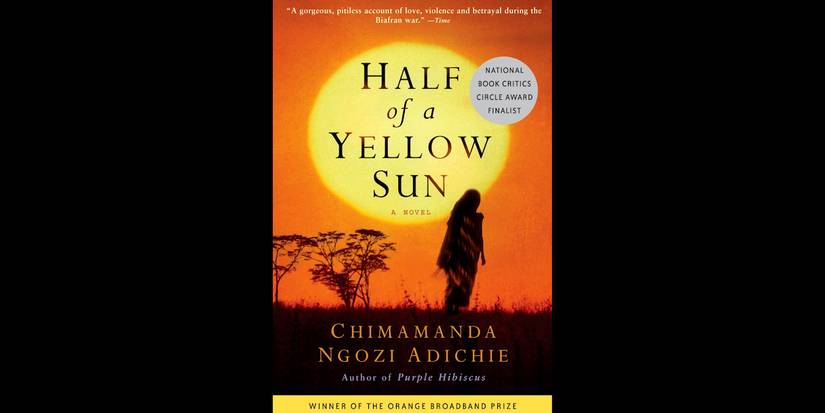
Image via 4th Estate
“World was silent when we died.” Set during the Nigerian Civil War of the late 1960s, Half of a Yellow Sun follows a group of interconnected characters: Ugwu, a houseboy turned soldier; Olanna and Kainene, twin sisters navigating love and ideology; and Richard, a British writer drawn into the conflict. Through their perspectives, the novel traces the rise and fall of Biafra, capturing both the hope of independence and the devastating reality that follows. The warmth of the early chapters contrasts brutally with the coming destruction.
The book is both expansive and intimate, shifting between personal relationships and the broader political landscape. Crucially, it draws every character in shades of gray, avoiding easy moralizing or simplistic interpretations. In the process, Half of a Yellow Sun humanizes a war often overlooked in global discourse, revealing how quickly ordinary lives can be consumed by forces beyond their control.
9
‘All the Light We Cannot See’ (2014) by Anthony Doerr
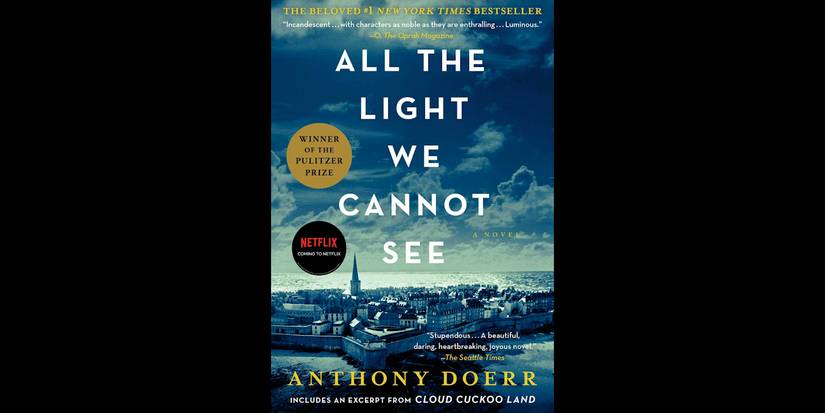
Image via Scribner
“Open your eyes and see what you can with them before they close forever.” This one was adapted into a mediocre TV series, but the book itself is great. All the Light We Cannot See intertwines two lives during World War II: Marie-Laure, a blind French girl fleeing Nazi-occupied Paris, and Werner, a German boy with a talent for engineering who is drawn into the machinery of the Reich. Their stories unfold in parallel, gradually converging in the coastal town of Saint-Malo.
The narrative structure moves back and forth in time, creating an interesting tension. The whole way through, the author’s prose is lyrical, almost luminous, often highlighting the beauty of the natural world even amid the deepest ugliness of the war. There’s a fundamental hopefulness to the story, insisting that curiosity and connection are always possible, no matter the circumstances.
8
‘The Things They Carried’ (1990) by Tim O’Brien
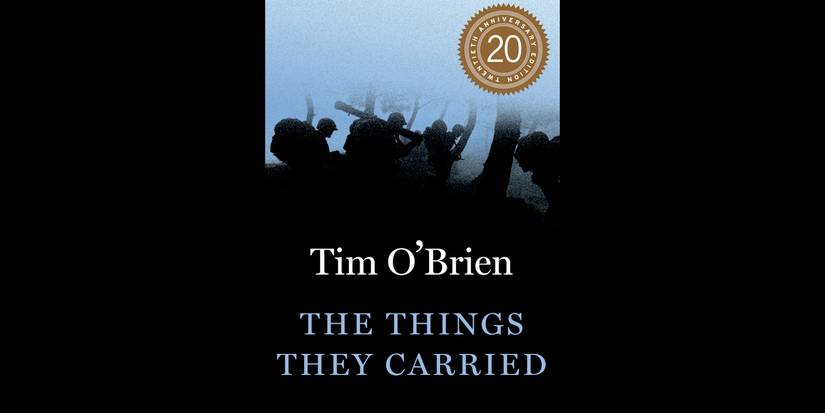
Image via Turtleback Books
“A true war story is never moral.” Blurring the line between fiction and memoir, The Things They Carried is a collection of linked stories about American soldiers during the Vietnam War. Each chapter explores different aspects of their experience, framed through the central idea of what these men carry, both physically and emotionally. These include letters, photographs, and weapons, but also grief, shame, and the weight of decisions that cannot be undone.
The narrative is fragmented, often contradictory and deliberately resists a single, coherent version of events. In the process, author Tim O’Brien plays with the idea of truth itself, suggesting that emotional authenticity can be more important than factual accuracy, especially when it comes to wars. This approach was acclaimed on release and went on to become deeply influential. The Things They Carried is now one of the most-studied works of Vietnam War literature.
7
‘Slaughterhouse-Five’ (1969) by Kurt Vonnegut

Image via  Dell Publishing
“So it goes.” This one is another semi-autobiographical work informed by the writer’s wartime experiences but filtered through a surreal sci-fi lens. Slaughterhouse-Five follows Billy Pilgrim, a soldier who becomes “unstuck in time,” drifting between moments of his life including his experiences as a prisoner of war during the bombing of Dresden. Eventually, he ends up on an alien planet in the far future. The incorporation of these speculative elements implies that war can’t be understood from a realist purely factual perspective.
Slaughterhouse-Five is a unique hybrid of subgenres, fusing sci-fi war story dark comedy and memoir into something that shouldn’t work but somehow does. The plot is colorful and engaging but also sharp and intelligent making a firm anti-war statement. For instance, repetition of “so it goes” after every death becomes both a coping mechanism and quiet indictment—a way to acknowledge loss while refusing to fully confront it.
6
‘Catch-22’ (1961) by Joseph Heller
Image via  Simon & Schuster
“Just because you’re paranoid doesn’t mean they aren’t after you.”
Catch-22 follows Captain John Yossarian a World War II bombardier desperately trying to maintain his sanity in a system that seems designed to destroy it. The novel’s central paradox (the titular “Catch-22”) ensures that any attempt to escape combat duty only proves one’s fitness to continue serving. The style reflects it: narrative nonlinear looping back on itself building sense absurdity that mirrors logic bureaucracy.
In this, Joseph Heller channels host influences from Kafka Absurdists slapstick Abbott Costello.
His characters exaggerated almost comical but their situations anything but.
The humor becomes way highlighting underlying horrorof system values procedure over human life.
This approach was provocative divisive earning high praise alongside fierce criticism even banishments.
5
‘War and Peace’ (1869) by Leo Tolstoy
<source media=(max-width:480px)
data-srcset=http:/exampleurl/wartime-peace-cover?
src=http:/exampleurl/wartime-peace-cover?
<source media=(max-width:767px)
data-srcset=http:/exampleurl/wartime-peace-cover?
src=http:/exampleurl/wartime-peace-cover?
<source media=(max-width:1023px)
data-srcset=http:/exampleurl/wartime-peace-cover?
src=http:/exampleurl/wartime-peace-cover?
Image via Vintage Classics’
“If everyone fought for their own convictions there would be no war.” Few novels attempt whatWar and Peace does even fewer succeed.
Spanning Napoleonic Wars lives several aristocratic Russian families book weaves together personal drama philosophical reflection large-scale historical events intosomething vast yet deeply human.
Here Tolstoy alternates between intimate scenes balls conversations quiet moments introspection sweeping battles.
Yet even its grandest sequences focus remains individual confusion soldiers randomness survival illusion control.
It’sa vision history chaotic convergence countless small decisions accidents human desires.
Themes aside,‘War and Peace’ simply epic terms scope length clocking well over 12000 pages.
Not for nothing frequently ranked among greatest classics world literature.
4
‘Regeneration (1991) by Pat Barker
<source media=(max-width:480px)
data-src set=https:/exampleurl/regeneration-pat-barker?
src=https:/exampleurl/regeneration-pat-barker?
<source media=(max-width:767px)
data-src set=https:/exampleurl/regeneration-pat-barker?
src=https:/exampleurl/regeneration-pat-barker?
<source media=(max-width:1023px)
data-src set=https:/exampleurl/regeneration-pat-barker?
src=https:/exampleurl/regeneration-pat-barker?
Image via Penguin Classics’
“I am trying cure you your nightmares.” Set during World War I‘Regeneration’‘ takes place largely within Craiglockhart War Hospital where soldiers suffering from what then called “shell shock treated.
There tale blends historical fact fiction introducing us several real-life figures such psychiatrist‘W.H.R Rivers’‘ poetsSiegfried Sassoon Wilfred Owen.
Through these characters Pat Barker<strong examines psychological toll war.
Rather than depicting battlefield directly Regeneration focuses aftermath<strong trauma carried those return.
It gets incredibly complex themes delving deep Great War effect identity masculinity even society itself.
The novel also draws heavily how psychology understood at time incorporating lot Freud's theories particular.
Two sequels followed broadening exploration.
3
‘For Whom Bell Tolls (194) by Ernest Hemingway
‘
<source media=(max-width:480px)
data-src set=https;/example url for whom bell tolls?
src=https;/example url for whom bell tolls?
<source media=(max-width:767px)
data-src set=https;/example url for whom bell tolls?
src=https;/example url for whom bell tolls?
<source media=(max-width:1023px)
data-src set=https;/example url for whom bell tolls?
src=https;/example url for whom bell tolls?
Image via The Hemingway Library Edition’
“The world fine place worth fighting for hate very much leave it.” Set during Spanish Civil War‘For Whom Bell Tolls’‘ follows Robert Jordan American volunteer tasked blowing up bridge behind enemy lines.
Over few days becomes embedded with group guerrilla fighters forming bonds complicate mission force him confront reality what about do.
His romantic connection Spanish woman makes things murkier still.
As always Hemingway’s prose direct almost understated beneath lies deep emotional current.‘For Whom Bell Tolls’‘ really meditation duty mortality.Captures tension between individual desire collective responsibility</strong showing how war forces people make choices define ultimately limit lives.
2
‘Life Fate (1959) by Vasili Grossman
‘
<source media=(max-width:480px)
data-src set=https;/ example url life fate?
src=https;/ example url life fate?
<source media=(max-width:767px)
data-src set=https;/ example url life fate?
src=https;/ example url life fate?
<source media=(max-width:1023px)
data-src set=https;/ example url life fate?
src=https;/ example url life fate?
Image via Vintage Classics’
“Truth not afraid investigation.” Often compared to‘War Peace’,‘Life Fate’‘ epic about World War II focusing Battle Stalingrad surrounding events.
Story follows wide array characters including soldiers scientists prisoners each navigating immense pressures war totalitarianism.
We move between battlefields prison camps domestic spaces creating comprehensive portrait life under extreme conditions.
The whole way through,‘Vasili Grossman’s perspective unflinching.’‘ confronts systems enable violence while never losing sight individuals caught within them.Most strikingly author draws clear parallels between Nazi Germany Stalinist Russia highlighting ways ideology dehumanize people regardless stated aims.
Not for nothing,’Life Fate now widely hailed classic<strong one towering works World War II writing.'.
1
‘All Quiet Western Front (1929) by Erich Maria Remarque
‘
<source media=(max-width:480px)
data-src set=https;/ example url all quiet western front ?
src=https;/ example url all quiet western front ?
<source media=(max-width:767px)
data-src set=https;/ example url all quiet western front ?
src=https;/ example url all quiet western front ?
<source media=(max-width:1023px)
data-src set=https;/ example url all quiet western front ?
src=https;/ example url all quiet western front ?
Image via Random House’
“We not youth any longer.” Most famous all anti-war novels,‘All Quiet Western Front’‘ told from perspective Paul Bäumer young German soldier World War I.
It follows him classmates they move from patriotic enthusiasm disillusionment idealism shattered realities trench warfare.
Focus soldiers day-to-day existence marked boredom fear sudden violence.
The process,‘book strips away any illusion glory presenting war purely process erosion identity hope very idea future.’ As author tells us “Death not adventure those who stand face face with it.”
Writing style reinforces this.‘Remarque’s prose stark unadorned capturing immediacy experiences almost century later still hits hard.’.