These days, when Hollywood seeks the next significant voice in horror, it appears they often turn to individuals with comedy backgrounds. This trend has led to the emergence of talents like Zach Cregger, Danny and Michael Phillippou, and Curry Barker. However, before them, a comedian achieved success beyond a niche YouTube audience — Comedy Central’s Key & Peele made Jordan Peele a household name. His horror films, particularly the one-two punch of Get Out and Us, further elevated his status by providing terrifying and eye-opening experiences. Peele’s third film, Nope, now available on Netflix, is just as compelling as its predecessors. However, it is also the film in his filmography that is the most misunderstood. The deeper messages behind Get Out and Us are relatively easy to decipher. In contrast, Nope presents a different challenge. It is not merely a straightforward alien invasion movie that audiences anticipated. Nope has much to convey; you just need to pay attention.
Jordan Peele’s ‘Nope’ Is Built on Past Alien Invasion Tropes
The trailer for Nope or its synopsis may appear simple and straightforward. On the surface, it resembles another alien invasion movie. This is not inherently negative, as the genre has been popular for good reason. Audiences enjoy thrilling narratives where creatures from other worlds descend upon Earth, forcing humanity to unite and fight back.
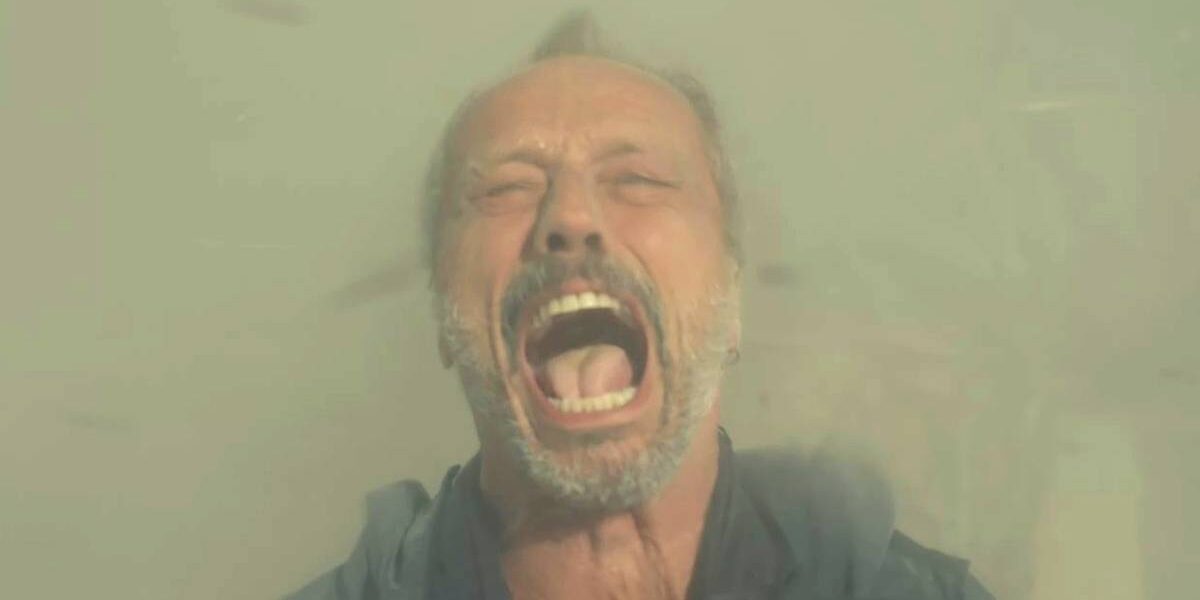
This is how Nope begins. In the small community of Agua Dulce, California, Otis Haywood Sr. (Keith David) manages the Haywood Hollywood Horse Ranch, which trains horses for movies and commercials. Early in the film, Otis meets his demise due to a coin falling from the sky, setting the stage for an unusual UFO descending from the clouds. Otis’ children, OJ (Daniel Kaluuya) and Emerald (Keke Palmer), are determined to capture footage of the craft, leading to a significant twist. What they observe is not a spaceship; rather, the circular shape is the alien itself. The subsequent events, along with an seemingly odd subplot involving theme park operator Jupe (Steven Yeun) and a killer chimp named Gordy (Terry Notary), establish the overarching theme of Nope.
‘Nope’s Gordy Subplot Is About Animal Exploitation
Like much horror, Nope delves into themes of grief and trauma. When combined with parallels to Jaws, as the Haywoods and cinematographer Antlers Holst (Michael Wincott) collaborate to capture the creature on camera, it creates a truly terrifying movie. However, Peele uses his platform to address challenging themes. Nope partly critiques how Hollywood exploits animals for our entertainment.
15 Good Movies With Bad Titles, Ranked
What’s in a name?
The most evident example is Gordy the chimpanzee, who is used for comedic effect on the sitcom Gordy’s Home until he snaps and goes on a rampage. Even after his death, Gordy continues to be exploited as entertainment in a <em>Saturday Night Live</em> skit. There are also victims affected by Gordy’s actions, such as Mary Jo Elliott (Haley Babula), the actress whose face was disfigured. Peele provides a brief glimpse of her scarred features through the camera’s lens. Meanwhile, Jupe, who was once a child actor on the series, still capitalizes on this tragedy for personal gain. He eagerly recounts his experiences to strangers he just met. Gordy’s final moments evoke awe, fear, and fascination. This subplot is terrifying yet perplexing if one does not grasp its themes. What connection does Gordy have with this colossal alien?
Animals Are Used for Entertainment in ‘Nope’
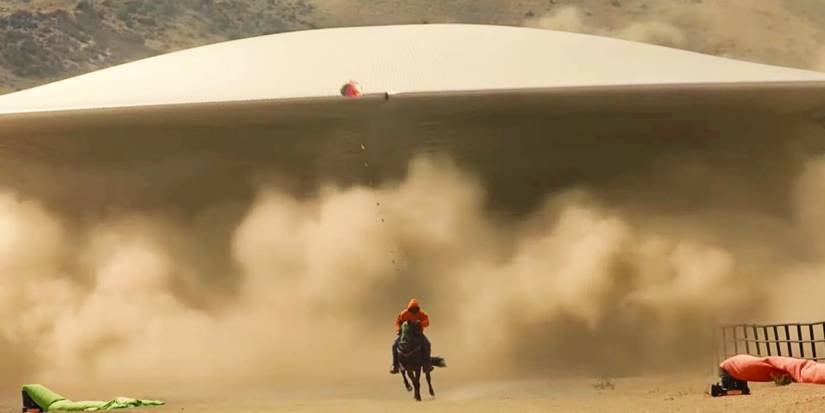
Gordy serves as an overt example of animal exploitation, but he is not alone in this narrative. OJ and Emerald Haywood continue their father’s horse training business by renting out their horses for various film productions. OJ is more reserved and less enthusiastic about being involved in the family business while Emerald embraces her role enthusiastically and uses her charm to secure roles for their horse Lucky, where he will be exploited for audience entertainment.
The alien in Nope, referred to as Jean Jacket, is similarly treated as a prop exploited for Jupe’s show. To him, it is not a genuine animal but merely a source of profit and entertainment that can be controlled, much like the chimp he grew up with. Having experienced Gordy’s exploitation firsthand, Jupe does not fear Jean Jacket. This ultimately leads to his demise along with those hoping to witness this spectacle of entertainment. The only true way to survive Jean Jacket, as OJ learns, is to avoid looking at it. If there is no audience for this gruesome entertainment, it cannot be sustained — this encapsulates what Nope fundamentally addresses — exploitation in its various forms.
Nope offers an exhilarating experience upon first viewing. OJ and Emerald are captivating characters within a well-crafted narrative that becomes increasingly unpredictable with each twist. Just when you think you’ve figured it out, Nope shifts again, making it ideal for repeated viewings. Jordan Peele’s direction and his actors’ performances remain sharp and impactful as the true message unfolds clearly over time. Nope challenges viewers to confront its uncomfortable themes rather than presenting itself as an easily digestible monster movie.
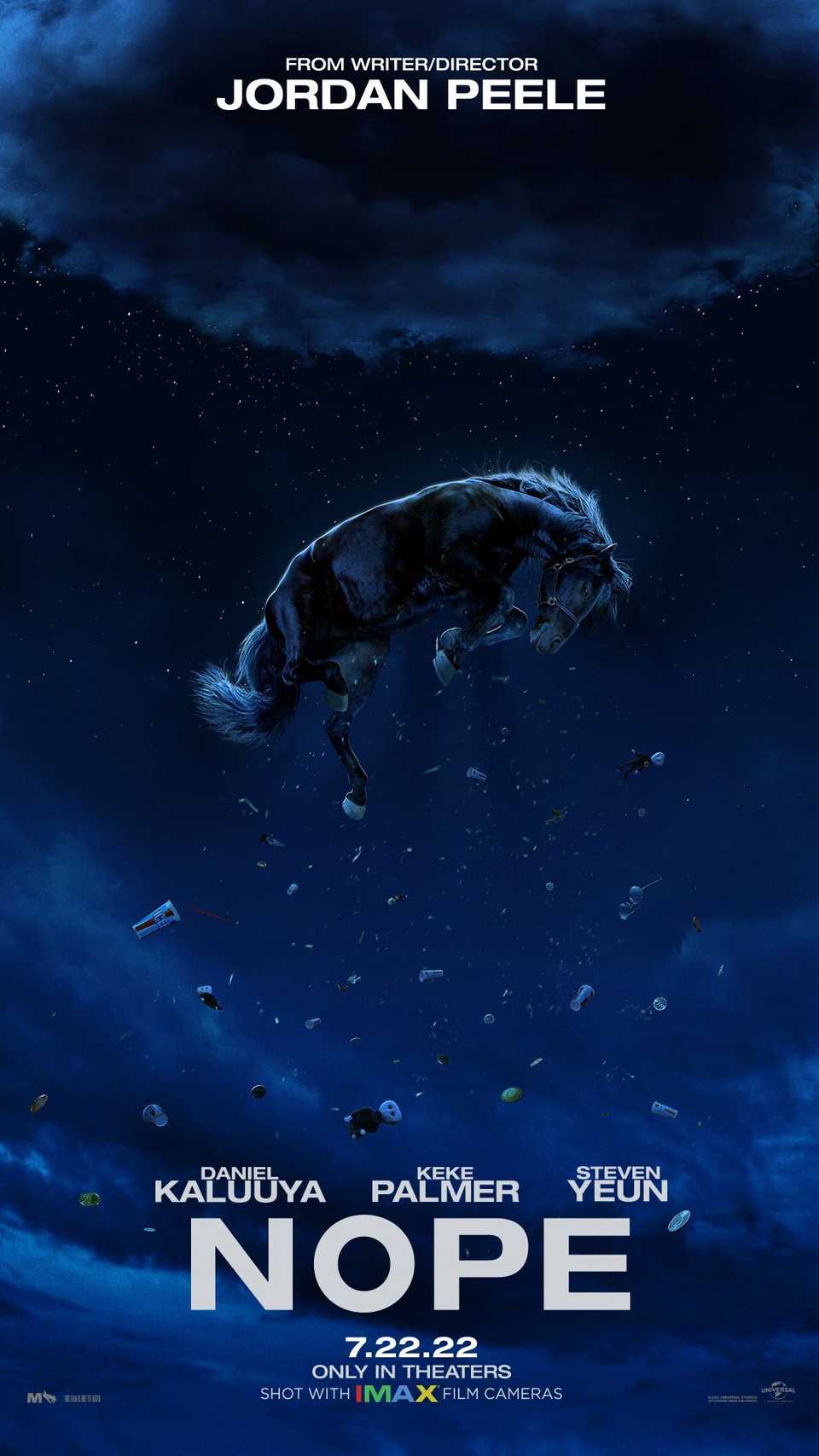
Nope
- Release Date
-
July 22, 2022
- Runtime
-
131 minutes