Key Takeaways
- Collaboration Insights: Mouse On Mars had a unique experience working with Lee “Scratch” Perry, who exceeded expectations during studio sessions.
- Musical Legacy: The duo completed an album with Perry, titled Spatial, No Problem, seven years after its recording.
- Community Involvement: The recording sessions attracted many musicians, creating a vibrant and collaborative atmosphere.
- Innovative Techniques: The project involved the use of AI to enhance Perry’s voice, reflecting his openness to new technologies.
When Mouse On Mars were preparing to welcome Lee “Scratch” Perry to their Berlin studio in December of 2019, the occasion came with parameters.
“We were told like, ‘Three hours a day is the maximum Lee can do,’” says the duo’s Jan St. Werner, “and take care of his health, and no drugs or alcohol.”
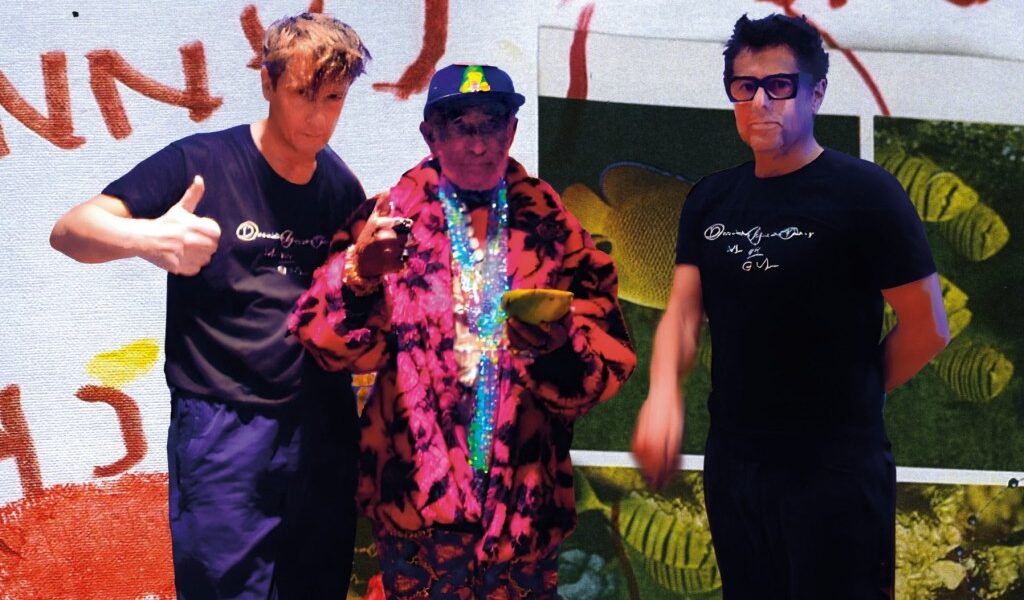
The longstanding electronic act — St. Werner and Andi Toma — were prepared to abide by these outlines. Perry, then 83 years old, was not. “[The first day] he worked from 10 in the morning until two or three in the morning, and he was super happy about it,” says St. Werner. “Then he was like, ‘When do we start tomorrow,’ and we were like, ‘Whenever you want?’ and he said to pick him up at 10 a.m. He was just constantly going… The vibe after was like, ‘What did you do to Lee? He’s so happy,’ and we did exactly the opposite of what we were supposed to do.”
Mouse On Mars ultimately spent four long and happy days in the studio with the dub icon, who lived up to his reputation as a far-out musical genius. “I thought he was going to live for another 10 or 20 years, because he was very energetic, super concentrated and he didn’t seem to be old,” says St. Werner. But as it will for all of us, death caught up with Perry on August 29, 2021, when the artist died at the age of 85 in his native Jamaica.
The men of Mouse on Mars, who’ve released 12 studio albums since 1994, had a lot of unfinished Perry music on their hands, and — having thought they’d get together with him again to complete it — weren’t sure what to do. “We didn’t know if we wanted to finish without him,” says St. Werner. “When Lee passed away, we were like, ‘We’re so glad we got to meet him and share this beautiful time.’ That already was a huge gift, so we were kind of like, ‘Maybe that’s it.”
But it would not go down like that, with the duo ultimately finishing and releasing the music seven years after it was recorded as Spatial, No Problem. Heady, stylish and deep the eight-track collaborative album from Mouse On Mars and Lee “Scratch” Perry was released last week on Domino Records.
The most forceful cajoling to make it happen came from Mouse on Mars’ friend and frequent collaborator Louis Chude-Sokei, who over the years kept on them about finishing the project. “Louis was like, ‘Guys, you cannot sit on this material,’ recalls St. Werner. “He heard a few of the sketches and kept bothering us, like ‘You have to get your s–t together.”
While the duo reasonably had reservations about finishing the work without input from Perry, Chude-Sokei emphasized they had an obligation and responsibility to Lee, to his fans and to music history at large. “He was like ‘It’s not just about you or whoever thinks they have claims on this [music] or ideas about what this session was supposed to be,’” says St. Werner. “This just has to happen because it’s precious.”
He was right. As Chude-Sokei’s liner notes to the album explain, after Perry’s passing, “a deluge of recordings appeared claiming to be the ‘last’ or ‘final’ project of the Jamaican icon. These came from musicians and producers from an incredible range of genres — trip hop, dub, ambient, rock, reggae. This range represented Perry’s hunger for new sounds and ideas. However, his last official album project took him to Berlin, Germany where he landed on the doorstop of electronic pioneers Mouse on Mars. He was looking for something that remained unclear. The only thing clear was that it should not be reggae.”
As such, Spatial, No Problem. is the final transmission of a career that began in the 1960s in Jamaica, where Lee first released music with The Upsetters before working under his own name over the years while collaborating with artists including Bob Marley and King Tubby while pioneering sampling practices and creating the dub genre—innovations that would inform electronic music’s sound and trajectory. The way Mouse On Mars came to see it represented a special chapter of Lee’s art not only because it came so close to the end but for how it functions as a confluence of styles, ideas and musical traditions.
“The material is great and Lee loved the stuff he had recorded but besides that this is a particular chapter in his history and in what you could call Black Technopoetics or Afrofuturism,” says St. Werner. “It was also a moment where we were not just Mouse On Mars; we were also representing a maybe more Western or Central European idea of improvised or free music. At the same time it was this whole history of electro-acoustic and electronic music and all this stuff coming together so casually.”
Lee’s legendary status preceded him before he arrived in Berlin; when Mouse On Mars friends and associates heard Lee would be around (arriving from Switzerland where he lived with his wife Mireille), people just started showing up. “It was like a community because people were telling friends who were telling friends like ‘Lee Scratch Perry is coming if you want to come by and maybe contribute something.’”
As such the workspace got so cramped with singers harpists brass players drummers and other hopeful contributors that at one point St. Werner was in the recording booth looking out through the glass wondering who everyone was. This freewheeling vibe suited the freewheeling Perry who seemed to be enjoying this looseness and possibilities therein.
“Lee was basically walking through rooms in a kind of dream state,” St. Werner continues; “sometimes sitting there listening sometimes firing up the situation sometimes just moving along asking for a pen or writing something down putting a sticker somewhere very intentionally.” Despite the untraditional nature of the sessions the resulting recordings were rich interesting ready. Says St. Werner: “Everything was first take as if the planets were working for us.”
Amalgamating dub free jazz electronic elements and a melting pot of other sounds Spatial, No Problem. is quite appropriately a sort of retrospective of Lee’s life. Each song tells a story with “Fire Dali” referencing the famous 1979 destruction of his Black Ark Studios in Kingston Jamaica (with Lee often claiming that he burned down the space himself due to negative energy). The crackling of fire is heard at the end of the track before it fades into nature sounds; in the eight-minute closer “State of Emergency,” Lee recounts stories of Bob Marley and other deceased reggae artists over sounds from a New Orleans-style funeral jazz band.
“It was like he was talking about his past,” says Toma. “Then right at the end he also said ‘This is the end,’ and he was laughing.”
Having performed their sacred obligation to finish the project; the pair now think of it as St. Werner says “a meeting of timelines histories genres styles and technologies. It’s tape digital electronic acoustic instruments recording techniques and then AI.” To wit when they asked Perry’s widow if it would be okay to use AI to render elements of his voice she told them St. Werner recalls “‘Go for it; Lee would have loved this he was super into that kind of stuff.’”
As an explorer of music art philosophy and nature itself Perry’s work across mediums melded sounds styles bending things transforming them into something different while infusing logic both scientific and spiritual; Spatial, No Problem. manages to capture that wizardry presenting Perry’s work while functioning as both retrospective and celebration of his life.
“This record kind of predicts what could it be if all knowledge you have at hand could just merge fertilize create something again?” says St. Werner; “It’s like you’re on a spaceship all nations try finding other forms of life engaging dialog; it’s like time capsule traveling backwards as much as forwards; I think that’s what that record is.”