Key Insights: The plus size fashion market exceeds $282 billion globally and continues to grow. Indie designers who pioneered this space face numerous challenges, including rising production costs due to tariffs, reduced organic reach from algorithm changes, and competition from fast fashion. Supporting these brands is crucial for their survival.
I have been covering plus size fashion since 2008. Seventeen years of watching this industry expand, contract, overpromise, underdeliver, and every so often, get something genuinely right. This moment is not one of those times. This is me, as someone who has had a front-row seat to this industry for nearly two decades, telling you plainly: the plus size indie brands who built this community need us right now in a way they have not before. Here is why.
The global plus size clothing market is currently valued at over $282 billion, and is projected to reach $426 billion by 2030, according to Research and Markets. North America alone commands nearly 44 percent of that market share. The average American woman wears a size 16 to 18. Between 68 and 72 percent of U.S. women wear plus sizes, depending on which study you cite.
And the industry’s own data tells the story. Roughly one eighth of the clothing available at U.S. department stores comes in plus sizes. Meanwhile, plus size shoppers spend nearly $300 less annually on clothing than their non-plus size counterparts, a spending gap that reflects limited options far more than limited appetite.
We have always been the majority that the industry treats like a niche. That gap, between who we are and how we are served, is the entire reason plus size indie brands exist. They did not wait for permission from the industry. They built what we needed themselves.
How We Got Here: The Rise, the Rush, and the Retreat
To understand why this moment is so precarious, you need the full timeline.
In the early years of this platform… circa 2008 to 2013, plus size fashion was a desert. A handful of mall brands, a sea of poorly constructed basics, and almost no design ambition directed at our bodies. The indie designers who were working in this space were doing it out of necessity and community love, largely invisible to the mainstream industry.
Around 2015, something shifted. The body positivity movement had been building critical mass online; plus size bloggers and influencers were demonstrating real purchasing power; and the industry finally started paying attention.
What followed was a rush. Mainstream brands began extending their size ranges. International labels, particularly from Australia, the UK, and Europe recognized the underserved U.S. plus size market and moved in aggressively.
Brands like City Chic, Simply Be, Addition Elle, navabi, and others built significant U.S. customer bases almost entirely through digital direct-to-consumer channels offering trend-forward options that American retailers were still sleeping on.
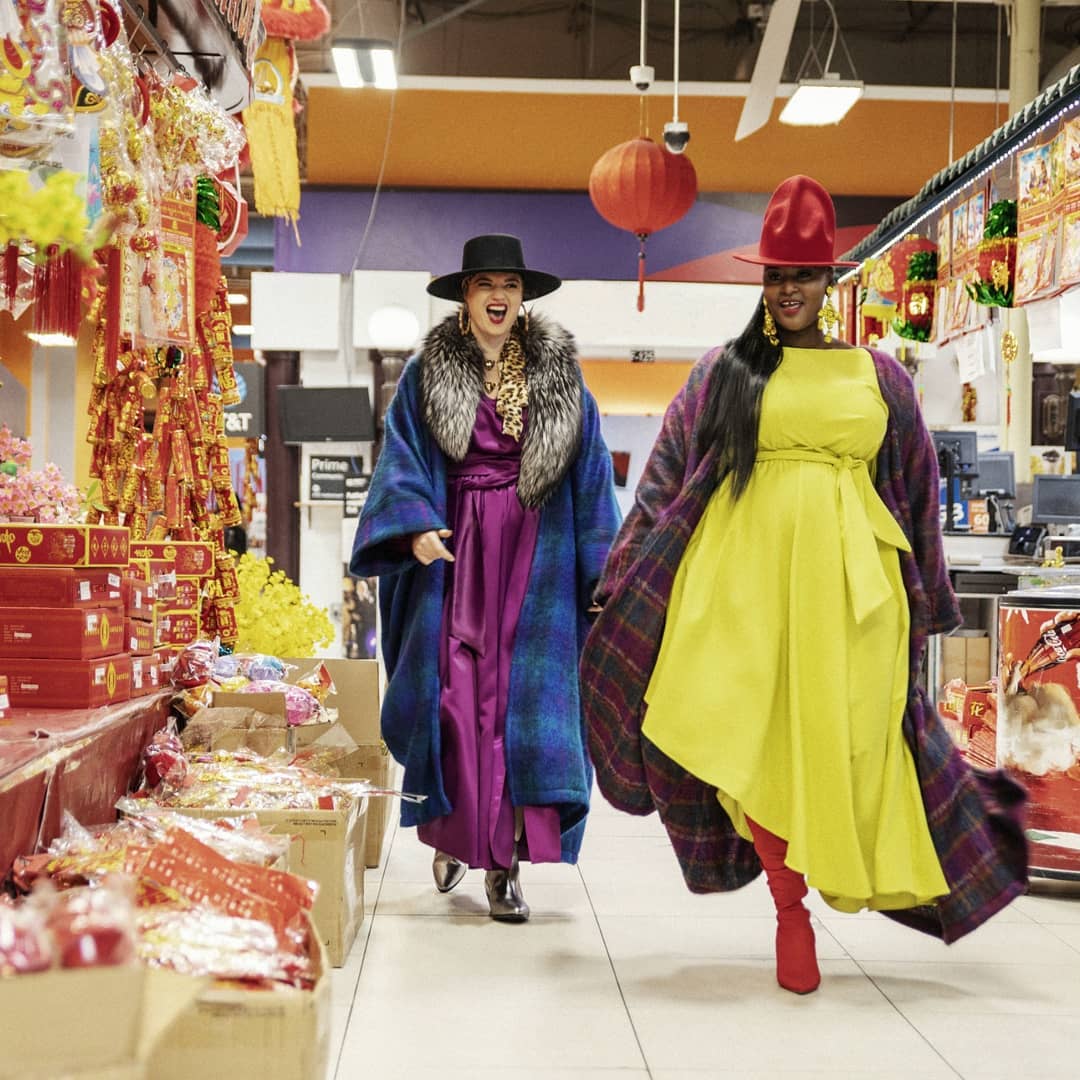
Simultaneously a new wave of plus size indie brands launched founded primarily by Black and Brown women who had been wearing and loving fashion their entire lives and were simply done waiting for the industry to serve them. These designers were scrappy intentional community-connected and building something real. They did not have Eloquii’s marketing budget or Lane Bryant’s floor space. They had Instagram they had talent and they had a community hungry for what they were making.
By 2019 and into 2020 mainstream fashion was loudly celebrating size inclusivity. Vogue was running think pieces major retailers were expanding size ranges runways were getting (slightly) more diverse. The narrative had fully flipped from “plus size is niche” to “plus size is the growth market.”
And then quietly they started retreating.
Post-pandemic inventory overcorrection gave brands a reason to pull back size ranges. The GLP-1 conversation gave them another. The same industry that rushed toward plus size when it felt profitable is now hedging its bets shrinking its commitments and moving extended sizes to online-only channels out of sight easier to eventually eliminate.
The plus size indie brands are still here. They did not chase the trend in and they are not chasing it out. But right now multiple forces are colliding in a way that threatens to dismantle what they have built.
Force One: Tariffs Are Hitting Small Designers Hardest
Nearly 98 percent of clothing sold in the United States is imported. When tariff rates on apparel imports climb into the 15 to 30 percent range as they have under the current trade policies the entire industry absorbs higher costs but it does not absorb them equally.
Plus size indie brands are oftentimes running a small label sourcing premium fabric working with small-batch manufacturers often handling fulfillment personally has none of that cushion. As Fashionista reported from New York Fashion Week in September 2025 small independent and emerging fashion labels are hit especially hard when suddenly faced with rising shipping fees and higher prices for materials that cannot be sourced locally.
“We’re not a billion-dollar company that can absorb this,” one small brand founder Dacey Trotta founder of Rumored told Glossy earlier this year. “Our manufacturers are partners we’ve worked with them for years. These are people we trust not just transactions.”
That is the indie brand reality. Every tariff increase is a personal financial decision: raise prices and risk losing customers who are already budget-stretched or absorb the cost and operate at a loss. Neither is sustainable.
Force Two: The Algorithm Has Made Indie Brands Invisible
The plus size community found its indie brands on social media. That is not nostalgia that is a documented fact. Before algorithmic timelines a small brand could post a beautiful look and reach thousands of new potential customers organically that era is over.
The growth of plus size fashion and the growth of social media were never separate stories they were the same story. Facebook Instagram and Twitter gave plus size indie brands what traditional retail never would direct access to a community that was hungry loyal and ready to spend no buyer approval no floor space negotiation just a beautiful image and a link in bio that democratization of discovery built an entire ecosystem of brands designers and creators who would not exist otherwise.
The algorithm did not just change the rules of that ecosystem it dismantled the infrastructure that made it possible and left the smallest most community-dependent brands holding the largest share of the damage.
Organic reach is down by 18 percent year over year engagement per post has dropped 28 percent, and 87 percent of businesses report significant reach decline over the past 18 months, meaning fewer than 1 in 10 followers typically see a brand’s post on any given day.
Brands like Torrid and Lane Bryant bridge that gap with paid advertising budgets and marketing teams A plus-size indie brand bridges it with nothing because there is nothing to bridge it with no ad spend no agency just a post going out into a feed engineered to suppress it while her production costs continue to climb and customers who would have found her organically never do.
This is not a complaint about social media It is a structural problem with direct consequences for the community’s access to the brands who serve us best If we cannot find them we cannot support them And if we cannot support them they cannot survive.
Force Three: GLP-1 Drugs Are Giving Brands an Excuse to Contract
This is the one that needs to be named directly And before we get into the numbers let us be honest about something we have been here before.
Fen phen in the 1990s. The South Beach Diet Weight Watchers at its peak Every decade brings a new weight loss moment that the fashion industry quietly uses as permission to shrink its plus-size commitments; to pause pull back wait-and-see if our bodies stop being inconvenient The script does not change Only the pharmaceutical branding does.
GLP -1 adoption in the U.S grew from 11 percent of adults in November 2024 to 16 percent by November 2025 according to Bernstein’s annual shopper survey JPMorgan estimates that by 2030 more than 30 million Americans will be on GLP -1 treatment.
The fashion industry has noticed some of what it is doing with that information is deeply frustratingly familiar:using it as a reason to serve plus-size women less.

Torrid reported a 14.3 percent year-over-year sales decline in Q4 of fiscal2025 and announced plans to close30 additional stores in early2026 . The mainstream retail conversation has already started framing GLP -1 drugs as justification for rethinking plus-size inventory quietly pulling back on size ranges migrating extended sizes online only hedging on any further expansion It is the same retreat New packaging.
The math is NOT mathing Mallorie Dunn founder of SmartGlamour adjunct faculty at Fashion Institute of Technology said it plainly in a CNBC interview retailers should not be making less plus-size clothing because of GLP -1 drugs; The community is already grossly underserved even a significant reduction in plus-size consumer base would still leave industry nowhere near overproduction.
The demand has always outpaced supply A pharmaceutical trend does not change that math It just gives brands cover to pretend it does.
Plus-size indie brands are not running that calculation They did not build for us when it was convenient they are not abandoning us now that it is not That is the difference between a brand that designed for this community and a brand that tolerated us during growth cycle One of those is still here The other is closing stores.
Force Four: Fast Fashion Is Stealing Their Work
This one is personal And the plus-size community needs to know it is happening.
This one is not metaphor It is not hyperbole It is business model.
An indie plus-size designer spends months developing an original piece concept fit development fabric sourcing small-batch production She posts it Within days sometimes hours A Shein or Temu listing appears with nearly identical garment at fraction price No credit No compensation No call Just copy.
This is not accidental Court filings against Shein allege company uses sophisticated algorithms AI algorithmically scour social media for trending designs then sends them directly factories for production with no human review no intellectual property compliance function.