What to Know About Aftermath
- Story problems define the review: the film’s scenes, dialogue and characters fail to form a coherent narrative.
- AI visuals look inconsistent, but fixing them would not resolve the film’s problems with storytelling, pacing or direction.
- Cast criticism includes Linnea Quigley’s objections to AI use and Beverly Randolph’s request to have her likeness removed.
- Independent horror can use AI as a production tool, but the review argues that Aftermath offers little reason for fans to pay to watch it.


Return of the Living Dead: Aftermath is the subject of this review, which explains why its storytelling and AI-generated visuals fail to work. The review’s purpose is to assess the film and help readers decide whether it merits their time and money.
I considered reviewing Return of the Living Dead: Aftermath, but that would mean treating it like a movie. I’d love to call it the worst film I’ve ever seen, but I’m not sure it deserves the distinction. While artificial intelligence is getting most of the attention, the bigger problem is that nobody bothered making an actual movie.
We’ve covered this topic before. Chris Bumbray sat through AI-generated Hell Grind at Cannes, and Gods Don’t Give Gifts is headed for theaters. Danny Boyle and Eli Roth used generative AI in Ink and Ice Cream Man, and Ben Affleck used it on Animals. I had fun with Ice Cream Man, though plenty of people hated it. AI wasn’t a dealbreaker for me. There was still a movie there.
Why Does Return of the Living Dead: Aftermath Go Wrong?
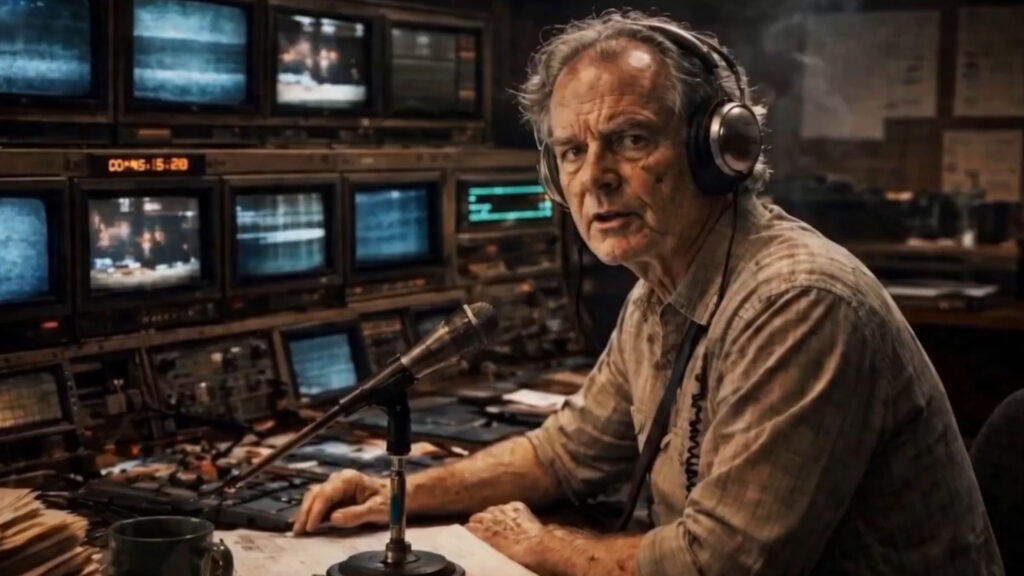
Return of the Living Dead: Aftermath fails most fundamentally at telling a story. Richard Driscoll’s continuation of Dan O’Bannon’s classic combines news reports, military footage and zombie attacks without making clear who the audience is following or why the events matter.
Aftermath does not connect its scenes into a coherent narrative.
Who are we following? Half the time, I couldn’t tell who was talking or why I should care. The dialogue sounds like placeholder text somebody forgot to replace. I consider the original one of the best zombie films of all time. You cared about those people. Here, scenes happen, people talk and nothing connects.
The AI visuals are atrocious. Faces shift, movements look unnatural and the sound rarely matches the image. The AXON bodycam footage looks like it’s from an indie PS3 game. But imagine someone fixing every visual glitch tomorrow. Would that suddenly give Aftermath compelling characters, good dialogue, effective pacing or a director’s vision? Of course not.
What Did the Original Cast Say About the Production?
Original stars Linnea Quigley and Beverly Randolph have publicly criticized the finished movie. Randolph explained that she filmed material for a very different project and was horrified by the extensive AI manipulation of the final product; she also requested that her likeness be removed.
Quigley says she specifically warned against using AI before distancing herself from the production.
The original cast members whose involvement was meant to lend the film credibility have publicly objected to the production.
Opinion: The cast’s criticism makes the production choices more troubling, especially because Randolph says the finished film differed greatly from the project she agreed to film.
How Can AI Affect Independent Horror Filmmaking?
AI can help independent filmmakers improve an effect or accomplish something their budget would not otherwise allow. The review’s concern is that AI should support a film rather than replace the work of building a story and making a production.
Independent horror often involves filmmakers working with small budgets, calling in favors, taking on multiple roles and spending time on practical effects.
Look, I can see how AI might help independent filmmakers who barely have enough money to shoot their movies. Use it to improve an effect, or accomplish something your budget won’t allow. Fine. What bothers me is that independent horror filmmakers break themselves trying to get movies made. They work with tiny budgets, call in favors, wear multiple hats, spend countless hours on practical effects and sometimes sacrifice years just to put something on screen. Their movies aren’t always good, but I can respect the effort.
Then Aftermath comes along, slaps a beloved franchise name on a pile of garbage and expects fans to pay for the privilege.
Screw that noise. You can find the whole thing on YouTube, if you are even curious. Don’t give this guy your hard-earned money.
Why Does the Review Distinguish Aftermath From Other Bad Horror?
The review argues that Aftermath is not entertaining in the way some badly made horror films can be. It criticizes the film’s story, generated footage and apparent tease of another sequel.
Aftermath is criticized for lacking both narrative coherence and the entertaining flaws that can make other bad horror films enjoyable.
I’ve watched terrible movies I’d happily revisit. Give me terrible acting, ridiculous practical effects and a story that makes no sense. At least I can have fun with that. Aftermath doesn’t even give me that satisfaction. Yet it has the audacity to tease another sequel. If branding and generated footage are enough, what exactly are we calling filmmaking anymore?
The zombies in The Return of the Living Dead famously crave brains. After watching this abomination, I’m convinced there wasn’t a single one involved in making it.
What Do Viewers Want to Know About Aftermath?
Return of the Living Dead: Aftermath is an AI-heavy continuation criticized here for its story and production. These answers summarize the review’s main points.
The review’s central claim is that Aftermath’s storytelling problems matter more than its AI-generated imagery.
Is Aftermath an AI-generated movie? The review describes the film as using extensive AI-generated imagery and AI manipulation.
What is the main criticism of Aftermath? The review says the film lacks a coherent story, compelling characters and effective dialogue.
Did the original cast criticize Aftermath? Yes. Linnea Quigley and Beverly Randolph publicly criticized the finished film, and Randolph requested that her likeness be removed.
Can viewers find Aftermath on YouTube? The review says the film can be found on YouTube.
Does the review oppose all AI use in independent horror? No. It says AI may help filmmakers improve effects or achieve something their budget would not allow.
The post Return of the Living Dead: Aftermath Is More Than an AI Disaster appeared first on JoBlo.