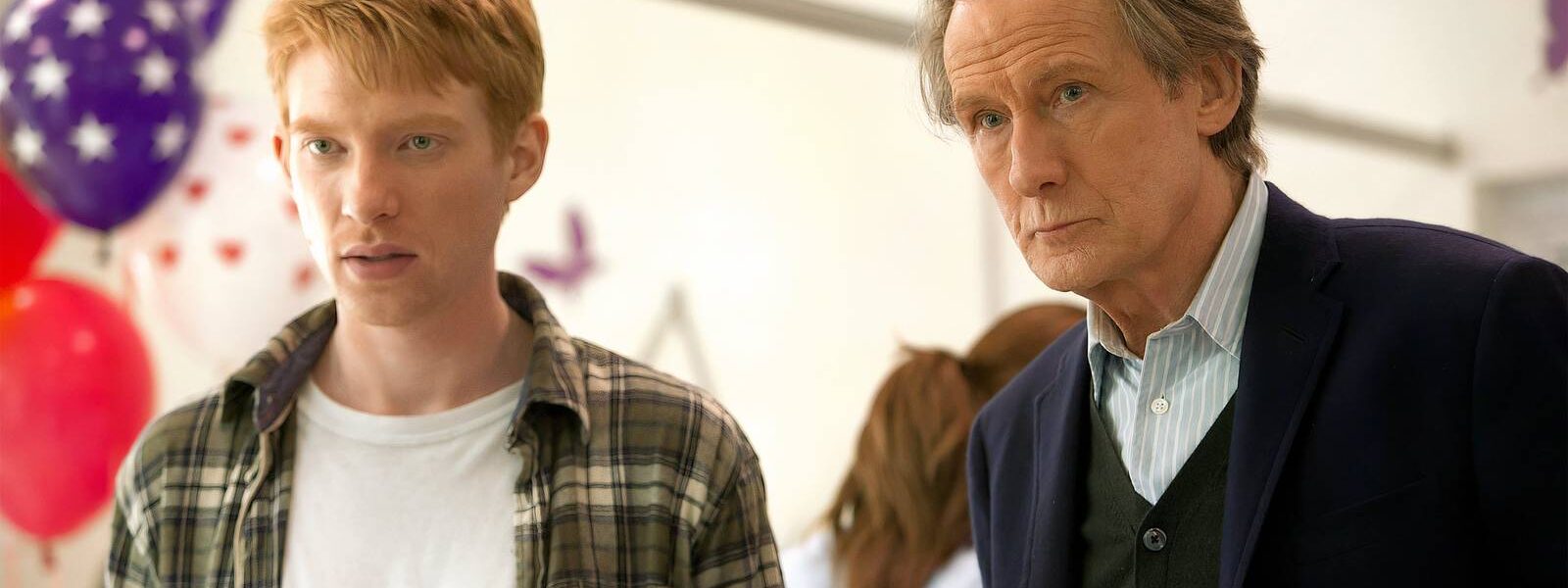
Romantic comedies often get reduced to their own surface mechanics, possibly more than any other genre. Aspects such as the meet-cute, the misunderstanding, the airport dash, the happy ending and countless others. But ironically, some of the most enduring entries in this category are not about falling in love at all. They are more about loss, the grief that comes with it, and losing a relationship, or a version of yourself and using romance as the vehicle to process it rather than the core driving force of the narrative. With two rom-com classics in About Time and Sleepless in Seattle hitting Netflix on September 1st, now feels like the right moment to revisit why films like these two have held up so much longer than their genre peers.
This distinction is crucial because it explains why certain entries have stuck around decades after their initial release while flashier, more conventional entries have faded into the abyss. Grief gives these movies a certain level of emotional stakes that the genre’s traditionally comedic structuring doesn’t allow for. It forces their characters to change in ways a simple obstacle-to-love plot rarely demands. The comedy still exists just in a more clever and sporadic manner. But look at all seven of these films, and it is actually rarely ever romance driving the plot itself.
But what truly separates this list from other well-known romantic comedies is how little their central romances actually resolve the grief driving them. A death, a divorce, an illness, a memory slipping away. None of these things gets neatly tied up by the arrival of a new partner, no matter how satisfying the ending feels. Instead, love becomes the space where these characters finally let themselves feel what they had been avoiding. That’s the true difference the movies encompassing this list have, that has allowed space for them to stay in the cultural zeitgeist long after many of their peers have mostly been forgotten. Revisiting them with that lens changes almost everything about how their famous scenes actually land.
7
‘Notting Hill’ (1999)
 Image via Universal Pictures
On the surface, Notting Hill is a straightforward fish-out-of-water romance between an ordinary bookshop owner and a famous movie star. But, the arc of bookkeeper William Thacker, played by Hugh Grant, only makes sense once you notice how much he is feeling loss and how it has already been defining the majority of his life. He is divorced, his travel bookshop is barely staying afloat, and his social circle is a small, tightly bonded group of friends that were built as a replacement family for a life that didn’t go as planned. His hesitation throughout the film is not really about Anna’s (Julia Roberts) fame or even the tabloid chaos that seems to follow her everywhere. It is really about a man who has already been disappointed before, and has arranged his entire existence — his eccentric roommate Spike and his low-stakes bookshop routine — around never being disappointed again.
That undercut of a quiet resignation that he holds is what gives the film’s more famous, sweeping moments their weight. William’s growth in the movie is really about relearning how to risk loss again after already absorbing one. All culminating in his decision to chase Anna down instead of letting his old ways get the best of him. The romantic optimism the project exudes, crystallized in that final Notting Hill garden scene, resonates so acutely because it is fighting against a real lived-in grief. Divorce rarely gets this much screen time in a genre built on first loves.
6
‘About Time’ (2013)
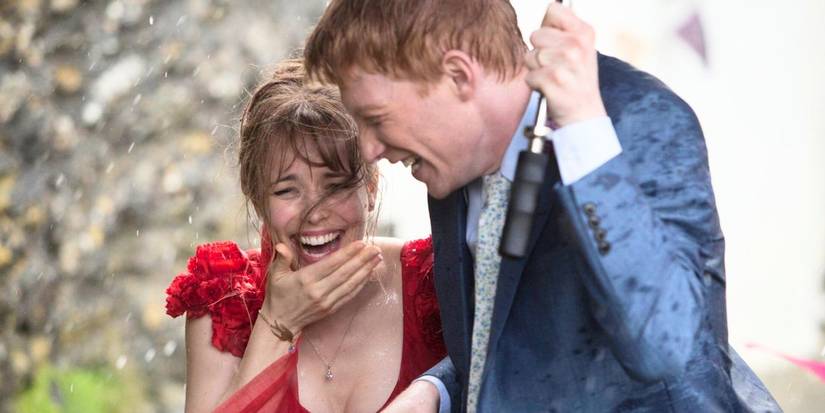 Image via Universal Pictures
About Time wears its premise as a time-travel romance, but the film’s actual emotional center has pretty much nothing to do with its central couple. Tim’s relationship with his father, played by Bill Nighy, and the years he spends trying to appreciate ordinary moments before being able to revisit them is the story the film is actually telling. The romance with Mary (Rachel McAdams) functions as the backdrop against which Tim learns to value the time he has, useful and sweet in its own right but never the film’s true stakes. It is that devastating gut punch when Tim learns he can no longer travel back once his father has died. That his journey has really been about a version of mortality and fatherhood rather than pure romantic love.
By the end, About Time has largely abandoned its central love story, choosing to sit with the grief behind the narrative directly. It shows Tim reliving ordinary days with his father, playing ping pong, walking on the beach one last time before accepting he cannot anymore. Richard Curtis structures the entirety of the back half of the film around that farewell and not any romantic climax one might have expected. It’s a clear example of a movie using that romcom structure as a Trojan Horse of sorts to build a narrative focused on loss. Audiences walk in expecting a love story and walk out having cried over a father-son relationship instead.
5
‘The Big Sick’ (2017)
The Big Sick complicates its own marriage structure by removing its female lead from most of the film’s runtime. It places Emily in a medically induced coma and forces Kumail to fall in love with her parents, Terry and Beth instead while confronting the very real possibility that she might die. This movie never lets the audience forget how close its central relationship comes to ending before it ever truly begins. It turns what could have been a standard culture-clash romance about Kumail’s Pakistani family and arranged marriage expectations into something closer to a meditation on anticipatory grief. Since it’s based on the real courtship of Kumail Nanjiani and Emily V. Gordon, the movie treats the medical crisis with an attention and care most romcoms never attempt.
It is a tension that is constantly overshadowed by the threat of loss, which gives the movie’s comedic beats real meaning and weight beyond traditional genre-infused bits. And Kumail’s growing bond with Emily’s parents becomes its own kind of grief-adjacent relationship, constructed out of shared fear and long hospital waiting-room silences. It makes the eventual resolution to the story feel earned and lived-in rather than just another simple, sweet romantic comedy entry. By the time Emily wakes up, The Big Sick has already done the emotional heavy lifting of grieving a relationship that technically never ended. It makes its actual reunion almost secondary to everything before it, cleverly side-stepping a massive genre stereotype.
4
‘Marley &‘ Me’ (2008)
…
…
…
…
…
…
…
…
…
…
…
…
…
‘Marley &‘ Me’ is really a film about marriage even though its true emotional architecture is built around a dog’s lifespan…
‘The Big Sick‘ complicates its own marriage structure by removing its female lead from most of …
…
…
…
…
…
…
…
3
‘Silver Linings Playbook’ (2012)
…
‘The Big Sick‘ complicates its own marriage structure by removing its female lead from most …
…
…
…
…
…
2
‘Eternal Sunshine of …’(2004)
…
‘Eternal Sunshine‘ takes …
…
…
…
…
…
1
‘Sleepless in Seattle’ (1993)
…
‘Sleepless in Seattle’ spends most …
…
…
…
…
…
…