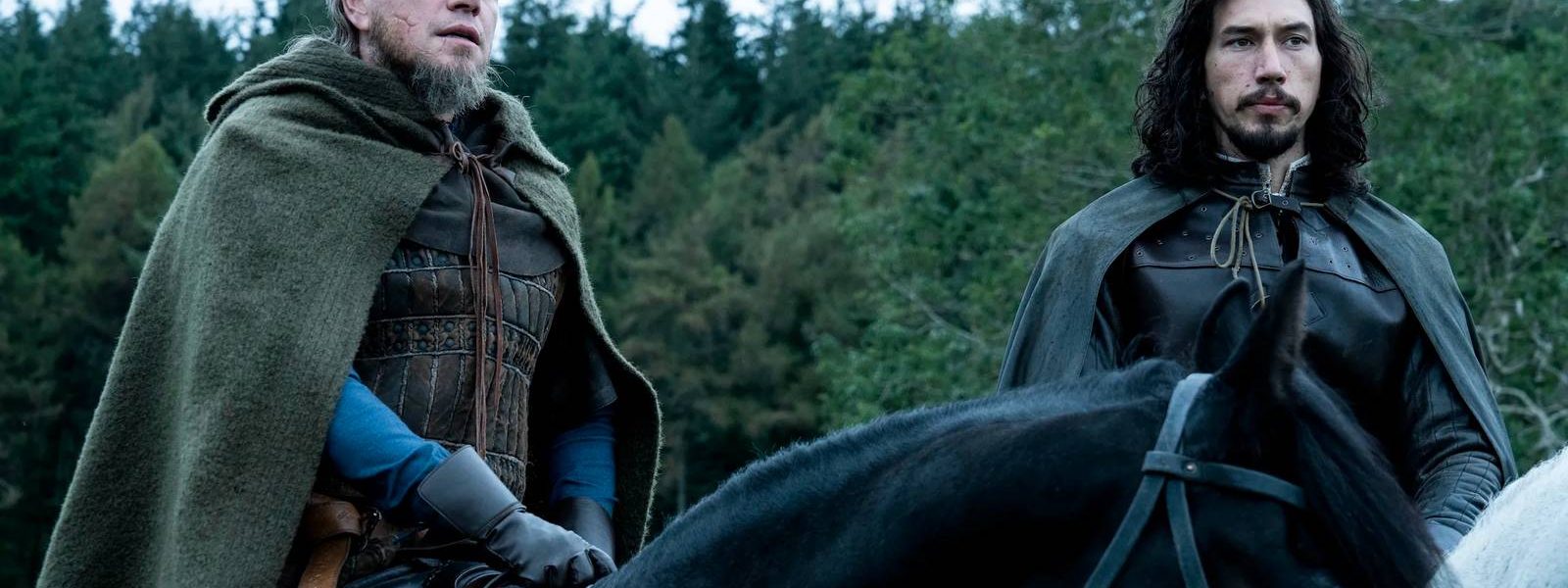
While Ridley Scott has mastered the historical epic with films like Gladiator, Kingdom of Heaven, and Napoleon, his 2021 medieval film The Last Duel didn’t resonate with audiences. Even with an all-star cast reuniting Matt Damon and Ben Affleck (who co-wrote the screenplay with Nicole Holofcener), the movie was a box office bomb, making just over $30 million globally according to Box Office Mojo. Not only was this a poor reception to an excellent film (one of Scott’s best in recent years), it was a harsh rejection of the movie’s grim subject matter as well as the movie to which it bears the strongest resemblance: Akira Kurosawa’s Rashomon.
Rashomon is perhaps the most retold story in all of cinema. It’s most famous for its unusual structure in which an event is presented multiple times with multiple differences — some subtle and some obvious — and everybody remembers things differently. Most characters present self-serving versions of the story, in which they come off as heroic, or at least not foolish. Like Rashomon, Scott’s film covers a legal case in a centuries-old society, examining timeless questions of honor, ethics, justice, and cruelty. Even more significantly, it deals with a sexual assault, and the ramifications of taking allegations seriously versus diminishing the victim. But there is a key difference from how Rashomon treats the nature of its story.
‘Rashomon’ and ‘The Last Duel’ Are Essentially Courtroom Drama Period Pieces
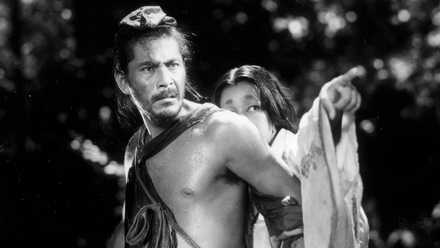
Both Rashomon and The Last Duel are adapted from previous works. In the former case, Akira Kurosawa drew from a decades-old short story, “In A Grove” by Ryūnosuke Akutagawa, while Ridley Scott’s film came out of Eric Jager’s nonfiction book of the same name. Rashomon’s adaptability to a variety of scenarios comes out of its almost pure, mythic narrative sensibility. There are just a handful of sets and as few characters, and they are defined by their roles and class. Where Kurosawa often found incredible kinetic movement in feudal epics like Seven Samurai, Rashomon is remarkably restrained. The movie’s central crime is abstracted through multiple narrative layers: unrelated characters are discussing the court case, and the court scenes flash back to the central characters’ recollections. There are a samurai (Masayuki Mori), his wife (Machiko Kyō), and the bandit (Kurosawa’s muse Toshiro Mifune), who assaulted her and possibly killed her husband.
10 Movies To Watch if You Love Akira Kurosawa’s ‘Rashomon’
For those looking for other cinematic tales of justice.
The Last Duel, true to its nonfiction roots, requires more specificity. Dealing with the real story of a famous medieval French trial by combat in 1386, it follows Jean de Carrouges (Damon), his wife Marguerite (Jodie Comer), and the striving squire Jacques le Gris (Adam Driver) who is accused of raping her. As opposed to Scott’s previous and future historical epics like 1492: Conquest of Paradise or his 2010 misbegotten take on Robin Hood, the movie practically blitzes past its big battle sequences in favor of digging into the characters’ psychological ache, leaning more into the grim ambiguity of what Kurosawa’s movie offered than giving viewers clear heroes and villains. As well, it lets its characters reflect on their versions of events, breaking down Jean’s insecurity and how Jacques’ entry into the aristocracy calcified his morality. But it differs in a key point from Rashomon: it offers something like objective truth.
‘Rashomon’ Emphasized Ambiguity, but ‘The Last Duel’ Sought Truth
Films that have followed in the Rashomon tradition tend to keep the multiple retellings but usually nix the movie’s moving coda, where even the objective voice of reason turns out to be concealing aspects of the truth for personal gain. The movie’s emphasis on patriarchal violence, playing out in the mundane light of day, only adds to its ambivalent storytelling. Even The Last Duel, one of the few Rashomon descendants to follow in its darkness, gives viewers one of Ridley Scott’s best gritty action scenes with its titular trial by combat. (Kurosawa offers no such catharsis.) By the end of Rashomon, all of the lies have been revealed and even the samurai’s wife, a victim, has failed to disclose her role in her husband’s death; after her rape, she effectively encouraged a trial by combat of her own.
The most fascinating thing about The Last Duel is its portrayal of characters’ different recollections. Each of its three chapters is called “The Truth According to (x character),” setting up who is recalling what. For Jacques le Gris, the assault on Marguerite is essentially an awkward seduction, complete with chasing around the bedroom and giggles, while she remembers it traumatically. In the court system of medieval France, the accusation against him is really an accusation against Jean for allowing this to happen. Even in a situation where the woman is the victim, the movie suggests, her status as the property of a nobleman means her own truth goes untold. But we see it, and in one of the movie’s great touches, the chapter dealing with her own story is simply called “The Truth.” While Kurosawa kept it just out of reach, The Last Duel‘s relationship with the truth gives the movie its stark power and social commentary.