

Whether it’s Friday the 13th Part 3, Freddy’s Dead: The Final Nightmare, or even Jaws 3-D, entering the third dimension feels like a rite of passage for many horror franchises. Sure, it’s a gimmick, but what type of film is better suited to having objects fly at the screen than horror? And despite being the planned final entry in the series, producers felt it was finally time for Saw to take the leap into 3D. Yet why was the original director fired just weeks before cameras were ready to roll? Why was the film converted from a two-parter into one movie? And why do we have traps taking place outside, of all places? Well, let’s find out all this and more as we look at what happened to Saw 3D.
The development of Saw 3D
Saw VII was announced before Saw VI had even been released, with the announcement coming in July 2009. While most films would wait for the previous installment to come out, allowing the filmmakers to gauge the audience’s reaction before deciding how to proceed, the Saw producers were already looking ahead.
The producers were shown a minute of footage from the original film converted to 3D and were convinced that the new sequel should take the leap into the format. However, the 3D element meant production would take longer, so work needed to begin as quickly as possible.
The writing team of Patrick Melton and Marcus Dunstan, who had worked on Saw IV, Saw V, and Saw VI, would return. Saw V director David Hackl was also set to return behind the camera.
Saw 3D was originally going to be two movies
At the time, ending a major franchise with a two-part finale was all the rage. It started with Harry Potter and the Deathly Hallows and continued with Twilight: Breaking Dawn and The Hunger Games: Mockingjay. It was a good way for studios to stretch out a story and, at least in theory, make twice the money. That was actually the original plan for Saw 3D. Unfortunately, the profits from Saw VI weren’t quite enough to justify splitting the story into two films, so the producers dropped the concept altogether. Most of the material intended for Part 2 was scrapped, with the intention of potentially using some of those ideas in future sequels if the series ever returned. So it seems they weren’t completely ignorant of the possibility that this might not actually be the end.
At various points, the movie was known as Saw: Endgame, Saw 3D, Saw 7, and Saw: The Final Chapter.
Why was David Hackl replaced?
The movie would run into a major hurdle right before filming began. Lionsgate had become concerned about the Paranormal Activity series, which executives believed had cut into the box office performance of Saw VI. Saw VI director Kevin Greutert was signed to direct Paranormal Activity 2, which would put that movie in direct competition with Saw 3D. So, being a bit shady, Lionsgate exercised a clause in Greutert’s contract that required him to leave Paranormal Activity 2 and take the director’s chair on Saw 3D instead.
This left David Hackl, who had been preparing the movie for months, out to dry. Fortunately for him, Hackl had a “pay or play” stipulation in his contract, meaning Lionsgate had to pay him his full fee.
Neither Hackl nor Greutert was particularly happy with the studio’s approach. Greutert was also anything but a “gun for hire.” He wanted to contribute creatively to the script, despite sets already being built based on the previous version of the movie. He would do a rewrite, but it still had to remain mostly within the confines of what had already been constructed.
The result can feel like a segmented, all-over-the-place story, with different creative minds pulling in different directions.
The challenges of shooting Saw 3D
David A. Armstrong, who had been the cinematographer on the previous six Saw movies, didn’t return. He was replaced by Brian Gedge, who had considerably less experience as a director of photography.
The movie used the brand-new SI-3D digital camera system, meaning the crew had to figure out the technology through trial and error.
Of course, Tobin Bell returned as Jigsaw/John Kramer, although his total screen time in the finished film amounts to only about three minutes. That feels like a wasted opportunity for what was supposed to be the final entry in the series.
Costas Mandylor also returned as Hoffman, Jigsaw’s protégé who has lost his way. Boondock Saints star Sean Patrick Flanery took the lead role of Bobby Dagen, while Final Destination alumni Chad Donella and Gina Holden appeared as Detective Gibson and Bobby’s wife, Joyce.
Just like the previous film, one role was cast through the reality show Scream Queens. Gabby West won the contest and earned the role of Kara. Unfortunately, she gets less to do than Tanedra Howard did in the previous movie. Gabby essentially gets about ten seconds of screen time and a car dropped on her.
Chester Bennington’s Saw 3D role
One of the coolest appearances, especially in retrospect, is that of Linkin Park’s Chester Bennington. Bennington was a massive fan of the Saw franchise and frequently saw the movies on opening day. Producer Mark Burg happened to move next door to one of Bennington’s bandmates, and the subject of Chester’s Saw fandom came up. The rest is history.
Bennington plays Evan, a skinhead who finds himself at the center of one of the movie’s most memorable traps. He even took acting lessons for the part because he took the role seriously.
Cary Elwes returns as Dr. Lawrence Gordon
We would also see the return of a massive star from the franchise’s past, with Cary Elwes reprising the role of Dr. Lawrence Gordon. There had long been speculation that Gordon was still alive, and Saw 3D finally confirmed it. The producers had actually tried to bring Elwes back before but there had been friction between the actor and production.
Elwes had filed a lawsuit over his salary from the first Saw and had turned down previous opportunities to return. Once the lawsuit was settled out of court, however, Elwes was happy to come back and reprise his role.
How Saw 3D was filmed in 3D
Filming on Saw 3D began in February 2010 in Toronto and wrapped in April. Given the success of My Bloody Valentine 3D, producers wanted plenty of effects involving objects flying toward camera. But they also wanted to add depth and make audiences feel like they were actually inside traps.
The extra dimension helped push movie’s budget to million, largest of series at that point. Shooting in 3D also added roughly ten days to production because properly aligning cameras took considerably more time.
The filmmakers could have shot movie traditionally and converted it to 3D in post-production as many movies were doing at time. Instead they felt shooting in 3D would produce best results.
3D requires much light and can dull an image, which is why Saw 3D looks noticeably brighter than its predecessors. The new cameras also meant crew had to learn on go. Traditional 3D uses two-camera setup meaning two images have match despite being captured from slightly different positions. Lighting therefore had be consistent between both cameras.
This meant no lens flares or hot spots since they wouldn’t match between two images. Filmmakers also didn’t have many lens options leaving Greutert with very limited palette with which paint.
The story of Saw 3D
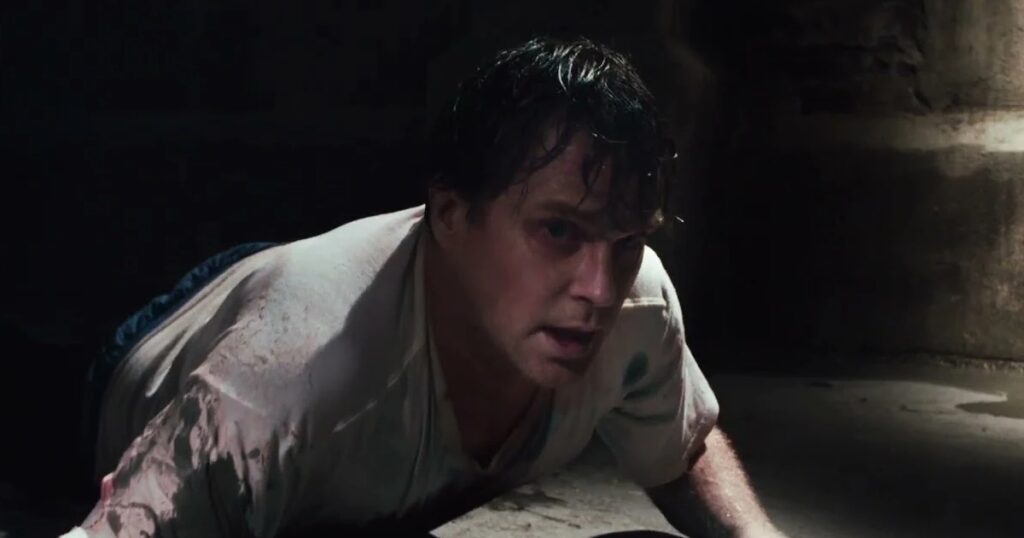
While most Saw movies begin with glorious opening kill,Saw opens with reveal many fans had been waiting seven years for: return Lawrence Gordon.We see him immediately after events first film dragging himself across floor after cutting off own foot.There was no hiding presence or saving reveal for end.
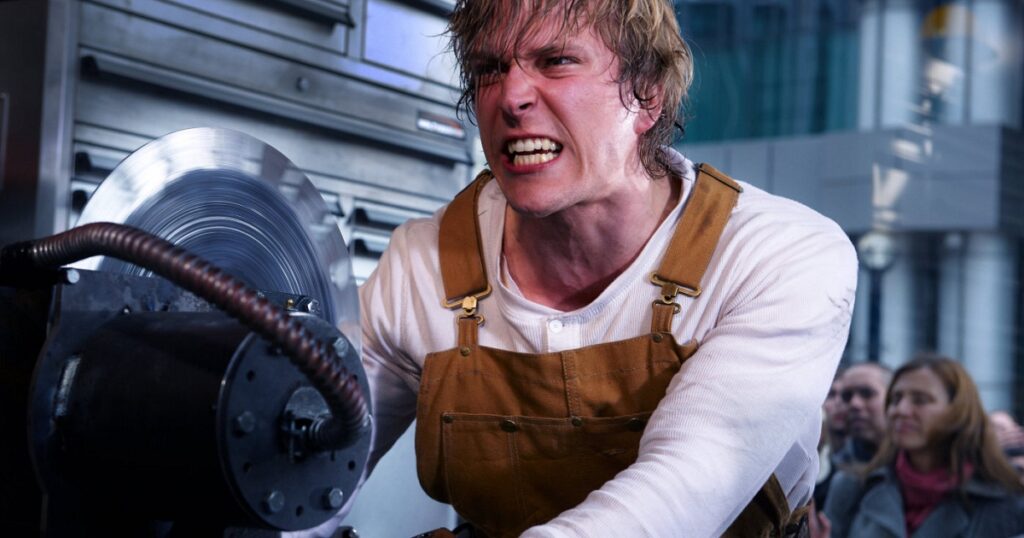
The story continues when we finally get our opening kill,and it’s quite different from those previous movies because takes place completely public even daylight.Two men are attached massive Saw device their girlfriend hanging high above them.They have sacrifice one another order save her.Thankfully they decide be bros not prioritize this cheater.The entire scenario members public watching through glass intended represent public executions old society fascination watching them.
This scenario originally featured John Kramer standing crowd watching trap,but timeline muddied somewhat showing Jigsaw staged public trap long before audience realized it.This changed when story condensed two movies into one scenes shuffled around putting trap firmly present John already dead.
Hoffman goes after Jill/h2>
If you’ll remember end