
What matters in the Elvis–Suno lawsuit
- Voice cloning Elvis Presley Enterprises alleges that Suno enabled users to create unauthorized songs resembling Elvis Presley’s voice.
- ELVIS Act The lawsuit tests a Tennessee law that can hold companies liable for providing tools used to clone a person’s likeness.
- Copyright claims The complaint also alleges that Suno trained its AI models on Elvis songs without permission.
- Legal status The allegations are claims in a lawsuit, and the case raises questions that courts have not yet resolved.
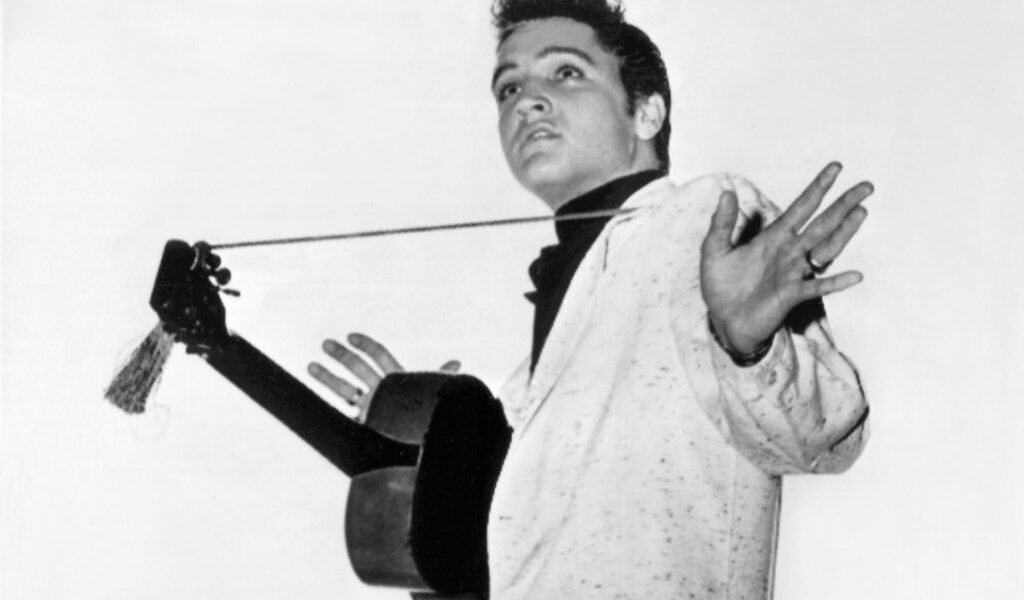
The owners of Elvis Presley’s intellectual property are suing Suno, alleging that the AI music company violated the singer’s likeness rights by using his voice without authorization. This article explains the lawsuit’s voice-cloning and copyright claims, and why the case could test Tennessee’s ELVIS Act.
Weeks after suing AI company Anthropic over allegations that it trained Claude on Elvis songs, Elvis Presley Enterprises filed a similar copyright case against Suno on Friday (Nov. 6). The new complaint also makes legally novel allegations, claiming that Suno broke the law by allowing users to clone Presley’s “unmistakable and iconic voice.”
Related

“All of the humanity, history, despair, and triumph that constitutes Elvis’ identity was stolen and is stored on servers and harnessed by Suno to make massive amounts of money,” writes Richard Busch, a veteran music litigator at Adams & Reese who filed the case. “Suno did so intentionally, maliciously, and fraudulently to financially benefit itself and artificially compete with Elvis’ likeness and copyrights, and continues to do so to this day.”
The lawsuit is among the first major cases brought under Tennessee’s ELVIS Act, a law enacted to address problems associated with artificial intelligence. The first-in-the-nation statute was presented as a way to combat illegal deepfakes, and it also allows lawsuits against technology companies that enable voice or image cloning.
Together with the Anthropic case, the lawsuits concerning Elvis Presley represent one of the most significant actions brought on behalf of an individual musician over AI. Suno and Anthropic also face cases from music labels alleging that they infringed millions of copyrighted songs to train their models, as well as a class action by smaller artists who say Suno misused their likenesses.
The Friday lawsuit was filed by Elvis Presley Enterprises, a unit of licensing company Authentic Brands Group that controls intellectual property associated with Elvis, including much of his song catalog and rights to his name, image and likeness. In a statement to Billboard on Saturday, ABG spokeswoman Lark-Marie Antón said the lawsuit and its evidence “speak for themselves.”
“The name, image, likeness, and music of Elvis Presley are among the most valuable intellectual property assets in the world,” Antón said. “We protect those rights vigorously.”
A Suno spokeswoman did not immediately return a request for comment on Saturday.
What does the Elvis lawsuit claim about Suno’s voice cloning?
The complaint alleges that Suno’s AI music platform can generate songs that closely resemble Elvis Presley’s voice. The allegations raise unresolved questions about when an AI company can be held responsible for reproducing a musician’s identity.
The lawsuit’s central voice-cloning claim is that Suno enabled the unauthorized imitation of Presley’s recognizable vocal identity.
The dispute will raise untested legal questions about whether AI companies can be sued for allegedly copying a musical artist’s identity. Convincingly imitating real people with AI-generated music has become one of the technology’s most controversial uses, particularly in an industry closely associated with distinctive singing voices.
“Elvis’ voice possessed a distinctively rich vocal timbre, with a warm velvety resonance and perfectly employed vibrato, coupled with his ability to vary his technique and delivery within the same song as well as across several different styles of music, which became his immediately recognizable musical signature across the world,” the lawsuit says.
Suno has argued in other lawsuits that its current models do not let users name specific artists in prompts or produce outputs that imitate particular real voices. In the new complaint, however, Elvis Presley Enterprises calls those claims “unequivocally false” and links to videos that it says show Suno generating songs remarkably similar to Presley’s music.
“Those … are NOT examples of Elvis Presley singing. They are synthetic and unlicensed uses of Elvis’ voice and likeness,” Busch writes. “There are hundreds to thousands more like it.”
How does the ELVIS Act apply to AI voice cloning?
The ELVIS Act, enacted in Tennessee in 2024, makes it easier for musicians to bring certain claims involving unauthorized use of their likeness. Unlike laws that generally applied only to commercial exploitation, the statute also imposes liability on companies that provide tools enabling unauthorized likeness use.
The ELVIS Act extends potential liability to providers of tools used to make unauthorized voice and likeness copies.
The new case will test the reach and limits of the ELVIS Act (Ensuring Likeness Voice and Image Security), which was enacted in Presley’s adopted home state. Previously, laws typically applied only to commercial exploitation of someone’s likeness, such as an unauthorized advertisement; the new statute removed that restriction. The law also specifically makes companies potentially liable for providing tools that allow unauthorized use of a person’s likeness.
“Suno is the embodiment of why the ELVIS Act was so essentially required,” the lawsuit reads. “Suno has stolen Elvis’ voice, his image, and likeness, as well as his copyrighted works on, literally, a breathtaking scale, and must now be called to answer for its theft.”
Suno’s lawyers have argued that claims of this kind will not hold up in court. In an earlier likeness case filed by Jason Isbell and other artists, the company’s lawyers said it used artist names as “shorthand for the genre they perform in” and did not enable direct voice theft. The Elvis lawsuit alleges that Suno generated an Elvis clone as recently as the previous month, based simply on lyrics that included his name.
“Entering a musician’s name into Suno’s ‘Create’ function, such as Elvis’, causes Suno to generate unauthorized output based on his [name, image and likeness], which copies and reproduces the signature and recognizable aspects of his distinguished voice,” Busch writes in the new case.
Which Elvis songs are included in the copyright allegations?
The lawsuit also alleges that Suno used copyrighted Elvis songs to train its AI models without permission. The complaint names “Can’t Help Falling in Love,” “Don’t Be Cruel,” “A Little Less Conversation,” “All Shook Up,” “Return to Sender” and “(You’re the) Devil in Disguise.”
The complaint combines claims about AI training on copyrighted songs with allegations about unauthorized voice imitation.
Like the earlier case against Anthropic, the new lawsuit claims that Suno used the songs to train its models and replace human artists.
“The next Elvis won’t pick up a guitar,” the Presley Enterprises lawyers write. “Suno’s ravenous race to the bottom aims to make human creativity obsolete, coldly replicating without a license in seconds what takes years to learn, struggle with, maintain, and endlessly attempt to make better and perfect.”
Separately on Friday, the same attorneys filed another case against Suno on behalf of Eight Mile Style, a publisher that owns much of Eminem’s catalog. That case makes similar copyright allegations, claiming the company trained its models on the rapper’s “Lose Yourself,” “Without Me,” “Till I Collapse,” “The Real Slim Shady,” “Stan” and other songs.
What other legal cases is Suno facing?
The Elvis and Eminem lawsuits add to the legal challenges facing Suno. The company was first sued in 2024 by all three major music companies over AI training and has since settled with Warner Music Group while continuing to litigate with UMG and Sony Music.
Suno’s disputes span copyright claims from music companies and publishers, as well as likeness claims brought by artists.
Although Suno has vowed to partner with the music industry, UMG and Sony Music have shown no interest in reaching a deal, according to the article. The company has also faced cases from music publishers Round Hill Music and Reservoir, along with the Jason Isbell likeness case.
Common questions about the Elvis–Suno lawsuit
Why is Elvis Presley Enterprises suing Suno? Elvis Presley Enterprises alleges that Suno enabled unauthorized voice cloning and used copyrighted Elvis songs to train its AI models.
What is the ELVIS Act? The ELVIS Act is a Tennessee law enacted in 2024 that addresses unauthorized use of a person’s voice, image and likeness, including the provision of tools that enable such use.
Has a court decided whether Suno cloned Elvis’s voice? The material describes allegations in a lawsuit, not a court finding that Suno cloned Presley’s voice.
Which Elvis songs are named in the complaint? The complaint names “Can’t Help Falling in Love,” “Don’t Be Cruel,” “A Little Less Conversation,” “All Shook Up,” “Return to Sender” and “(You’re the) Devil in Disguise.”