Alan Parsons was contemplating the idea of forming his own group. All he needed was the right collaborator.
He found both, along with ample inspiration, while working as an assistant at Abbey Road Studios.
Parsons had actually been sent to London’s Savile Row to assist with the final live performance by the Beatles during his first week on the job. He later served as an assistant engineer on Abbey Road and then as a Grammy-nominated engineer on Pink Floyd’s The Dark Side of the Moon.
How Did the Alan Parsons Project Develop a New Concept?
Along the way, Parsons met Eric Woolfson, a fellow studio professional and aspiring songwriter. “Eric made the bold suggestion that he become my manager,” Parsons later told the Tallahassee Democrat. “I was arguably the first producer with a manager. But with his songwriting background, that didn’t last long. We soon became partners.”
Woolfson quickly developed a grand vision for the still-unnamed act, one based on auteur-like musicianship built around decidedly literary themes.
READ MORE: Prog Rock’s 50 Best Albums
“Alan and I looked to the film industry and saw that directors like Steven Spielberg and George Lucas had become the real stars of their movies,” Woolfson told the Chicago Tribune. “We thought, ‘Oh, records are going to go that way, too.’ It was logical because record producers are the musical equivalent of those guys.”
Pink Floyd’s burgeoning success with widescreen album projects only bolstered their nascent dream. But after The Dark Side of the Moon‘s rocket ride to success, the band asked Parsons to record their follow-up. Forced to choose, Parsons decided to align himself with Woolfson.
Listen to the Alan Parsons Project’s ‘Doctor Tarr and Professor Fether’
The Alan Parsons Project’s First Album Actually Used Fake Titles
Parsons took a shared passion for long-form ideas with him: “It was a deliberate ploy to break the rules, to do what our instincts told us to do,” Parsons told The Florida Times-Union. “It is all very well to have a four-minute hot-single playable commercial hit, but my musical tastes are a bit beyond that. I think our audience wanted that dimmed atmosphere and play an album from start to finish.”
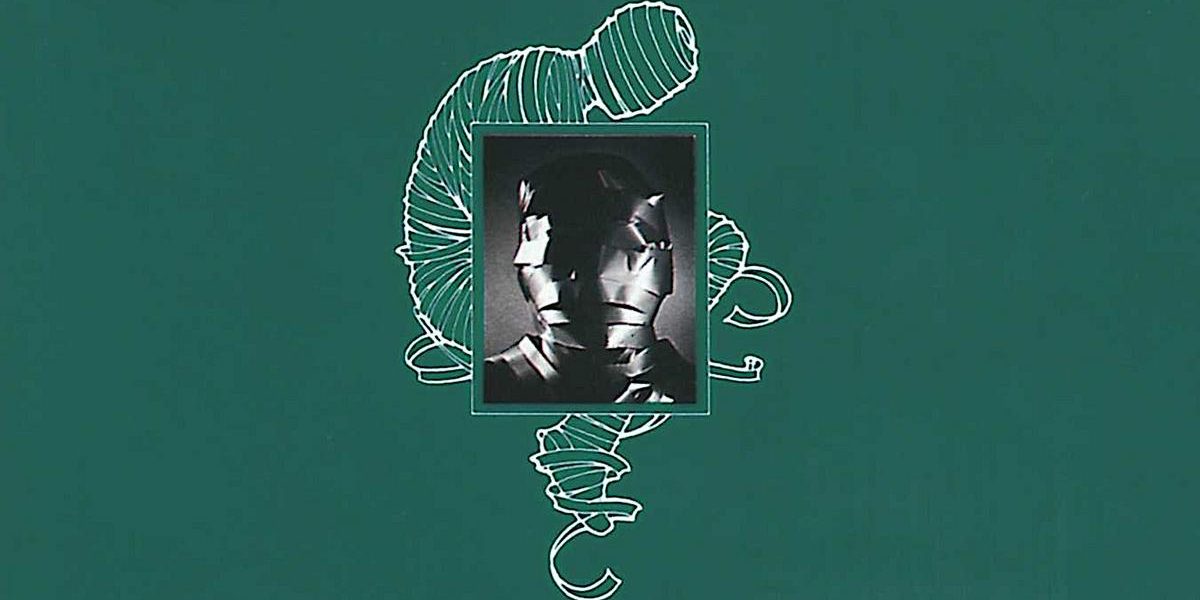
Meanwhile, Woolfson had become fascinated with the macabre writings of Edgar Allan Poe as a child. That inspiration helped their ambitions take shape on a project that would emerge on May 1, 1976, as the band’s Poe-themed debut Tales of Mystery and Imagination. “It was Eric’s idea [to focus on Poe],” Parsons told the Democrat. “I liked short stories. I never had the patience to read a book.”
As they dove into the sessions, however, the late Woolfson became stricken with worry. “I remember being petrified that Pink Floyd would get hold of the idea,” he said in 2010’s Mountains Come Out of the Sky: The Illustrated History of Prog Rock. “We called everything by fake song titles so that nobody would know what the real subject matter was.”
Photo of Alan Parsons
Parsons and Woolfson quietly completed their songs while casting a rotating group of musicians – in the fashion of a big-budget film – to bring Tales of Mystery and Imagination to life. Many of them were members of Pilot and Ambrosia, with whom Parsons had worked as a producer.
“At the beginning, when I just had Pilot in the studio for their first album, it seemed like a good choice to get players who played together all the time and that I knew,” Parsons told New Jersey Stage. “I knew the guys well, knew their strengths and limitations, and so on.”
Recording at Kingsway Hall in London provided a sumptuous setting but also presented its own unique urban challenges. Feeling their creative energy, the group didn’t just tolerate the resulting ambient noises; they incorporated them into Tales of Mystery and Imagination.
“The underground trains, when they’d pass, would give you a terrible rumble – which sometimes necessitated a retake,” Woolfson said in Mountains Come Out of the Sky. “We were in the middle of recording a section of ‘The Fall of the House of Usher,’ and in comes this fantastic rumble. That sound was mixed in as a subsonic effect. We couldn’t have picked a better place to record.”
Listen to the Alan Parsons Project’s ‘The Raven’
Why Were They Called the Alan Parsons Project?
All that remained was to decide on a name for the group. Tapes from the sessions and their supporting documents were anecdotally marked “Alan Parsons Project.” Suddenly, they had a name. Parsons, who never thought of himself as a band leader, disliked it from the start.
“I never professed to be anything more than just a strummer, really. I’ve always said I’ve made records for years without picking up an instrument,” Parsons told the Deseret News. “The marketing people, much to my disdain, said the album needed an identity and I was chosen. Thus, it became known as the Alan Parsons Project.”
Nevertheless, the band was on its way: Tales of Mystery and Imagination became a Top 40 hit in the U.S. and went silver in their native U.K. Their follow-up, 1977’s Isaac Asimov-inspired I Robot, shot to No. 9 on the Billboard chart, marking their first of five Top 20 hit LPs for the Alan Parsons Project. Three of their subsequent albums also went platinum or multiplatinum.
READ MORE: How Alan Parsons Hit the Big Time With ‘Eye in the Sky’
Parsons said he ultimately had Poe, Pink Floyd, and most importantly, Woolfson to thank.
“I would have to say that the initial success of The Alan Parsons Project’s first album, was a milestone for me,” Parsons later told Mike Dow. “We set out to make our own The Dark Side of the Moon, if you like. Eric Woolfson, who sadly passed away in 2009, had a vision to create a concept album based on Edgar Allan Poe’s work, which turned out to be an excellent choice for such an album.
“Concept albums have become somewhat unfashionable in modern times,” Parsons added, “but back then it was absolutely trendy to do such things. To have my name on an album that I produced in bold type as an artist was my crowning glory.”
Weird Facts About Rock’s Most Famous Album Covers
Early on, LPs typically featured basic portraits of artists. Then things got weird.
Gallery Credit: Nick DeRiso