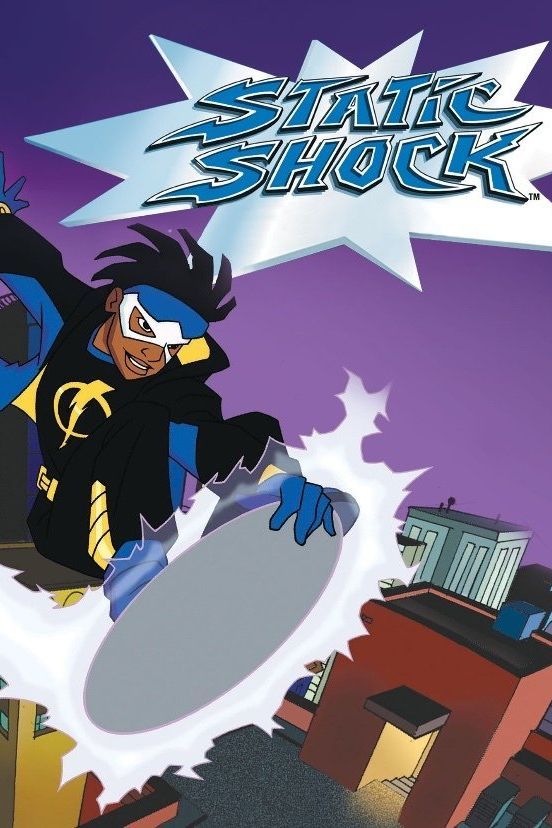


The DC Animated Universe produced a remarkable array of iconic series during the 1990s and early 2000s, yet few remain as underrated as Static Shock. This groundbreaking series made significant strides on various fronts, introducing a diverse and unique cast of heroes and villains to a fresh generation of viewers. Static Shock stands out as one of those superhero shows that often surfaces in discussions yet rarely garners the recognition it truly merits. A product of Warner Bros. Animation‘s efforts to broaden its growing collection of interconnected heroes, the series aired for four seasons starting in 2000, skillfully blending familiar cameos with the thrilling crime-fighting adventures of Phil LaMarr‘s character, Virgil Hawkins. Moreover, although aimed at a younger demographic, Static Shock addresses its mature themes more effectively than many adult-oriented series, with one particular scene illustrating how Virgil was remarkably progressive compared to many of his peers.
One of the most significant scenes occurs in the series’ renowned episode, Season 1, Episode 8, titled “Sons of the Fathers.” In a moment that has since rightfully gained viral attention and even elicited comments from one of the show’s creators, Virgil persuades his best friend, Richie (Jason Marsden), to invite him over for a sleepover. However, Virgil’s initial excitement quickly shifts to confusion when Richie’s father unexpectedly arrives home; this leads to a series of racist comments about the rap genre during dinner, followed by a more insidious bigoted tirade that Virgil overhears while brushing his teeth later that night. By choosing to leave immediately after, Static Shock confronts both Virgil and the audience with racism in its rawest and most intimate form, significantly enhancing the series’ tone as it boldly addresses one of society’s most enduring prejudices.
The Impact of ‘Static Shock’s Racism Scene: A Testament to the Series’ Creative Courage
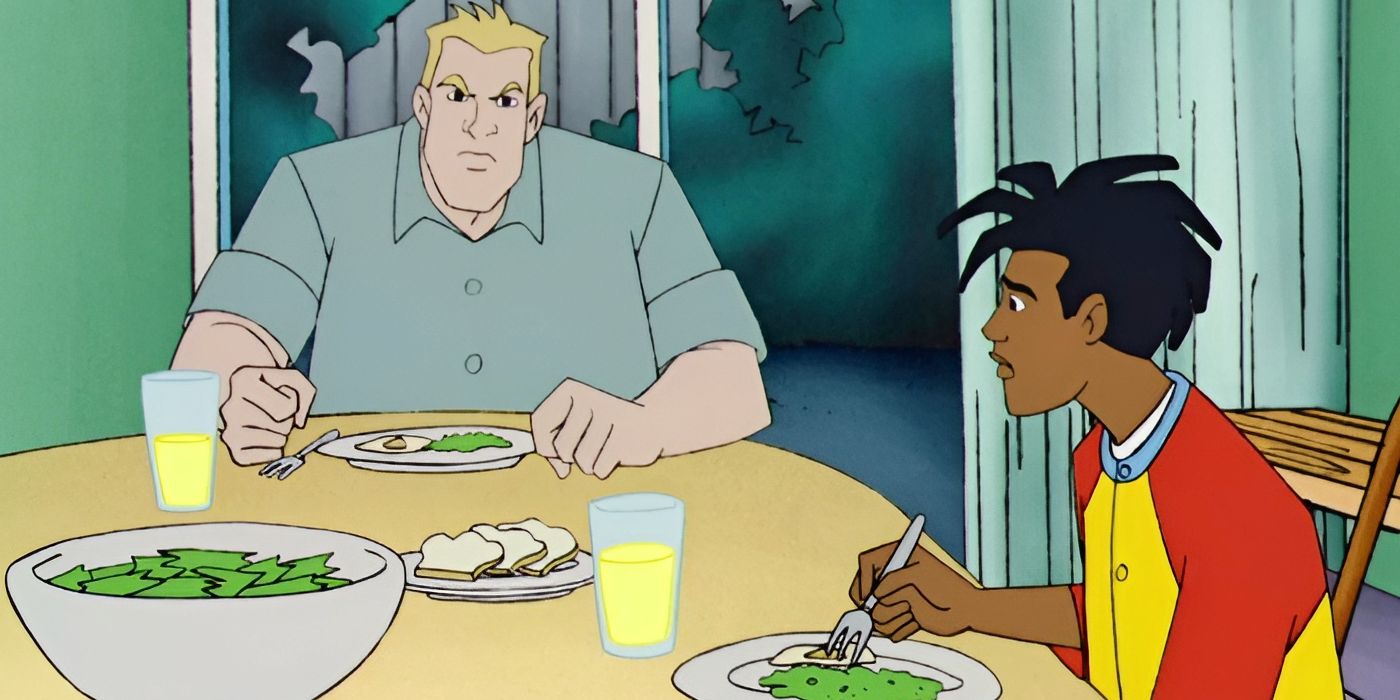
What distinguishes the racism scene in “Sons of the Fathers” is the unflinching manner in which it portrays the prejudice exhibited by Richie’s father. The DCAU is not typically known for its light-hearted stories, as it often features tragic deaths, tortured children, and mutilated bodies scattered throughout its narratives, leading one to question how this universe could possibly cater to a young audience. Yet, in general, superhero shows often mask their more pointed social critiques through metaphor or indirect messaging. For instance, consider another show from the same era, Batman Beyond, which addresses corporate corruption without directly condemning capitalism as an exploitative system. In stark contrast, Static Shock takes a bold step by initiating a challenging conversation in “Sons of the Fathers,” refusing to shy away from portraying racism in its most infuriating and domestic setting while confronting the veiled bigotries of the white working class.
As Richie’s father’s hurtful language drives him to flee, Static Shock reinforces its powerful messaging. Following Richie’s father’s attempt to enlist Virgil’s dad to help retrieve his son, Mr. Hawkins (Kevin Michael Richardson) delivers a poignant monologue that admonishes Mr. Foley (Dan Lauria) about how Mr. Foley’s pride in his petty privilege is jeopardizing his relationship with his son while also fostering a disdainful perspective towards well-meaning individuals around him. This dialogue marks another incredibly courageous moment for a genre often pressured to prioritize capes and supervillain antics, and for many younger viewers, this episode likely served as their first exposure to racism in such an accessible and mainstream manner.
“Sons of the Fathers” Exemplifies ’Static Shock’s Dedication to Addressing Challenging Social Issues
Given the pervasive nature of racism and white supremacy within the United States, the decision to write the anti-racist scenes in “Sons of the Fathers” carried inherent risks, highlighting the bravery involved in producing this episode. More broadly, the unsettling scene of Virgil overhearing Richie’s father’s remarks underscores the series’ commitment to using its platform to engage compassionately with sensitive social issues. While “Sons of the Fathers” is likely the most recognized installment of Static Shock, it is far from the only daring episode that provides a candid look at the growing pains experienced in the early 2000s, struggles that continue to affect the adolescence of numerous young people navigating American society today.
Season 2 of Static Shock is particularly enriched with antagonistic forces that draw inspiration from real-life issues. Season 2, Episode 5, “Frozen Out,” poignantly captures the struggles of a young girl living without a home, highlighting her loneliness as Virgil steps in to assist her with the help of his local church. The final episode of Static Shock Season 2, titled “Jimmy,” is even more harrowing, showcasing how a single act of bullying can irrevocably alter lives when a boy brings a gun to school, a remarkably prescient storyline for the early 2000s. Notably, even towards the conclusion of the series, Static Shock Season 4, Episode 9, “Where the Rubber Meets the Road,” delves into Rubberband Man’s (Kadeem Harrison) challenges with his insecurities related to living with dyslexia. In each of these story arcs, Static Shock fearlessly tackles aspects of society that many prefer to ignore, securing its place as one of the most significant superhero shows ever produced.
Contemporary Superhero Series Must Take Cues from ‘Static Shock’s Legacy
Regrettably, over two decades after the debut of Static Shock, it appears that modern superhero television has not adequately drawn inspiration from the series as it should. As numerous members of marginalized communities recognize, representation transcends mere talking points and holds far greater significance than the term ‘important’ conveys. Witnessing television shows engage thoughtfully with topics often relegated to the periphery of public discourse enables vulnerable individuals to feel acknowledged and protected, mirroring precisely what a superhero is meant to embody. In this respect, shows like Young Justice have somewhat inherited Static Shock‘s legacy, not only by bringing the hero back into the spotlight but also by representing diverse marginalized identities and mental health challenges throughout its later seasons. Nevertheless, considering the heated climate of contemporary public discourse, it’s entirely plausible that “Sons of the Fathers” would face significant scrutiny today, with potential backlash from far-right critics and platformed bigots overshadowing the noble intentions of the show’s creators.
It is not difficult to romanticize the golden age of shows like Static Shock because no other series seems to engage with societal issues as urgently, passionately, or critically as those explored through the lens of Dakota’s fictional hero. Even as superhero television has largely transitioned from traditional networks to the streaming era, allowing creators to delve into narratives darker and more graphic than ever before, many series still avoid discussions that define modern society. While shows such as Invincible and Harley Quinn continue to make significant strides in providing high-profile representation and uplifting narratives, sensitive dialogues surrounding race, gender identity, and the treatment of marginalized individuals have only become more pronounced. Through its most impactful episodes, Static Shock serves as a poignant reminder that superheroes are meant to offer hope to vulnerable populations by facilitating those difficult conversations and that art, when wielded courageously, can foster empathy even among the most cynical audiences.
Static Shock is available for streaming via Amazon Prime in the U.S.