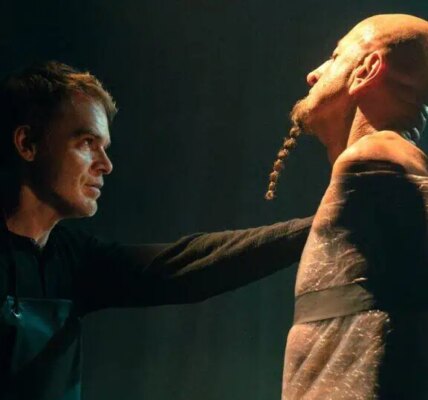
What Defines Godzilla’s Wider Toho Universe?
- Shared monsters: Mothra, Rodan and Baragon began in separate Toho films before appearing in Godzilla movies.
- Franchise connections: Moguera, the Gotengō and the Maser Cannons also link other Toho productions to Godzilla.
- Separate continuities: Some films share monsters or ideas with Godzilla without taking place in the same timeline.
- Ranking scope: This list compares 16 Toho films by their contribution to Godzilla’s wider cinematic legacy.


For more than 70 years, Godzilla has anchored Toho’s monster-movie universe, and Godzilla Minus Zero continues that legacy. Across decades of filmmaking, Toho productions that began without Godzilla have become connected to his world through monsters, characters, vehicles and other ideas that later crossed into the franchise.
Some connections are direct: Mothra, Rodan and Baragon each headlined their own films before becoming familiar faces in the Godzilla franchise. Other links are less immediate, including Moguera, the giant robot introduced in The Mysterians, and the Gotengō, the submarine battleship from Atragon that returned in Godzilla: Final Wars.
This ranking looks beyond strict continuity to trace the wider legacy of Toho’s Godzilla-related movies. The films below are ranked from least to most compelling according to their monsters, characters, vehicles and concepts, as well as their connections to the King of the Monsters.
Not every film here shares a timeline with the Godzilla movies. Some introduce monsters that later appear alongside Godzilla, while others contribute vehicles, characters or concepts to the franchise. Other links come through related productions or alternate versions of established Toho creations, making this a look at Godzilla’s broader cinematic family rather than a single continuity.
16. DOGORA, THE SPACE MONSTER (1964)
- Director: Ishirô Honda
- Key Monsters/Creatures: Dogora
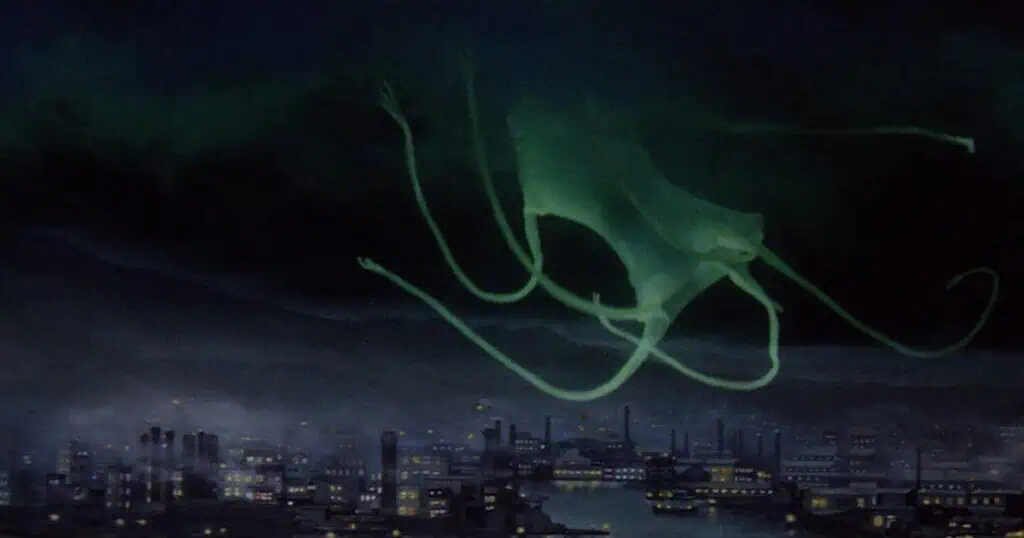
- Godzilla Connection: Dogora appears in the opening montage of Godzilla: Planet of the Monsters (2017), attacking London in that film’s anime continuity. The creature also appears in the television series Godzilla Island and several Godzilla video games.
- Best Feature: Dogora’s unusual design and the scenes of the space creature descending on Earth to feed.
- Biggest Weakness: The crime-comedy subplot overwhelms the monster action, and much of the humor falls flat.
Unlike most Toho kaiju films, Dogora combines a crime comedy with a giant-monster story. The titular creature is a space-born cell mutated by radiation in Earth’s atmosphere, eventually growing into a gigantic, flying, jellyfish-like organism. Dogora feeds on carbon, targeting coal mines and oil fields, while its appetite for diamonds creates a mystery that leads police to suspect an international jewel-theft operation. Even real diamond heists are disrupted when Dogora swoops in and eats the stolen gems. The result mixes monster attacks, police investigation and criminal capers, with the human crime story often taking center stage.
Directed by Gojira filmmaker Ishirô Honda, from a screenplay by Shinichi Sekizawa and a story by Jôjirô Okami, Dogora tries an unconventional approach to the kaiju formula. The diamond-theft plot is not especially engaging, and much of the comedy does not land. The scenes of Dogora descending from the sky and causing monster-movie destruction are effective, but they are too brief to make this one of Toho’s most satisfying kaiju films.
15. VARAN (1958) / VARAN THE UNBELIEVABLE (1962)
- Director: Ishirô Honda (Japanese version); Jerry A. Baerwitz (new American footage)
- Key Monsters/Creatures: Varan
- Godzilla Connection: Varan later appears alongside Godzilla and other Toho monsters in Destroy All Monsters (1968).
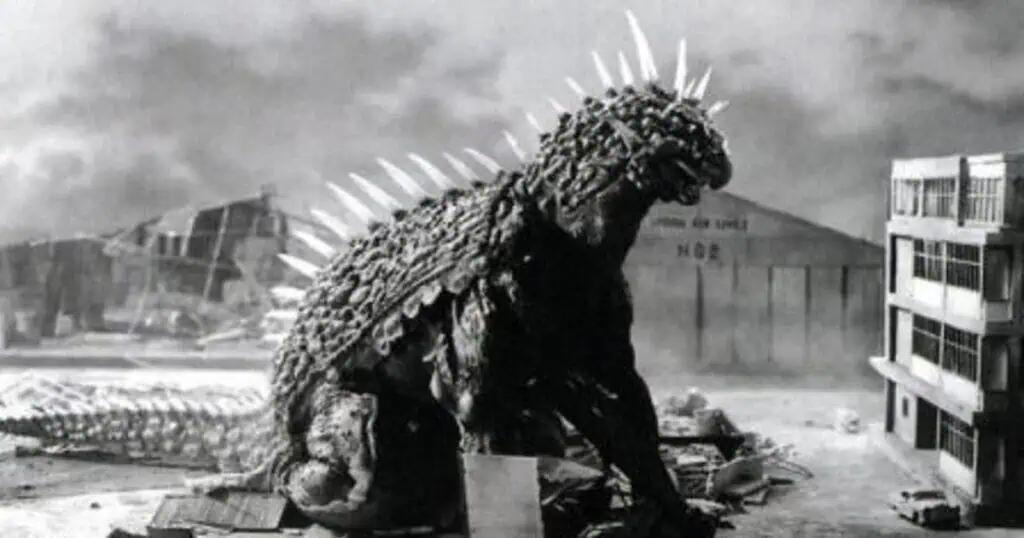
- Best Feature: Varan’s creature design and the special-effects sequences showcasing his rampage.
- Biggest Weakness: A troubled production, uneven storytelling and a heavily reworked American version.
Few Toho monsters had a more difficult journey to the screen than Varan. Originally planned as a Japanese-American co-production between Toho and ABC, the film aimed to build on Godzilla by reuniting producer Tomoyuki Tanaka, director Ishirô Honda, composer Akira Ifukube, special-effects director Eiji Tsuburaya and Godzilla suit performers Haruo Nakajima and Katsumi Tezuka. The story follows researchers who visit a remote Japanese village where residents worship a lake-dwelling deity called Baradagi. When the visitors enter forbidden territory, the supposed god emerges from the water as a prehistoric creature called Varan, who soon rampages across Japan while the military tries to stop him before he reaches Tokyo.
Varan’s production problems began before the film reached theaters. ABC withdrew halfway through production, forcing Toho to reshape the television-oriented project for Japanese theatrical release. The change required existing footage to be cropped, and the reduced budget led to the reuse of effects footage from Gojira. The Japanese film was later shortened for television; its American distributor discarded most of the story, kept the monster effects and surrounded them with newly filmed material. Released in 1962 as Varan the Unbelievable, the result is a very different film, and neither version gives Varan the showcase his striking design deserves.

14. KING KONG ESCAPES (1967)
- Director: Ishirô Honda
- Key Monsters/Creatures: King Kong, Mechani-Kong, Gorosaurus, Giant Sea Serpent
- Godzilla Connection: Introduces Gorosaurus, who returns in Destroy All Monsters (1968) as part of Godzilla’s monster roster.
- Best Feature: The climactic battle between King Kong and Mechani-Kong around Tokyo Tower.
- Biggest Weakness: Uneven pacing makes the film less engaging than its premise and effects suggest.
Loosely based on characters and ideas from the animated series The King Kong Show, King Kong Escapes follows submarine Commander Carl Nelson, who has spent years researching a giant gorilla said to live on Mondo Island. Nelson designed a robotic duplicate, Mechani-Kong, but his former associate, the unscrupulous Dr. Who, stole the design and built the machine to excavate radioactive Element X at the North Pole. After Nelson’s submarine runs into trouble near the island, the crew encounters the real King Kong. Kong saves Lieutenant Susan Watson from the dinosaur Gorosaurus, battles a sea serpent and becomes attached to Susan. Dr. Who kidnaps them both after learning that Kong responds to her commands, then forces the gorilla to do the dangerous excavation Mechani-Kong could not complete. The scheme leads to a showdown between the giant creatures in Tokyo, including a battle atop Tokyo Tower.
Toho assembled an experienced team for this unusual adventure: Ishirô Honda directed, Akira Ifukube composed the score and Eiji Tsuburaya oversaw special effects. Haruo Nakajima, best known for playing Godzilla, performs as Kong, while Yû Sekida portrays both Mechani-Kong and Gorosaurus. The James Bond-meets-kaiju premise, effects and colorful characters give the film plenty to enjoy, but uneven pacing keeps the action from holding attention throughout. The Kong suits may look silly, yet the Tokyo Tower battle remains a highlight. King Kong Escapes is an unusual King Kong adventure, even if its pacing makes it less satisfying than its best sequences.
13. BATTLE IN OUTER SPACE (1959)
- Director: Ishirô Honda
- Key Creatures: The Natal
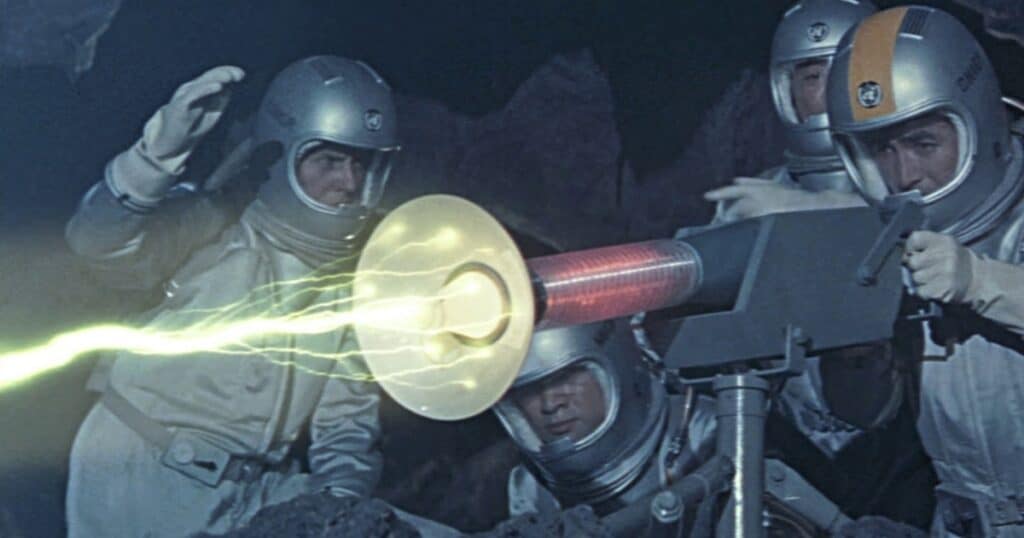
- Godzilla Connection: A loose sequel to The Mysterians, sharing returning characters and Heat Cannon technology; it also features a screenplay by Shinichi Sekizawa, a major contributor to the Godzilla series.
- Best Feature: Imaginative special effects, particularly the attacks on Earth and the lunar battles.
- Biggest Weakness: Thin characterization and a story that prioritizes action over substance.
A loose sequel to The Mysterians, Battle in Outer Space is set in the futuristic year of 1965 and brings back characters and technology from its predecessor, including the Heat Cannons. Earth now faces a different extraterrestrial threat: the Natal, moon-dwelling aliens intent on turning the planet into a colony. They announce their arrival by destroying a space station, flooding Venice with a giant waterspout and using a freeze ray to reduce objects’ gravity, even lifting a bridge out of an oncoming train’s path. The aliens can also control human minds remotely and vaporize people with their weapons. With Earth under attack, two SPIP spacecraft equipped with heat rays head to the moon to locate the alien base.
As its title promises, the film delivers outer-space action, including battles against flying saucers and space torpedoes, plus a lunar chase involving astronaut moon buses. Director Ishirô Honda and story writer Jôjirô Okami return from The Mysterians, while Shinichi Sekizawa, a regular contributor to the Mothra and Godzilla films, wrote the screenplay. The Natal remain largely faceless invaders, and the story favors one action sequence after another over character depth. That focus makes this an effects-packed science-fiction adventure, though it does not match the storytelling ambition of The Mysterians.

12. REBIRTH OF MOTHRA II (1997)
- Director: Kunio Miyoshi
- Key Monsters/Creatures: Mothra Leo, Dagahra, Barem, Ghogo
- Godzilla Connection: Continues the separate-continuity Mothra mythology established in Rebirth of Mothra, featuring Mothra Leo. Dagahra’s concept recalls Godzilla villain Hedorah, but they are distinct monsters.
- Best Feature: Dagahra’s design and the underwater monster battles.
- Biggest Weakness: A weaker screenplay, lower production values and an even more juvenile tone than its predecessor.
Released in Japan as Mothra 2: The Undersea Battle, this sequel continues the family-friendly Mothra mythology introduced in Rebirth of Mothra. The threat comes from polluted oceans: when strange creatures appear around Japan, the Elias fairies Lora and Moll discover that the ancient monster Dagahra has awakened. The lost civilization of Nilai-Kanai created Dagahra to consume ocean pollution, but its feeding produces dangerous starfish-like creatures called Barem. Meanwhile, children befriend Ghogo, a mysterious creature connected to the civilization’s magical treasure, which the evil Belvera seeks to claim. As the children search for the treasure that could stop Dagahra, Mothra Leo faces a difficult underwater battle against the pollution monster.
Directed by Kunio Miyoshi, Rebirth of Mothra II has a weaker screenplay and lower production values than its predecessor, and its tone is aimed even more squarely at young viewers. Ghogo’s unusual healing ability is one of the more childish elements, but the film still offers an accessible monster adventure for families. Dagahra’s design is a highlight, and its pollution-based origin recalls Hedorah, Godzilla’s Smog Monster, without making the two creatures the same entity.
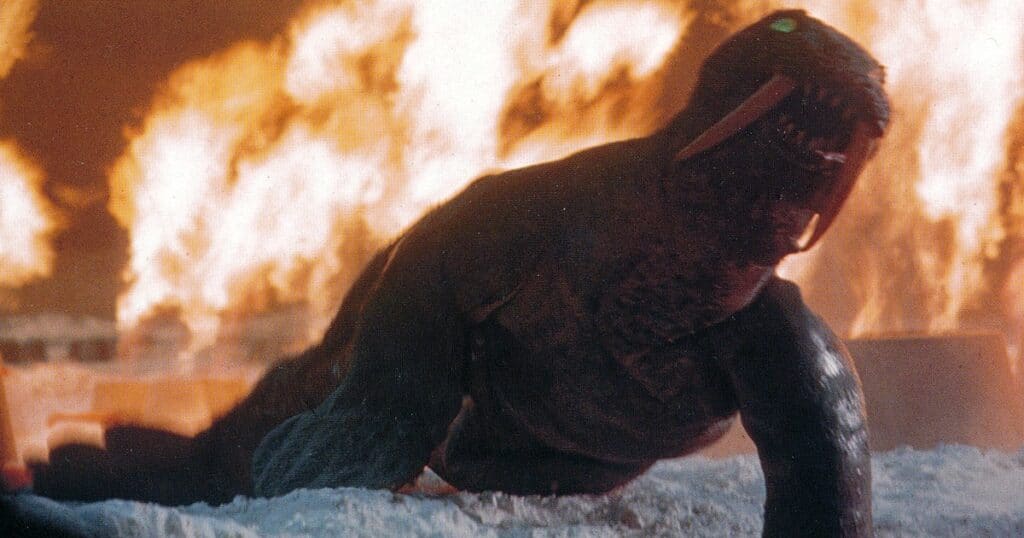
11. GORATH (1962)
- Director: Ishirô Honda
- Key Monsters/Creatures: Maguma
- Godzilla Connection: Introduces Gorath, the celestial body that reappears as an asteroid in Godzilla: Final Wars (2004). Maguma has returned in novels and comic books.
- Best Feature: The ambitious plan to move Earth out of a celestial body’s path, supported by impressive space and disaster effects.
- Biggest Weakness: Maguma’s brief monster sequence feels awkwardly inserted into an otherwise focused science-fiction disaster story.
In the futuristic 1980s, the gigantic celestial body Gorath enters the solar system on a collision course with Earth. Its gravitational pull is thousands of times stronger than Earth’s, threatening earthquakes, volcanic eruptions, devastating tides and the eventual loss of the planet’s atmosphere. With conventional defenses unable to stop an object of this magnitude, the United Nations approves an extraordinary plan: build enormous nuclear-powered rocket thrusters at the South Pole and propel Earth out of Gorath’s path. As Gorath’s mass and gravitational influence grow, scientists, engineers and astronauts race to save the planet on Earth and in space.
Although Gorath has no story connection to The Mysterians or Battle in Outer Space, the three films are often grouped as Toho’s Space Opera Trilogy. Director Ishirô Honda adapts a story by Jôjirô Okami with a screenplay by Takeshi Kimura, delivering an 89-minute science-fiction disaster film. The South Pole rocket engines awaken Maguma, a prehistoric walrus-like creature buried under Antarctic ice; the brief rampage feels separate from the central plot. The more direct Godzilla link is Gorath itself, which returns as an asteroid in Godzilla: Final Wars (2004), where it is part of an alien invasion scheme.

10. THE WAR IN SPACE (1977)
- Director: Jun Fukuda
- Key Monsters/Creatures: The axe-wielding alien beast
- Godzilla Connection: Features the Gohten, a spacefaring variation of the Gotengō from Atragon. The Gotengō later returned in Godzilla: Final Wars (2004), and the redesign was influenced by the Gohten.
- Best Feature: Entertaining action sequences, particularly Gohten’s battles against the alien forces.
- Biggest Weakness: Thin characterization, recycled footage and a rushed story that invites comparisons to Star Wars.
Toho rushed The War in Space into production after Star Wars became a sensation in the United States in May 1977. Toho released its own space adventure in Japanese theaters by the end of December, months before Star Wars opened in Japan. Set in a slightly futuristic version of Earth in the autumn of 1988, the film follows an alien invasion marked by UFO attacks, falling comets and the destruction of a space station. The United Nations Space Federation revives an abandoned defense project and sends the warship Gohten to Venus, where its international crew faces disguised aliens, a kidnapped young woman guarded by an axe-wielding monster and Commander Hell, Emperor of the Galaxy.
Directed by Jun Fukuda, a veteran of several Godzilla films, The War in Space has thinly drawn characters, recycled destruction footage and the feel of a rushed response to Star Wars. Its action includes ray-gun shoot-outs, large-scale destruction and aerial battles between Gohten and the alien forces. The connection to Atragon is especially clear: Gohten is a spacefaring variation on the earlier film’s drill-equipped warship, the Gotengō. That shared design gives The War in Space a place in Toho’s wider science-fiction and Godzilla-related legacy.

9. YOG: MONSTER FROM SPACE (1970) – ALSO KNOWN AS THE SPACE AMOEBA
- Director: Ishirô Honda
- Key Monsters/Creatures: Gezora, Ganimes, Kamoebas
- Godzilla Connection: Kamoebas appears in Godzilla: Tokyo S.O.S. (2003), where its carcass is discovered after an off-screen encounter with Godzilla. Gezora and Ganimes have also appeared in Godzilla-related expanded media.
- Best Feature: The monster action, with all three creatures receiving plenty of screen time.
- Biggest Weakness: A simple story and monsters that are not as memorable as Toho’s best-known kaiju.
An unmanned rocket called Helios 7 crashes into the South Pacific after a mysterious space amoeba takes control. The alien intelligence possesses creatures around Selgio Island and mutates them into giant monsters. Photojournalist Taro Kudo joins an expedition hoping to photograph evidence of prehistoric animals, only to find the island under attack. The monsters include Gezora, a giant squid with an icy touch; Ganimes, enormous crabs; and Kamoebas, a giant turtle. Because the alien intelligence can control humans as well as animals, residents and visitors must stop the threat from spreading beyond the island.
Directed by original Gojira filmmaker Ishirô Honda, Yog: Monster from Space, also known as The Space Amoeba, is a straightforward kaiju adventure. Its isolated island setting keeps the scale contained, while the story provides a framework for creature-feature action. The three monsters are the main attraction, and the film gives them plenty of suitmation screen time. It was Toho’s first effects-heavy film after the death of special-effects pioneer Eiji Tsuburaya; Sadamasa Arikawa led the effects work, with Teruyoshi Nakano as his assistant. Kamoebas later appears in Godzilla x Mothra x MechaGodzilla: Tokyo S.O.S. (2003), while Gezora and Ganimes have also entered Godzilla-related projects.
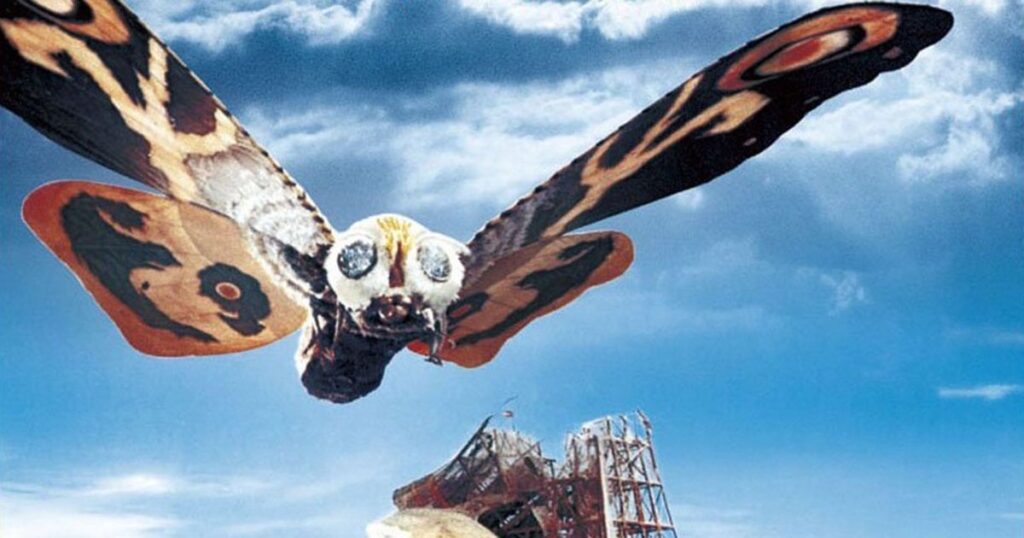
8. MOTHRA (1961)
- Director: Ishirô Honda
- Key Monsters/Creatures: Mothra
- Godzilla Connection: Introduces Mothra, who became one of Godzilla’s most frequent monster co-stars in films including Mothra vs. Godzilla (1964), Ghidorah, the Three-Headed Monster (1964), Destroy All Monsters (1968) and Godzilla: Tokyo S.O.S. (2003).
- Best Feature: Spectacular effects, especially Mothra’s rampage through miniature cityscapes and her transformation from larva to adult.
- Biggest Weakness: The lighter, comedic approach may not appeal to everyone, and Mothra may be less compelling than some of Toho’s other kaiju.
Created from an idea by producer Tomoyuki Tanaka, Mothra began as a literary project before becoming a Toho monster film. Authors Shinichiro Nakamura, Takehiko Fukunaga and Yoshie Hotta developed the serialized story The Luminous Fairies and Mothra, which Shinichi Sekizawa adapted for the screen. The film begins when a shipwreck leaves four survivors on Infant Island, a supposedly uninhabited nuclear-testing site. They return to Japan without radiation sickness and say that mysterious islanders gave them protective red juice. A later expedition finds the island’s inhabitants and two tiny, telepathic fairies, the Shobijin. When showman Clark Nelson kidnaps the fairies, their islanders summon guardian Mothra, who begins a destructive journey to rescue them, first as a larva and then as a giant winged moth.
Directed by Ishirô Honda with special effects by Eiji Tsuburaya, Mothra brings a fairy-tale sensibility to the kaiju genre, with a lighter and more comedic tone than earlier films such as Godzilla and Rodan. The miniature landscapes and Mothra’s transformation from caterpillar to moth give the film a distinctive visual identity. Mothra’s popularity led to frequent appearances alongside Godzilla, and the success of this film helped bring Godzilla back to theaters in 1962 after a seven-year absence.

7. REBIRTH OF MOTHRA (1996)
- Director: Okihiro Yoneda
- Key Monsters/Creatures: Mothra Leo, Desghidorah, Fairy
- Godzilla Connection: Introduces Mothra Leo and continues Toho’s Mothra legacy, although this trilogy takes place in a separate continuity from the Godzilla films.
- Best Feature: Colorful fantasy imagery, nature-focused themes and entertaining monster battles.
- Biggest Weakness: Its young target audience and occasionally childish tone may put off older viewers.
After Toho shelved plans for a new solo Mothra film around the original movie’s 30th anniversary, the studio revived the project following the success of Godzilla and Mothra: The Battle for Earth (1992). Released for Mothra’s 35th anniversary, Rebirth of Mothra builds a family-friendly fairy-tale mythology around the giant moth and her tiny fairy companions. When a logging company disturbs an ancient seal, the supernatural sisters called the Elias sense danger. Lora and Moll want to protect the world, while their estranged sister Belvera seeks the seal’s power. Belvera releases Desghidorah, a three-headed space monster that came to Earth millions of years ago to drain its life energy. Mothra cannot defeat the ancient monster, but her death leaves an egg that may give the world a final chance.
The larva becomes Mothra Leo, a reborn guardian who fights Desghidorah to save the planet. Clearly made for younger kaiju fans, Rebirth of Mothra uses fairy-tale imagery and nature themes rather than the more destructive approach of many Godzilla adventures. Its youthful tone may not suit every viewer, but the film combines monster action with a strong sense of fantasy. The trilogy takes place in a separate continuity from the Godzilla films, while continuing Toho’s wider Mothra legacy.

6. THE MYSTERIANS (1957)
- Director: Ishirô Honda
- Key Monsters/Creatures: Moguera
- Godzilla Connection: Introduces Moguera, the giant robot that returns in a different incarnation in Godzilla vs. SpaceGodzilla (1994).
- Best Feature: Spectacular effects, especially Moguera’s attack on the countryside and the battle against the alien dome.
- Biggest Strength: A fast-moving alien-invasion adventure with anti-nuclear themes.
The Mysterians opens with worldwide disasters, including wilderness fires, earthquakes, sinkholes, mass fish die-offs and UFO sightings. The events lead to the discovery of an alien base beneath a huge dome in the Japanese countryside. The visitors call themselves the Mysterians, survivors of the nuclear destruction of their planet, Mysteroid, who relocated to Mars and now seek a foothold on Earth. Their request for a small parcel of land becomes a demand for human women as breeding slaves because radiation has left most of their children deformed. When humanity refuses, the aliens threaten war with flying saucers, energy weapons and the giant robot Moguera.
Directed by Gojira and Rodan filmmaker Ishirô Honda, The Mysterians is a fast-paced science-fiction adventure with special effects by Eiji Tsuburaya. It was Toho’s first science-fiction film shot in its widescreen TohoScope format. The Mysterians are villains whose nuclear warmongering and demands for human freedom and women continue Honda’s anti-nuclear themes from Gojira. Moguera became the film’s most notable contribution to Godzilla’s world: the robot appears in a different incarnation in Godzilla vs. SpaceGodzilla, but the concept originated here. The Mysterians is an important stop for viewers exploring the origins of Toho’s wider monster universe.

5. REBIRTH OF MOTHRA III (1998)
- Director: Okihiro Yoneda
- Key Monsters/Creatures: Mothra Leo, King Ghidorah, Desghidorah
- Godzilla Connection: Features King Ghidorah, one of Godzilla’s recurring enemies, in a separate-continuity incarnation. The film also continues the Mothra mythology of the previous two movies.
- Best Feature: The prehistoric battle against a younger King Ghidorah.
- Biggest Strength: An exciting trilogy finale that combines action and heart.
Sixty-five million years ago, or 130 million according to the subtitles on the copy watched by the reviewer, King Ghidorah killed many dinosaurs. Now the three-headed space monster has returned, causing destruction and teleporting children into a giant forest dome. The fairies Lora and Moll ask Mothra Leo to stop Ghidorah before humanity faces extinction. This version of King Ghidorah is more powerful than the Desghidorah Mothra defeated in the first film and can turn people evil with a look. When Mothra Leo is outmatched, he travels back to the dinosaur age to confront a younger Ghidorah. Victory still requires help from the Elias sisters and a child who must restore Lora’s good-hearted nature.
Screenwriter Masumi Suetani returns to complete the trilogy, and Okihiro Yoneda, director of the first Rebirth of Mothra, returns after missing the second installment. The film remains aimed at children, but its prehistoric time-travel adventure adds excitement to the story. It is a separate-continuity appearance of King Ghidorah, a monster more widely known as one of Godzilla’s iconic foes. Producer Tomoyuki Tanaka, who helped bring Godzilla and Mothra to life, died in 1997 and was not involved in this final chapter.

4. FRANKENSTEIN CONQUERS THE WORLD (1965)
- Director: Ishirô Honda
- Key Monsters/Creatures: Frankenstein’s Monster, Baragon
- Godzilla Connection: Introduces Baragon, who later appears in Destroy All Monsters (1968) and Godzilla, Mothra and King Ghidorah: Giant Monsters All-Out Attack (2001). The film also connects to Godzilla through the earlier Frankenstein vs. Godzilla story concept.
- Best Feature: The sympathetic portrayal of Frankenstein’s Monster and the blend of human drama and kaiju action.
- Biggest Weakness: Godzilla is absent from the climactic battle, despite the film’s unusual development history.
The development of Frankenstein Conquers the World began with an unrealized King Kong project by stop-motion effects pioneer Willis O’Brien, in which Kong would fight a giant Frankenstein’s Monster. Producer John Beck took the idea to Toho, where it became King Kong vs. Godzilla. Toho later considered other Frankenstein projects, and screenwriter Takeshi Kimura developed a story that originally brought the monster face-to-face with Godzilla. Godzilla was replaced by the new creature Baragon, but the basic premise remained. The resulting film was co-produced by Toho and UPA.
The story begins in 1945, when Frankenstein’s living heart is transported from Nazi Germany to Hiroshima and exposed to the atomic bombing. Fifteen years later, American doctor James Bowen and colleagues find a feral boy who survived radiation and can regenerate. The boy is revealed as Frankenstein’s Monster, growing rapidly because of the radiation. After escaping the research institute, he becomes a giant, while destructive attacks in the countryside reveal another creature: subterranean Baragon. Directed by Gojira filmmaker Ishirô Honda, the film addresses the human consequences of nuclear devastation through the people still affected by the Hiroshima bombing. Its central creature is both a tragic figure and a source of kaiju spectacle, while Baragon’s later appearances connect the film to the Godzilla franchise. The absence of Godzilla reflects a story concept that changed during development.

3. ATRAGON (1963)
- Director: Ishirô Honda
- Key Monsters/Creatures: Manda
- Godzilla Connection: Introduces Manda, who later appears in Destroy All Monsters (1968) and Godzilla: Final Wars (2004), as well as the Gotengō, which returns in Final Wars.
- Best Feature: The Atragon’s striking design and capabilities, particularly its climactic battle against the Mu Empire.
- Biggest Strength: An imaginative adventure premise, memorable characters and impressive effects.
The world comes under attack from superheated figures revealed as emissaries of the lost Mu Empire, a civilization that has survived beneath the Pacific Ocean for 12,000 years. The Empress of Mu demands that humanity surrender the planet and identifies Navy Captain Jinguji as the main obstacle. Jinguji has secretly spent nearly two decades building an undersea warship called Gotengō, or Atragon in some English-language versions. Presumed dead since World War II, he has devoted himself to restoring the Empire of Japan and initially refuses to use the vessel for another purpose. When Mu attacks the world, Jinguji’s daughter and others try to persuade him to turn the Gotengō against the invaders and their sea serpent deity, Manda.
Directed by Ishirô Honda and written by Shinichi Sekizawa, Atragon combines science-fiction fantasy, adventure and large-scale effects. The Mu Empire’s attacks devastate Hong Kong and Venice and cause destruction in Tokyo. The Gotengō enters the conflict with a drill, a freeze ray and the ability to fly. Sekizawa completed the screenplay less than four months before the film’s Japanese premiere on December 22, 1963, as Toho prepared a major release for the New Year crowds. Manda’s dragon-like design also drew on 1964 being the Year of the Dragon. The Godzilla links are direct: Manda later appeared in Destroy All Monsters and Godzilla: Final Wars, and the Gotengō returned in Final Wars as a major human weapon.
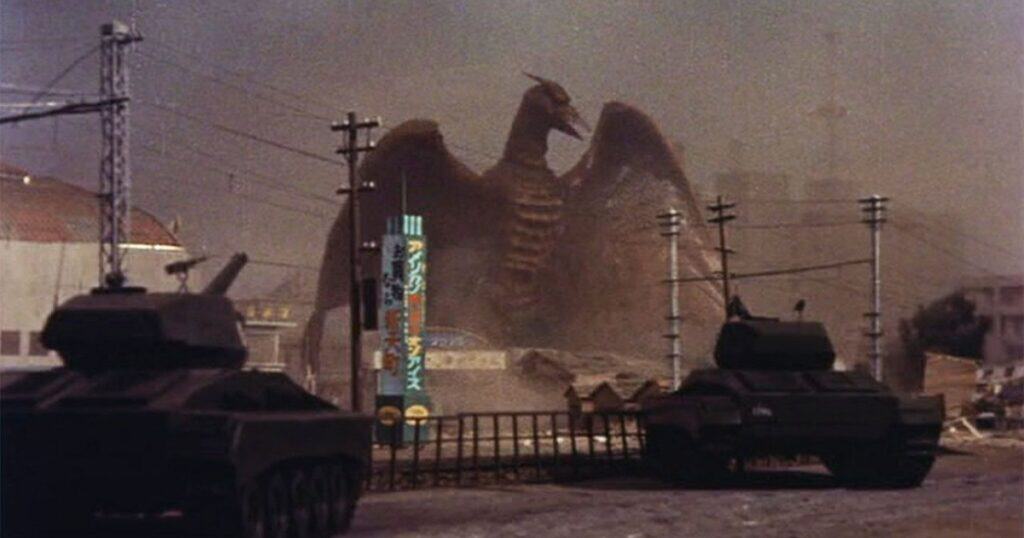
2. RODAN (1956)
- Director: Ishirô Honda
- Key Monsters: Rodan, Meganulon
- Godzilla Connection: Introduces Rodan, who later becomes one of Godzilla’s recurring monster allies and adversaries.
- Best Feature: The shift from underground creature horror to spectacular giant-monster destruction.
- Biggest Strength: Suspenseful Meganulon and egg-hatching sequences, followed by Rodan’s devastating attack on Fukuoka.
Rodan begins as a horror film in a small Japanese mining village, where workers are found mutilated by something underground. The culprit is a Meganulon, a giant prehistoric insect whose deadly pincers make the mine scenes resemble a monster-movie slasher story. The mystery deepens when a pilot pursuing a supersonic UFO is killed. Shigeru, a surviving mine worker, describes a giant egg hatching to release a prehistoric flying reptile. The UFO is actually Rodan, a Pteranodon-like creature whose emergence appears to have been triggered by nuclear testing. A second Rodan later joins its mate in an attack on Fukuoka.
Directed by Ishirô Honda, with music by Akira Ifukube and suit effects by Eiji Tsuburaya, Rodan was Toho’s first kaiju feature filmed in color. Haruo Nakajima, best known for playing Godzilla, also performs inside the Rodan suit. The film builds from the unsettling Meganulon attacks to the discovery of Rodan’s egg, then unleashes the flying monster on Fukuoka. Its wing-generated winds send people and vehicles flying and reduce buildings to rubble. Rodan’s later appearances in the Godzilla franchise make this standalone film an important part of the King of the Monsters’ wider cinematic family.

1. THE WAR OF THE GARGANTUAS (1966)
- Director: Ishirô Honda
- Key Monsters/Creatures: Sanda, Gaira, Giant Octopus
- Godzilla Connection: Introduces the Maser Cannons, which recur in the Godzilla series. Gaira appears in stock footage in Godzilla Against Mechagodzilla (2002), and the film’s events are incorporated into the continuity associated with that movie and Godzilla: Tokyo S.O.S. (2003).
- Best Feature: The climactic battle between Sanda and Gaira, staged amid spectacular miniature-city destruction.
- Biggest Strength: Brisk pacing, frequent monster action and the contrast between the two Gargantuas.
A year after Frankenstein Conquers the World, Toho and UPA reunited for another giant-monster adventure that works as a loose sequel. The story begins when a giant octopus attacks a ship off Japan, only to be defeated by the green, hairy Gaira. Gaira then attacks the ship and devours passengers. The authorities consult three scientists from the Kyoto Shingara Institute, where a baby Frankenstein-like creature was held five years earlier. American doctor Paul Stewart and Japanese colleagues Akemi Togawa and Yuzo Majida believe their former creature could not have become a man-eater. Their doubts are resolved when a second Gargantua appears: Sanda, a large, brown-furred creature who protects Gaira. The scientists theorize that Gaira developed from cells shed by Sanda. As the military tries to destroy both creatures, Sanda attempts to stop his violent offspring.
Directed by Ishirô Honda, who co-wrote the screenplay with Takeshi Kimura, The War of the Gargantuas shares elements with Frankenstein Conquers the World, including UPA’s involvement and scientists studying a mysterious creature. The film never explicitly states that it is a direct continuation, but those references suggest a sequel relationship. Its most notable Godzilla connection is the introduction of the Maser Cannons, which became recurring weapons in the franchise. The climactic fight between Sanda and Gaira unfolds amid miniature-city destruction created under Eiji Tsuburaya’s effects direction. The two Gargantuas’ contrasting behavior, the brisk pace and frequent monster action make this the ranking’s strongest entry.
Questions About Toho’s Godzilla-Related Movies
Which Toho film introduced Mothra? Mothra (1961) introduced the monster before she became one of Godzilla’s most frequent co-stars.
Does every film in this ranking share Godzilla continuity? No; several films connect through monsters, vehicles or concepts without sharing the Godzilla movies’ timeline.
Which film introduced Moguera? The Mysterians (1957) introduced Moguera, who later returned in a different incarnation in Godzilla vs. SpaceGodzilla.
How does Atragon connect to Godzilla? Atragon introduced Manda and the Gotengō, both of which later appeared in Godzilla: Final Wars.
Which ranked film is first? The War of the Gargantuas (1966) ranks first in this list.
The post Beyond Godzilla: 16 Toho Monster Movies Ranked from Worst to Best appeared first on JoBlo.