Before shows like Only Murders in the Building turned murder into a punchline, NBC’s Trial & Error had already cracked the case. Premiering in 2017, the series starred John Lithgow as Larry Henderson — a small-town poetry professor accused of killing his wife — in a mockumentary-style sitcom that fused true-crime tropes with absurdist comedy.
Created by Jeff Astrof and Matt Miller, the show earned an 88% rating on Rotten Tomatoes and quickly became a cult favorite for fans of offbeat humor. Think The Staircase meets Parks and Recreation, but with a lot more roller skates and murder weapons.
The Case of John Lithgow’s Larry Henderson
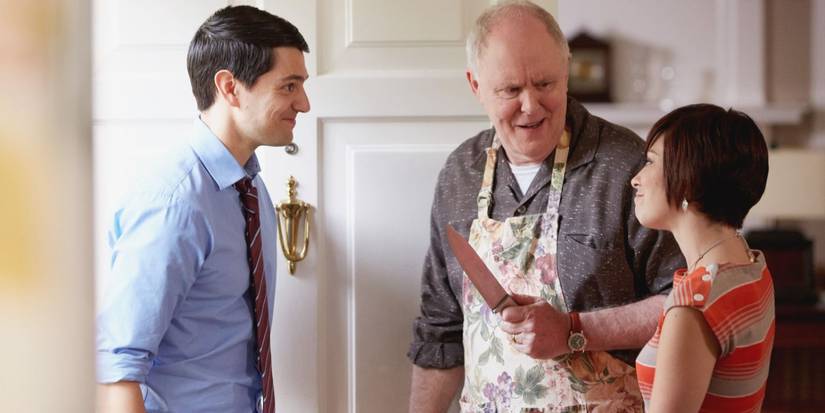
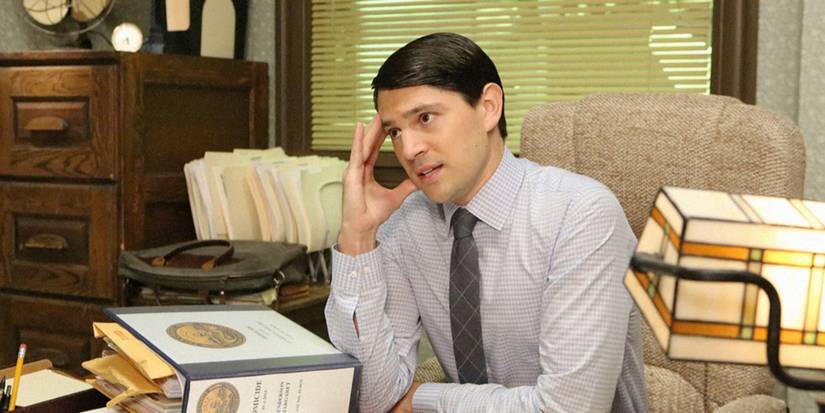
In the show’s first season, young, eager defense attorney Josh Segal (Nicholas D’Agosto) heads south to represent Larry, whose quirks — like his obsession with “rollercizing,” his insistence on innocence, and his flair for poetic drama — make him both a perfect murder suspect and an unlikely sitcom lead.
Rounding out the cast were Jayma Mays as overzealous prosecutor Carol Anne Keane, Sherri Shepherd as Josh’s assistant with wildly specific medical conditions, and Steven Boyer as a dim-witted investigator whose family tree “circles back on itself.” Together, they turned East Peck, South Carolina, into a deliriously oddball world where everyone was both a caricature and a suspect.
The series followed the structure of a serialized true-crime doc — complete with cliffhangers, reenactments, and character confessionals — while lampooning the genre’s tendency to sensationalize every detail. The result was a show that felt like a spiritual cousin to Making a Murderer… if Making a Murderer had punchlines.
How ‘Trial & Error’ Perfected the Parody
At its heart, Trial & Error worked because it played everything straight. The mockumentary format allowed the cast to deliver the kind of deadpan absurdity usually reserved for prestige satire. Lithgow, in particular, walked a tightrope between pathos and parody — his Larry could seem heartbreakingly innocent in one scene and wildly guilty the next.
It’s that ambiguity that made him so magnetic. As one critic phrased it, “Something about Lithgow’s hangdog visage invites you to comfort Larry and to flee from him in terror.” His combination of sincerity and slapstick boosted what could have easily been a one-joke premise into something truly sharp and incisive.
Season 2 traded Lithgow for Kristin Chenoweth — playing a faded beauty queen accused of murdering her husband — but the magic was never recaptured. Lithgow’s presence reined in the chaos and lent the satire a sense of warmth, even as it savagely skewered the absurdities of courtroom theatrics and true crime.
Why ‘Trial & Error’ Starring John Lithgow Deserves a Chance
Although the show was well-received, Trial & & >
The show was well-received but ended after two seasons. Still, it is one of the most intelligent and overlooked comedies of its time — a show that could make fun of the legal system, the South, and every facet of true crime while maintaining a genuinely funny sitcom.
In retrospect, Trial &Error was prophetic, not just a parody. Before the likes of Only Murders and Poker Face incorporated murder into comedic cases, Trial &Error demonstrated that there was some comedy gold to be found in the chaos of the case. And at the center of it all was Lithgow, giving yet another master class in making madness feel strangely human.