What makes the Alive Films era worth revisiting?
- Four films Alive Films gave John Carpenter and Wes Craven creative room to make four distinctive horror films.
- Carpenter’s films Prince of Darkness joins scientific inquiry with religious horror, while They Live uses science fiction to examine social control.
- Craven’s films Shocker experiments with television-centered supernatural horror, while The People Under the Stairs turns domestic abuse and hidden power into a dark fairy tale.
- Creative freedom The films show that unusual ideas can produce memorable work, even when ambition and execution do not always align.
This article looks back at John Carpenter, Wes Craven, and their four Alive Films productions to compare the ideas, strengths, and limitations that shaped this unusual period in horror filmmaking.


Shep Gordon began his entertainment career as a manager, guiding the careers of Alice Cooper, Groucho Marx, Raquel Welch, and other performers. His first producing credits were Alice Cooper concert videos. In the early 1980s, he entered feature-film production with producing partner Carolyn Pfeiffer. They formed Island Alive with Chris Blackwell, the founder of Island Records. The company released Stop Making Sense, The Hit, and Kiss of the Spider Woman, but lasted only a few years. After the partnership with Blackwell ended, Gordon and Pfeiffer regrouped as Alive Films. By the late 1980s, Gordon had secured multi-film arrangements with horror filmmakers John Carpenter and Wes Craven. With distributor Universal Pictures, Alive Films gave the directors creative control on four movies: Carpenter’s Prince of Darkness and They Live, and Craven’s Shocker and The People Under the Stairs.
Gordon recognized the potential of two filmmakers with distinct approaches to horror. Carpenter directed Halloween, The Thing, and Escape from New York, while Craven created The Last House on the Left, The Hills Have Eyes, A Nightmare on Elm Street, and Scream. Both filmmakers could deliver genre classics, but they also pursued strange ideas, unconventional storytelling, and unexpected turns. Their Alive Films movies range from supernatural apocalypse to science-fiction satire, from an electrically empowered serial killer to a mansion where children are abused and imprisoned. Carpenter used his opportunities to explore subjects that fascinated him, including theoretical physics and social control. Craven sought to create new horror properties that could give him more control and financial reward than his association with Freddy Krueger had provided.
Together, these four films capture a period when two influential filmmakers could bring personal, unusual ideas into mainstream horror productions.
What ideas did John Carpenter explore through science, religion, and social control?
John Carpenter’s Alive Films productions paired supernatural horror with scientific ideas and used science fiction to question social power. Prince of Darkness blends religious mythology with scientific investigation, while They Live turns consumerism and media influence into a science-fiction conflict.
Carpenter’s two Alive Films movies connect speculative ideas with threats to ordinary people.
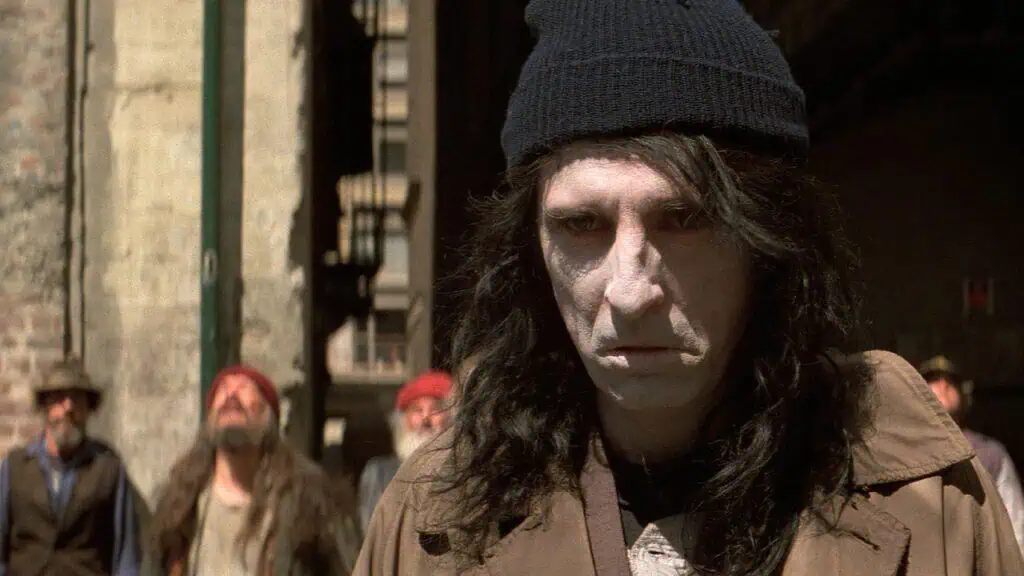
Carpenter’s Prince of Darkness begins with a mysterious container hidden beneath a rundown church in Los Angeles. For decades, a guardian priest has protected it, guarding a secret known only to the forgotten Brotherhood of Sleep. After the priest dies, another priest recruits a college professor and graduate students to investigate the substance inside. The group includes specialists in physics, microbiology, and biochemistry, as well as actors Donald Pleasence and Victor Wong. The researchers expect scientific experiments; instead, their findings point to something that defies scientific explanation. A 2,000-year-old book describes the Sleeper, whose awakening could allow a great evil to enter the world.
How does Prince of Darkness bring science and the supernatural together?
Prince of Darkness combines scientific experimentation and religious mythology by making each part of the same unfolding nightmare. The story grew from Carpenter’s interest in theoretical physics and atomic theory.
Prince of Darkness makes scientific inquiry the path through which its supernatural threat becomes visible.
Carpenter developed the story from his interest in theoretical physics and atomic theory. He wrote the screenplay under the pseudonym Martin Quatermass, a reference to writer Nigel Kneale and his character Professor Bernard Quatermass. Kneale had previously worked with Carpenter on the screenplay for Halloween III: Season of the Witch, although he disliked the finished film enough to have his name removed from the credits.
The unsettling premise of Prince of Darkness treats religious mythology and scientific experimentation as parts of one nightmare. The green liquid inside the container is disturbing, but the threat grows when the characters discover that mirrors may open a passage to another world. The students also share a dream that appears to be a transmission from the future, warning that the apocalypse they are trying to prevent may be inevitable.
As the Sleeper gains influence, students fall under its power. People trying to leave the church find it surrounded by murderous, zombie-like unhoused people. One of them is played by Gordon’s friend Alice Cooper, whose appearance adds another memorable detail to the film.
Prince of Darkness is less widely known than some of Carpenter’s other films, but its atmosphere, unsettling ideas, and grotesque imagery make it an effective horror experience. Carpenter and Alan Howarth also created an electronic score that reinforces the film’s mood.
The film’s deliberate pacing and restrained depiction of possession can keep its premise from reaching full intensity. The graduate students often analyze events instead of panicking, which makes the story feel less frantic. Carpenter nevertheless delivers striking scenes in the final stretch, including a student trapped in a janitor’s closet with possessed people outside. Dennis Dun, who had worked with Carpenter on Big Trouble in Little China, is part of the sequence.
Prince of Darkness is not among Carpenter’s most accessible films, but it uses the creative freedom Gordon offered to bring together the director’s scientific interests and religious horror.

How does They Live turn science fiction into a warning?
They Live uses science-fiction action and a pair of special sunglasses to expose hidden messages and disguised aliens. Carpenter’s story connects that device to consumerism, economic inequality, television, and social control.
They Live makes hidden advertising commands visible through its central pair of sunglasses.
In 1963, Ray Nelson published the short story Eight O’Clock in the Morning, about George Nada, who wakes from a hypnotic demonstration and discovers that creatures control society through subliminal messages. Twenty-five years later, Carpenter expanded the idea into They Live, a science-fiction action film about consumerism, greed, the shrinking middle class, and television’s influence. Nelson supplied the central premise, and Carpenter developed it into a broader commentary on American life.
Roddy Piper stars as Nada, a drifter arriving in Los Angeles to find work. At a construction site, he befriends Frank Armitage, played by Keith David, a fellow worker supporting his family. Frank takes Nada to a homeless encampment, where a group believes hidden forces control society. The group uses a church as its base and hacks television broadcasts with messages intended to wake people up, but the aliens work to keep humanity under control.
A pair of special sunglasses made by the resistance changes Nada’s understanding of the world. The sunglasses reveal subliminal messages in advertisements, magazines, money, and broadcasts, as well as the aliens’ true appearance. Carpenter replaces the original story’s hypnosis with this visual device, turning ordinary surroundings into a satire of social control. The glasses expose commands such as “Obey,” “Consume,” and “Conform,” while money tells people to stay asleep.
The sunglasses let Carpenter make familiar places feel sinister without lengthy explanations. Nada responds recklessly to what he sees: he confronts aliens in public and eventually enters a bank with a shotgun and shoots them. His actions are hardly a careful strategy for undermining a secret ruling class, but they propel the story forward.
Carpenter takes time to establish Nada’s world before he finds the sunglasses, which he does roughly a third of the way into the film. That delay allows the film to show a society where poverty and desperation are part of everyday life.
Nada eventually finds allies in Frank and television station employee Holly Thompson, played by Meg Foster. Frank is so committed to protecting his livelihood that he fights Nada at length rather than putting on the glasses. The confrontation highlights the film’s idea that people may resist evidence when accepting it would mean questioning their lives. Some may choose comfortable ignorance over the frightening possibility of change.
They Live has developed a substantial cult following, in part because its concerns remain recognizable. Although technology and social conditions have changed since 1988, the film’s focus on advertising, economic inequality, media influence, and the manipulation of public opinion still resonates. A modern version would need to account for the internet and cell phones alongside television.
They Live shows that Carpenter used horror and science fiction not only to frighten audiences but also to comment on the world around them.
Carpenter’s arrangement with Alive Films did not proceed as planned. Prince of Darkness and They Live were meant to be the first two films in a four-picture deal, but the third project, a time-travel action film called Victory Out of Time, was never produced. Disagreements over financing and scheduling damaged the relationship. Carpenter sued Gordon in 1990, alleging that their agreement had been breached, and Gordon countersued. The dispute also halted At Midnight and a planned They Live sequel called HypnoWar.
Why did Wes Craven look beyond Freddy Krueger?
Wes Craven used the Alive Films opportunity to develop horror projects beyond Freddy Krueger and pursue properties over which he could have more creative control. Shocker and The People Under the Stairs show two very different results of that effort.
Craven’s Alive Films projects reflect his interest in creating horror stories outside the A Nightmare on Elm Street franchise.
While Carpenter used horror to explore personal interests, Craven had a professional question to answer: what would come after Freddy Krueger? Craven created one of horror’s most recognizable villains in A Nightmare on Elm Street, but had limited control over the sequels. He co-wrote Dream Warriors and later returned to write and direct Wes Craven’s New Nightmare, but did not guide most of the franchise’s development. In an interview with Fangoria, he said creating Freddy had brought him considerable credibility without an equally substantial payday.

Could Shocker create Wes Craven’s next horror icon?
Shocker was designed to introduce a new horror villain, Horace Pinker, and potentially launch a franchise. The film begins as a grim serial-killer story before shifting into supernatural horror built around television and electricity.
Shocker changes from a slasher film into a supernatural story about a killer who moves through electrical devices and television.
When Alive Films gave Craven an opportunity to develop a horror property with creative control, he created Shocker. Its villain, Horace Pinker, was intended to join horror icons such as Freddy Krueger, Jason Voorhees, Michael Myers, and Leatherface.
The idea began as a television-series pitch Craven made to Fox under the title The Dream Stalker. The finished film kept the idea of a killer invading someone’s life through dreams, but turned television into the gateway for supernatural horror.
The story takes place in Maryville, Ohio, where the Family Slasher has terrorized the community. College football player Jonathan Parker experiences psychic nightmares about the murders, and his visions help him identify television repairman Pinker as the killer. With help from his adoptive father, police lieutenant Don Parker, Jonathan brings Pinker to justice. Pinker then claims Jonathan is his biological son and reveals that he has supernatural plans.
The first part of Shocker is genuinely creepy. Mitch Pileggi plays Pinker as a sleazy, intimidating psychopath who has abused his family. His son eventually shoots him in the knee, leaving him with a permanent limp. After Pinker is executed in the electric chair, the film changes direction: a deal with mysterious electric entities lets him possess people and travel through appliances and television screens.
Pinker’s supernatural abilities create amusing moments. He possesses a little girl who suddenly swears and becomes murderous, and other performers take turns playing him as he jumps between bodies. But the shifts in tone are hard to miss. The frightening killer becomes a wisecracking supernatural menace, delivering lines such as “Take a ride in my Volts-wagen.” He even turns into a recliner and chants “I think I can, I think I can” while trying to plug himself into an electrical outlet.
The ambitious climax sends Jonathan and Pinker through television programs, stock footage, an episode of Leave It to Beaver, and viewers’ living rooms. The sequence treats television as a physical landscape and pushes Craven’s premise in an unusual direction. However, the film struggles to unite its identities as a grim slasher, supernatural thriller, and live-action cartoon.
Production presented further challenges. Craven clashed with the MPAA over the violence and faced difficulties with the special effects. When the original effects fell through, replacement work had to be completed on a tight schedule and at greater expense. Craven was not fully satisfied with the result.
The rock soundtrack, featuring Megadeth, Iggy Pop, and Dangerous Toys, adds to the film’s late-1980s excess.
Shocker did not become a major hit, and its intended franchise never emerged. The film’s ideas do not always fit together: Pinker is most frightening in the first half, while the tonal shifts and sometimes silly effects weaken the threat. Still, Craven’s willingness to move beyond familiar territory makes the film an unusual entry in his work.

How does The People Under the Stairs turn a house into a nightmare?
The People Under the Stairs turns a mansion into a setting for horror about abuse, secrecy, and control. Its story follows a boy who discovers children imprisoned by the house’s owners.
The People Under the Stairs uses its hidden rooms and imprisoned children to expose the violence beneath a respectable appearance.
Craven’s next Alive Films production, The People Under the Stairs, gave familiar horror material an unusual shape. Its inspiration came from a newspaper story he had read in the late 1970s: neighbors noticed someone breaking into the home of a couple away on vacation, and police discovered that the couple’s children had been imprisoned for years.
Craven was interested in the gap between outward respectability and hidden cruelty. People who seemed ordinary and well-behaved could commit horrific acts behind closed doors while their neighbors remained unaware.
That premise became a story about a poor boy named Poindexter, nicknamed Fool by his tarot-reading sister. Facing eviction, Fool agrees to help his sister’s friend Leroy rob their landlord’s mansion, expecting to find a valuable coin collection. Instead, they discover electrified doors, windows secured from the outside, and a boy called Roach hiding in the walls. The basement holds other children who have fallen out of favor with the owners.
The owners, known as Mommy and Daddy, are siblings who have created a grotesque imitation of a conventional family. They adopt children and punish them for failing to meet impossible standards. Their daughter Alice survives by trying not to see, hear, or speak evil. Daddy, played by Everett McGill, searches the house with a shotgun and a Rottweiler named Prince. Mommy, played by Wendy Robie, enforces the household’s twisted rules. McGill and Robie had previously played Ed and Nadine in Twin Peaks, and they bring eccentric energy to these roles.
The mansion becomes a maze of secret passages, hidden rooms, and disturbing discoveries. Fool must find a way out while beginning to sympathize with the children who have suffered under Mommy and Daddy’s control.
Craven spent years developing the screenplay and struggled to bring Fool into the mansion quickly. Early drafts, written under the title The Puzzle, kept the boy outside for too long. The solution came to Craven in a lucid dream; in the finished film, Fool reaches the mansion within the first eleven minutes. After that structural problem was solved, production moved forward smoothly.
The mansion’s interior was built on a set that Craven conceived as a representation of the human mind. The exterior and first floor appear normal, while deeper parts of the house grow stranger and more disturbing. The children imprisoned beneath the stairs represent thoughts their captors try to suppress, though those thoughts cannot be contained forever. Craven also viewed the story as a commentary on American society and as a story of younger generations freeing themselves from the madness of their predecessors.
The People Under the Stairs combines horror imagery with a social story about power and control. Like They Live, it examines domination, but Craven approaches the subject through a dark fairy tale rather than Carpenter’s science-fiction satire.
The film earned more than $31 million against a budget of around $6 million. Critics responded to its combination of horror, humor, and social commentary, although some considered the comedy excessive.
Unlike Shocker, The People Under the Stairs was not designed to create a new horror icon or launch a franchise. Craven abandoned an ending jump scare in which Daddy would return, partly because he was tired of that kind of ending and did not want to imply a sequel. The film stands as a self-contained story and an example of Craven following an unusual idea into strange territory.
What do the four Alive Films productions reveal about creative freedom?
The four films show both the opportunities and the limits of creative freedom in horror filmmaking. Carpenter used his projects to explore science, religion, and social influence, while Craven tested new horror concepts beyond Freddy Krueger.
Creative freedom gave Carpenter and Craven room to experiment, but it did not guarantee that every film would succeed.
Taken together, Prince of Darkness, They Live, Shocker, and The People Under the Stairs show what creative freedom can make possible, as well as where it can fall short. Carpenter explored the relationship between science and religion and the ways advertising and economic power influence society. His films are not always subtle, but their distinctive ideas make the filmmaker’s perspective recognizable.
Craven’s films are less even in their execution. Shocker tries to create a new Freddy Krueger but becomes so distracted by its own possibilities that Pinker loses some of his initial menace. The People Under the Stairs turns a disturbing premise into a horror story with thematic purpose. The Alive Films arrangement gave Craven room to pursue new properties after A Nightmare on Elm Street, but creative control could not guarantee success. A franchise needs more than an ambitious premise and memorable villain; the story also needs to sustain audience interest. Shocker did not become a major franchise, while The People Under the Stairs worked as a self-contained story.
These films are worth revisiting because they come from a period when established horror filmmakers could use commercial opportunities to explore personal, provocative, or unusual ideas. Not every experiment worked, but the results are more distinctive than four interchangeable films built around the same formula.
The four productions also mark an important period in the brief history of Alive Films. The company’s independent production operation ended soon after the films were released. Carpenter and Gordon eventually worked together again despite the bitter end to their earlier arrangement: Gordon was an executive producer on Carpenter’s 1995 remake of Village of the Damned. That project was not part of the original four-film deal, but the dispute did not permanently end their professional relationship.
Alive Films may have sought hits and franchises, but these productions remain notable for their individuality. Carpenter and Craven were given room to experiment, and even when the results were uneven, they produced films that continue to invite discussion.
What are the four Alive Films movies made with Carpenter and Craven?
The four films are John Carpenter’s Prince of Darkness and They Live, and Wes Craven’s Shocker and The People Under the Stairs.
What is They Live about?
They Live follows drifter Nada, who uses special sunglasses to see aliens and subliminal messages hidden in everyday life.
Did Shocker become a horror franchise?
No. Shocker did not become a major hit, and its planned franchise did not materialize.
How does The People Under the Stairs differ from Shocker?
The People Under the Stairs tells a self-contained story about children imprisoned in a mansion, while Shocker was designed to introduce a new horror villain and potential franchise.
Why are the Alive Films productions still discussed?
The four films remain notable for their unusual premises and for showing how Carpenter and Craven used creative freedom to explore different ideas in horror.
The post When John Carpenter and Wes Craven Got Weird: Inside Their Alive Films Era appeared first on JoBlo.