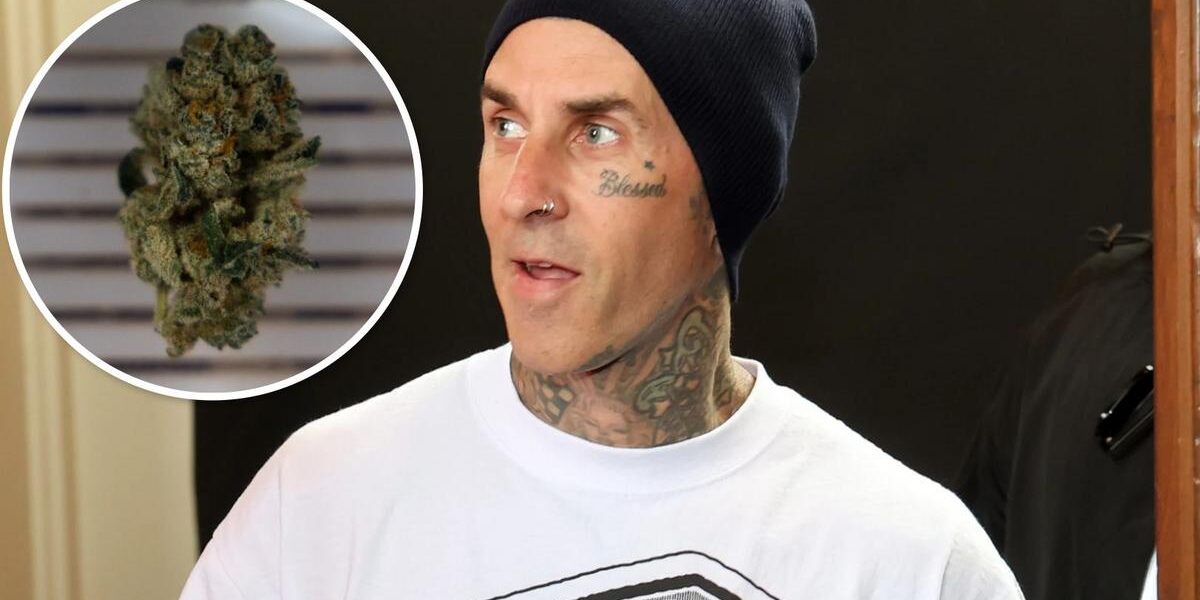

What to Know About Travis Barker’s Running and Sobriety
- Health warning: Travis Barker said he stopped smoking weed after a doctor warned him about pre-cancer of the esophagus.
- Former habit: Barker said he had smoked between 10 and 15 blunts a day.
- Running routine: Barker described running as a healthier habit that helped him stay sober and feel calmer.
- Run club: Run Travis Run brings people together to walk or run and make healthier choices.
This article explains why Travis Barker stopped smoking weed, how running became part of his routine, and what he has said about the Run Travis Run club.
Travis Barker’s account connects a doctor’s warning about pre-cancer of the esophagus with a shift toward running and a focus on sobriety. The information below summarizes his remarks and the club’s stated purpose.
Why Did Travis Barker Give Up Weed?
Barker said he stopped smoking weed after a doctor warned him about pre-cancer of the esophagus. He told Kid Cudi on the Big Bro With Kid Cudi podcast that he had struggled to quit and had smoked between 10 and 15 blunts a day.
Barker said a doctor’s warning prompted him to stop smoking weed.
“I only quit because I had pre-cancer of the esophagus. I loved blunts and I would smoke too much. So that was the only thing. My doctor, who was a really good friend of mine, Dr. B., I was like, ‘Dr. B., is this serious?’ And he was like, ‘This is your warning shot Trav. Don’t fuck around. You’ve got to stop smoking.'”
“I would’ve never stopped,” shared Barker. “I thought I could be like Willie Nelson and smoke until the day I die. But I feel like weed never hurt nobody, it just wasn’t right for me.”
Barker said he had been smoking between 10 and 15 blunts a day. He described his decision as personal, saying weed was not right for him.
What Healthier Habit Replaced Travis Barker’s Need for Weed?
Running became the healthier habit that Barker said replaced his desire to smoke. He said the idea of becoming a father helped motivate him to change his lifestyle.
Barker said running became more important to him than smoking.
Barker said he began running after learning he was going to be a father, because he wanted to be healthier and present for his son, Landon.
“When my ex-wife was pregnant with Landon, I didn’t know how or why I should do anything but I knew I needed to be healthy, healthier, because at the time it was like the Travis that you knew … walking around with a jar of blunts. That’s all I knew. Like, ‘Oh man, I’m having a son.’ So I started running to the freeway and back … I gotta be a badass dad. I gotta be the best dad I can be and I’m gonna start balancing out some of the bad stuff that I’m doing with the good.”
READ MORE: Why Travis Barker Felt Smoking Out With Cypress Hill Was Torture
At first, Barker said he tried to balance running with smoking, sometimes finishing a run with a blunt and a cigarette. Over time, he said his desire to run became stronger than his desire to smoke.
Barker described running as a routine that supported his sobriety.
“I found like 20 years later, a couple of miles a day keep the demons away. It really helped me stay sober because you can’t run a half a marathon if you’re doing drugs. It would be the hardest 13.1 miles of your life,” shared Barker, later adding, “My running started getting bigger and more important to me that smoking. It’s good man. It’s like therapy.”
Travis Barker Guests on the Big Bro With Kid Cudi Podcast
How Does Run Travis Run Bring People Together?
Run Travis Run is a club Barker started to share his interest in running with others. The club’s stated aim is to bring people together to walk or run and encourage healthy habits.
Run Travis Run connects Barker’s running routine with a community activity.
In a message on the club’s website, Barker said his routine began with short walks and developed into daily short runs. He said running gave him a sense of calm and a rush of dopamine, and that he runs 3 miles every day before shows while on tour.
He added, “This past year I ran my first half marathon and participated in a few 5Ks. I loved how everyone from all walks of life ran together and supported one another. The running community is massive and it really inspired me to create Run Travis Run as a way to bring like minded people together. I wanna motivate people to get outside and walk or run for a few hours, as well as make healthy decisions and create healthy habits. This is what Run Travis Run is built off of and we are just getting started.”
Barker said he had run a half marathon and taken part in several 5Ks. The club’s website offers ways to participate through charity, sponsorship, or volunteering.
What Did Travis Barker Say About Running and Sobriety?
Barker said running helped him stay sober and became more important to him than smoking. He also described running as a form of therapy.
Barker linked his running habit with his efforts to stay sober.
His account describes a gradual change: he began with short walks and runs, continued running over the years, and later said the habit had taken priority over smoking.
What Is Run Travis Run?
Run Travis Run is a running club started by Travis Barker to bring people together through walking and running. Barker said the club encourages participants to get outside and build healthy habits.
Run Travis Run is a community initiative centered on walking, running, and healthy choices.
The club’s website provides options to get involved through charity, sponsorship, or volunteering.
How Many Blunts a Day Did Travis Barker Say He Smoked?
Barker said he had smoked between 10 and 15 blunts a day. He said a doctor’s warning about pre-cancer of the esophagus led him to stop.
Barker reported smoking between 10 and 15 blunts each day.
Below, check out 30 photos showing Travis Barker’s tattoo transformation over the years.
30 Photos Showing Travis Barker’s Tattoo Progression Through The Years
Gallery Credit: Rob Carroll