Disaster movies often become mere spectacles filled with body counts, collapsing buildings, tidal waves, and panicked crowds. While the visual elements are significant, they are not the sole reason why the great films in this genre resonate with audiences.
Consider why films like 2012 and World War Z achieved such popularity. They carry profound real-life implications, grounding their narratives in relatable experiences. These films endure because disaster serves as a powerful storytelling mechanism that reveals human nature when normalcy is disrupted. Themes of vanity, courage, bureaucracy, tenderness, selfishness, class struggles, romance, cowardice, sacrifice, and denial emerge when stability is challenged. The following ten films exhibit these qualities but perhaps lack the star power or social media buzz to elevate their recognition.
10
‘Juggernaut’ (1974)
Image via United Artists
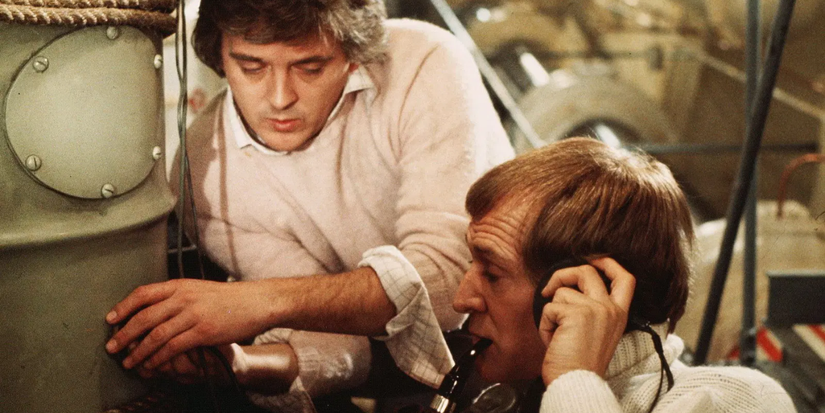
I will always advocate for Juggernaut. This film demonstrates that a disaster does not require rampant flames to create a sense of suffocation. Sometimes all it takes is a luxury liner, a bomb threat, the ocean, and enough procedural detail to make every passing moment feel like a tightening noose. The danger is tangible and well-defined. Explosives on a ship filled with people, a bomb disposal expert boarding—time, water, class dynamics, and panic all converge. Each corridor becomes a moral dilemma.
The film’s strength lies in its serious ensemble cast. No one approaches the material with campiness. Anthony Fallon (Richard Harris), Captain Alex Brunel (Omar Sharif), and Charlie Braddock (David Hemmings) bring a weary yet competent tension that enhances the film’s fear factor. The rich passengers, workers, crew members, and politicians are all interconnected within a system precariously balanced on the potential of one misstep. Juggernaut is a disaster film for those who appreciate process as suspense. It is calm, intelligent, and unsettling in just the right way.
9
‘The Rains Came’ (1939)
Image via 20th Century Fox
There is something magnificent about how openly emotional The Rains Came is. It belongs to an older style of disaster cinema where romance, melodrama, social upheaval, disease, weather events, and death coexist without apology. The setting of colonial India during a crisis adds moral depth beyond a simple “storm hits town” narrative. The rains symbolize more than just weather—they initiate a profound stripping away of vanity and social hierarchies. People reveal their true selves when faced with rising floodwaters and ensuing sickness.
The film allows catastrophe to redefine the emotional significance of everything around it. Characters who seemed confined to their drawing-room identities must suddenly navigate urgency, service, fear, and loss. While it possesses old-Hollywood grandeur, the movie earns its scale by illustrating that disaster can be both spectacular and spiritually corrective. This duality contributes to its potency.
8
‘San Francisco’ (1936)
Image via Metro-Goldwyn-Mayer
This classic film serves as a beautiful reminder that early Hollywood disaster movies did not view intimacy and scale as opposing forces. San Francisco dedicates significant time to constructing an entire social fabric—saloons, opera aspirations, rugged individuals, refined spaces—all before the earthquake strikes so that when it does occur, the city feels genuinely alive. This aspect is crucial since many disaster films falter by assuming that the event alone suffices.
San Francisco recognizes that an event only becomes overwhelming once something has been established for it to destroy. When the earthquake finally hits, it does so with tremendous impact. The destruction feels real and the ensuing chaos evokes an apocalyptic sense of fragility within civilization. However, what elevates this film from being merely historically significant is its emotional aftermath—lives are not just interrupted but fundamentally altered. The city’s collapse tests what remains when glamour, vice, social status, and personal illusions are all reduced to rubble together. The way San Francisco portrays communal suffering as both horror and reckoning is profoundly moving.
7 ‘The China Syndrome’ (1979)
Image via Columbia Pictures
I firmly considerThe China Syndromea disaster movie—and one of the finest—because it illustrates that disaster can exist in the tension between near misses and inevitability. There are no colossal waves or collapsing buildings in the first act. Instead, we witness one of modernity’s most terrifying disasters emerging from sealed systems, institutional denial, technological complexity—all while ordinary language masks impending annihilation.
This grounded approach only amplifies its fear factor over time. Kimberly Wells (Jane Fonda), Jack Godell (Jack Lemmon), and Richard Adams (Michael Douglas) deliver performances that encapsulate emotional range amid ambition and conscience under media pressure and whistleblower panic. The reactor itself becomes an unseen monster—something most cannot comprehend directly but must trust others to manage. This trust is what the film scrutinizes deeply.
6 ‘The Wave’ (2015)
Image via Magnolia Pictures
I admire howThe Wavesucceeds in merging two types of disaster-film enjoyment that often clash: geological spectacle with personal family panic. The initial scenes appear deceptively mundane—scientists monitoring instability amidst everyday family routines and local skepticism—but this ordinariness lays essential groundwork.
When the mountain finally gives way and transforms the fjord into a deadly corridor, all that realism pays off dramatically—every siren blaring becomes urgent as every road matters now. The wave itself terrifies because it captures scale from the victims’ perspective—not merely a stunning CGI wall of water but time running out in an environment turned into a trap.
5 ‘The Quake’ (2018)
Image via Nordisk Filmdistribusjon
The Quake serves as an unsettling companion piece toThe Wave because it carries forward emotional remnants from its predecessor into another rupture instead of resetting trauma cleanly between sequels—a smart narrative choice.
The earthquake isn’t merely an excuse for destruction but arrives amid pre-existing fears and obsessions—creating real tension during its first half.
‘Miracle Mile'(1988)
Image via Hemdale Film Corporation
I considerThe Miracle Mile one of the most distressing urban-apocalypse films ever made due to its brutal manipulation of ordinary time. Its premise is almost absurdly simple yet perfect: Harry Washello (Anthon Edwards answers a pay phone late at night only to overhear what may be an erroneous warning about impending nuclear war.
This sets off a frantic race against disbelief—Is this call genuine? Is panic warranted? How quickly can Los Angeles transition from dreamy nocturnal drift to chaotic unraveling? Horrifyingly fast.
‘These Final Hours'(2013)
Image via Roadshow Films
Image via Roadshow Films
This film brutally examines one of the ugliest questions any disaster movie can pose: if the world truly ends soon, who do you become in those final moments? Not in some noble or grandstanding manner but genuinely—do you seek pleasure? Violence? Numbness? Rescue? Obligation? Panic? Sex? Family? Self-erasure? These Final Hours excels at portraying apocalypse not just as fiery destruction but as moral decay long before any explosion occurs.
Sarah Parker is a research analyst and content contributor with a strong interest in business strategy, organizational behavior, and social development. With a background in sociology and public policy, she focuses on exploring the intersection between research and real-world application. Sarah regularly contributes articles that bridge academic insights and practical relevance, aiming to foster critical thinking and innovation across sectors.