

If you spent any amount of time in the trenches of genre TV during that strange post-Lost, pre-streaming-overload window, you learned to expect the unexpected — especially when a network decided to swing for the fences with a budget that barely covered the lumber. Shows like <em>Fringe</em> were throwing wild ideas on the table before anyone bothered to ask if the math worked. <em>Battlestar Galactica</em> was patching together a whole civilization out of shaky lighting and sleepless characters.
And then you had the oddballs — Invasion, Threshold, early Eureka — series that reached further than their budgets probably advised. That era had a handmade bravado to it, the sort that made ambition feel lived-in instead of manufactured. Helix comes from that same petri dish, the corner where pulp impulses and “let’s just try it” energy could coexist without apology. Best of all, both seasons are streaming free on Tubi, making now the perfect time to revisit (or finally discover) one of sci-fi horror’s strangest hidden gems.
You see shades of everything in Helix: a little The Thing in the way the cold gnaws at every frame; a little Alien in how the research station feels like a trap the characters wandered into without reading the fine print; even a little The X-Files in the black-oil weirdness drifting through vents like it’s trying to pick its moment. It doesn’t just borrow from its influences — it reacts to them, like it grew up on creature features and cold-lab paranoia and decided to tilt everything a few degrees off-center. And because nobody tried to smooth it out or make it “behave,” the series gets to be strange in a way that feels earned and a little intoxicating.
This Sci-Fi Series Is an Arctic Nightmare Built on Paranoia
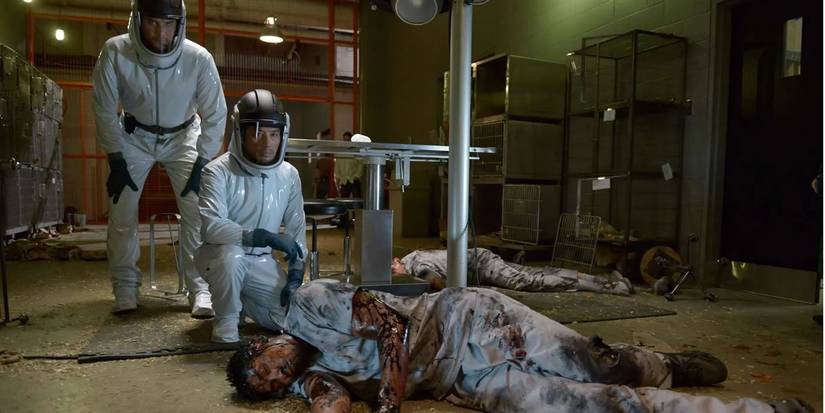 Image via SyFy
The foundation of Helix’s first season is simple, and simple becomes unstable fast. A CDC rapid-response team is dropped into an Arctic research base after a viral outbreak with no recognizable logic. The building itself — long hallways, sealed labs, whiteout windows — is unsettling in its blankness. It feels like a machine, and everyone inside starts to sync to its rhythm.
Once the virus begins bending biology, the show shifts from medical sci-fi into pure dread. Every episode squeezes the characters closer together, eroding trust in tiny, corrosive ways. Even familiar faces start to feel off, as if the cold is sharpening their edges.
And the Arctic setting does a kind of work no CGI can mimic. You feel the cold in the staging, in the way breath catches in the air, in the stillness between scenes. There’s nowhere to duck out, no woods, no nearby town, nothing but white in every direction. The snow makes its own kind of fence, letting you know that if things go bad, you’re stuck. It’s not loud tension; it creeps up on you and lingers after the episode shuts off.
The Infection in ‘Helix’ Doesn’t Just Spread, It Evolves
One of the show’s smartest instincts is refusing to give the virus a rulebook. Most outbreak stories map out incubation periods and tidy symptoms. Helix tosses that aside. Each infection feels like a new branch of the same nightmare — sometimes biological, sometimes psychological, sometimes a total rewrite of a character’s motives.
That unpredictability becomes the engine. You stop waiting for explanations because the show isn’t interested in them. It’s chasing mood, tone, and that low hum of wrongness. Tension stays alive in places where cleaner sci-fi would settle into procedure.
Underneath the mutation, there’s a quieter thread: the infection pulling at relationships. It warps the rhythms people rely on, scrambles loyalties, and makes colleagues hesitate around each other. Characters who once moved in sync suddenly feel like strangers occupying the same room. The breakdown of trust lands harder than the body horror because it feels like something the cold itself could trigger.
Season 2 of ‘Helix’ Swings Harder — and Stranger
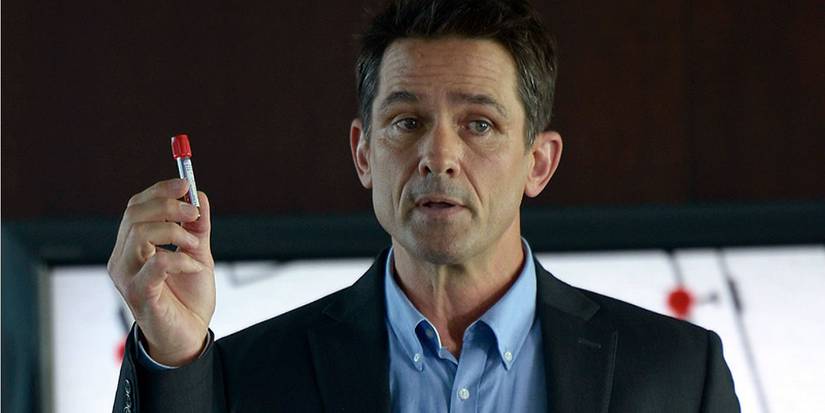 Image via SyFy
Season 2 is one of those pivots that still gets people talking because it doesn’t ease into anything — it just rips the floorboards up. One moment you’re trapped in Arctic steel, and the next you’re in a brighter, unnervingly alive world the show isn’t sure it can trust. Even people who didn’t love the shift can acknowledge the ambition. It’s the move you make when you can tell the story is running out of air, and the only fix is to change things up so it can breathe again.
The new environment opens a different flavor of paranoia. Without the cold metal backdrop, the danger becomes ideological. The threat feels more personal, more manipulative. It’s a different kind of claustrophobia: one built on social pressure instead of steel walls.
And the tonal swing lets the show finally dig into the idea Season 1 only hinted at: the real outbreak isn’t the virus — it’s fear. Fear messes with people. It throws off their read on a situation, pushes them into choices they’d never make on a calm day. And Season 2 runs with that, giving the whole story a shake just to see what comes loose. It’s rougher and more chaotic, but it doesn’t betray what came before.
‘Helix’ Broke the Mold of a Typical Sci-Fi TV Show
What makes Helix worth revisiting now is how boldly it rejects the polished consistency of modern genre TV. Today, even the strangest sci-fi has a smoothness to it. Helix has none of that. The show moves with that loose, jumpy energy you got from Lost back when it was throwing out weird ideas left and right or from early Fringe before everything was mapped out.
Some episodes feel like someone walked into the room with a rough idea and everyone decided, “Yeah, let’s go with it.” And weirdly, that’s when the show feels most alive. It doesn’t worry about looking polished or shaping itself into something safe. It just goes for it and assumes you’re willing to keep up. And because it never tries to behave, it becomes its own thing — something that feels more like a late-night cable discovery than a streaming-era product engineered for retention rates. The beat-up, scrappy vibe has aged way better than anyone figured it would.