
Key Takeaways
- Definition: A rock opera combines rock music with a narrative structure, distinguishing it from traditional concept albums.
- Historical Impact: The Who’s Tommy is often regarded as the most influential rock opera, setting a precedent for future works.
- Notable Examples: Other significant rock operas include Jesus Christ Superstar, The Rise and Fall of Ziggy Stardust, and The Wall.
- Cultural Relevance: Despite the digital age, rock operas remain a celebrated form of artistic expression in music history.
Rock opera is a term that curries both favor and foreboding. Depending on your feelings, you might applaud the ambition, criticize the conceit or lambast the bombast — or all of the above, simultaneously. Rock, after all, was not meant to be operatic; in fact, it was a reaction to/against such staid classical motifs. Three chords and the truth, right?
It was perhaps inevitable that rock musicians began exploring more advanced forms of composition and moved beyond two- and three-minute song forms and unconnected track listings. Frank Zappa is credited with, as early as 1963, talking about “the world’s first rock ‘n’ roll teenage opera” in relation to I Was a Teenage Malt Shop. Brian Wilson called the Beach Boys’ Pet Sounds “a teenage symphony to God.”
These works captivated their creators and were embraced by the growing rock audience. There is, however, a difference between the concept album and the rock opera. It’s what separates Pet Sounds from Pretty Things’ S.F. Sorrow, Sgt. Pepper’s Lonely Hearts Club Band from the Who’s Tommy — for that matter, Pink Floyd’s The Dark Side of the Moon from The Wall.
Though the “rock” aspect establishes it as something outside the usual strictures of classic oratorio, a piece still has to have a narrative to be considered a rock opera. What rock brings to the party is irreverence; the rock opera does not have to be linear or easy to follow, and plenty have certainly delved into surreal, trippy territory (sum up Genesis’ The Lamb Lies Down on Broadway in five easy words, why don’tcha).
But there’s always a story at the heart of these pieces that twists, turns and develops on a journey to an identifiable end. The idea of investing in such an enveloping, long-form piece may seem anathema to the digital streaming age. But rest assured that rock operas were, if not commonplace, then certainly regular fixtures during the 60s and 70s.
The best still hold up, which makes it no small challenge to identify the Big 4 of Rock Operas. But we’ll certainly stand by these as the pinnacle moments.
The Who, <em>Tommy</em> (1969)
It’s not the first rock opera — credit that to Pretty Things and S.F. Sorrow in 1968 — but Tommy was, and remains, the most impactful. Pete Townshend had delivered the first rock operetta three years earlier with “A Quick One, While He’s Away,” a nine-minute suite whose tale of infidelity was echoed at the beginning of Tommy.
We know the story: Young Tommy Walker becomes deaf, dumb and blind after watching his mother’s lover kill his father, who arrives home after being presumed dead in World War II. The adults tell him “you didn’t see it, you didn’t hear it, you won’t tell nothing to no one,” and we spend most of the double-album set tracking Tommy’s sometimes horrific experiences — particularly at the hands of Cousin Kevin, Uncle Ernie, the Hawker and the Acid Queen — and ultimately successful attempts to recover his senses, albeit with catastrophic but cathartic and rebellious results.
Tommy is also a musical tour de force, with Townshend expanding his compositional ambitions, Roger Daltrey’s tremendous growth as a singer, Kit Lambert dialing in his sonic production, and all four band members at their peak.
“Pinball Wizard” and “We’re Not Gonna Take It” endure in the Who’s pantheon, but instrumental pieces such as “Overture,” “Sparks” and “Underture” — not to mention live performances (“Show some respect; it’s a f—in’ opera!” Keith Moon reminded us) really show the band’s mettle.
Townshend’s varied explanations about Tommy‘s deeper meanings only add to its legacy, along with film, Broadway, ballet, orchestral and actual opera productions, the latter dating back to a 1971 staging in Seattle.
Jesus Christ Superstar (1970)
The Greatest Story Ever Told, or at least its final chapter, may not have been the first on the bingo card for rock-opera treatment. But with the format in its infancy, Andrew Lloyd Webber and Tim Rice chose to build their third collaboration (after The Likes of Us and Joseph and the Amazing Technicolor Dreamcoat) on the Gospels.
Jesus Christ Superstar, which tracks from Christ’s arrival in Jerusalem to his crucifixion, was an album first, featuring Deep Purple Mark II frontman Ian Gillan as Jesus, former Manfred Mann singer Michael d’Abo as King Herod, future Eric Clapton backing vocalist Yvonne Elliman as Mary Magdalene and Murray Head as Judas Iscariot.
Instrumentalists included future Wings guitarist Henry McCullough, Joe Cocker sideman Neil Hubbard, Bruce Rowland and Alan Spencer, and future Mott the Hoople organist Mick “Blue” Weaver. Lyricist Rice offered some intriguing insights, notably that “If you’d come today, you could have reached a whole nation/Israel in 4 B.C. had no mass communication.”
Jesus Christ Superstar was the No. 1 album of the year on the Billboard 200 and Top 10 in the U.K., and the musical made its way to Broadway in 1971 where it was nominated for five Tony Awards.
It’s been revived on regular occasions while Norman Jewison directed a film adaptation in 1973 that was nominated for six Golden Globe Awards and won a BAFTA in the U.K. for Best Soundtrack.
Read More: The History of Rock Stars in ‘Jesus Christ Superstar’
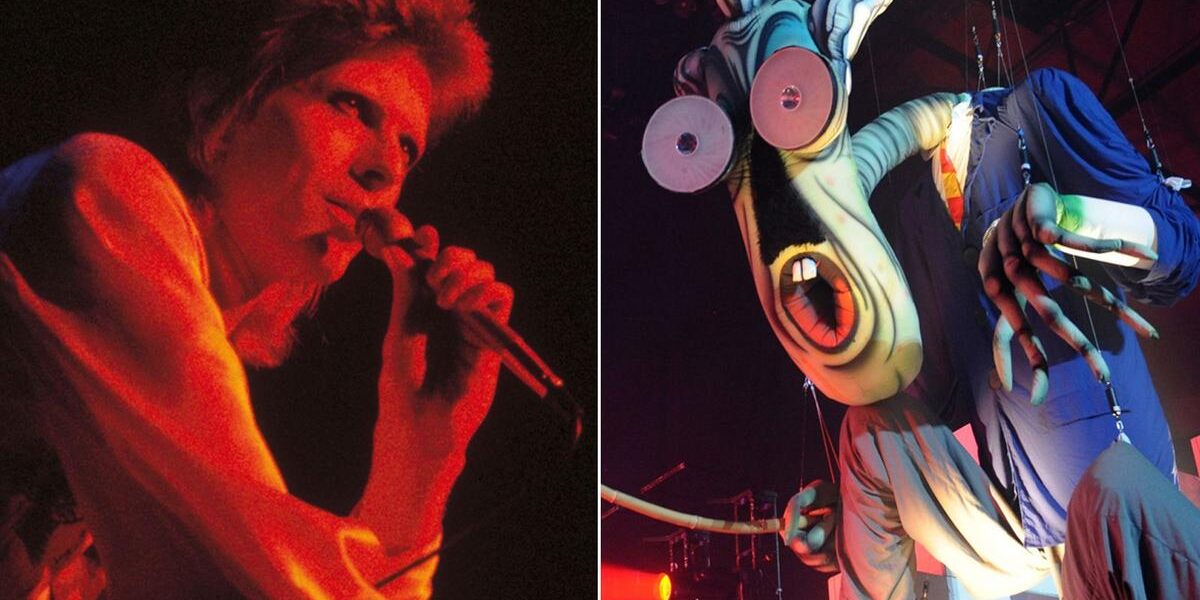
David Bowie, The Rise and Fall of Ziggy Stardust and the Spiders From Mars(1972)
David Bowie already had four albums under his belt when he came up with the androgynous orange-haired character that would become an enduring signature throughout his career — and the voice of some of his staple songs.
Ziggy Stardust is an alien sent to Earth to save it before an unidentified apocalyptic cataclysm. Inspired by self-destructive predecessors such as British singer Vince Taylor and Iggy Pop from The Stooges’, Ziggy experiences a rise fall and redemption over eleven songs — all by Bowie except for Ron Davies’ “It Ain’t Easy.”
Bowie became Ziggy while his established band members — guitarist Mick Ronson drummer Michael “Woody” Woodmansey and bassist Trevor Bolder — became The Spiders. The sound was at the forefront of glam rock.
“Suffragette City” has probably had the most robust afterlife but there isn’t a bad track on this album; it’s to Bowie’s credit that all work independent of storyline. He put Ziggy and The Spiders to rest on July 3rd 1973 after a concert in London but it remains an indelible part of his chameleonlike identity.
Fortunately performances have been preserved in films such as D.A. Pennebaker’s Ziggy Stardust and The Spiders From Mars, its companion soundtrack Ziggy Stardust: The Motion Picture, as well as Live Santa Monica ’72.
Pink Floyd,The Wall (1979)
No stranger to concept albums — riding on their ’70s roster including The Dark Side of The Moon,Wish You Were Here ,andAnimals – Pink Floyd flexed greater narrative muscle for their eleventh studio album.
The story goes that Roger Waters presented two stories to group,The Wall andThe Pros And Cons Of Hitch Hiking which became his first solo album in 1984.
His bandmates made wise choices embarking on turbulent ten-month production assisted by Bob Ezrin marked by considerable power struggles; keyboardist Richard Wright left before it was over.
The story came from close detailing deeply disaffected rock star—named Pink no less—drawing themes from Waters’ life as well as former Pink Floyd frontman Syd Barrett’s life.
The traumas run deep playing out exceptional songs including “In The Flesh?”, “Another Brick In The Wall Part 2”, “Mother”, “Goodbye Blue Sky”, “Nobody Home”, majestic “Comfortably Numb” rocking deluge “Run Like Hell”.
Fans loved it;The Wall hit number one around world selling more than thirty million copies. Concert presentation featuring Gerald Scarfe’s puppets construction actual wall between band audience became legendary although1982 film adaptation directed Alan Parker starring Bob Geldof Pink won two BAFTAs has since become cult favorite.
Though Pink Floyd (David Gilmour solo) continued play songs,The Wall largely existed Waters’ purview including all-star July1990 staging site Berlin Wall Waters’ own tours pieceAnother Brick In The Wall: The Opera .
Rock’s 20 Most Far-Out Concept Albums
Let’s return some most ludicrous messy weird wild records originating all corners pop music globe.
Gallery Credit: UCR Staff








