

Key Takeaways:
- Auld Lang Syne was the traditional New Year’s song until Bob Dylan‘s “Forever Young” gained popularity.
- “Forever Young” was written as a lullaby for Dylan’s son, Jesse, expressing hopes for his happiness and strength.
- The song’s lyrics resonate with themes of optimism and new beginnings, making it an unofficial New Year’s anthem.
- Dylan’s “Forever Young” is considered a classic despite its initial low chart success, gaining recognition through covers and live performances.
The Auld Lang Syne had been one of the only key New Year’s tunes since its publication in the 1700s, until 1974. This was the year that Bob Dylan released his fourteenth studio album, Planet Waves, including his hit song “Forever Young” in January. Since the song’s release, it has become the unofficial anthem for the New Year, although the song has personal origins that bear no relation to the New Year at all.
What is Bob Dylan’s “Forever Young” About?
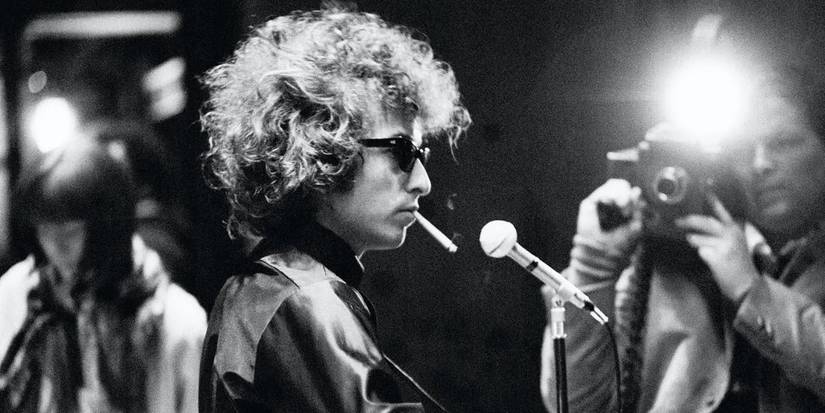
Dylan wrote and recorded “Forever Young” in 1973, and addressed the song to his oldest son, Jesse, who was born in 1966. He wrote the song, which was meant to be a lullaby, about a father’s hopes that his child will remain happy and strong while undergoing life’s biggest challenges. In a demo version released as part of his compilation album Biograph, Dylan can be heard saying that he was “thinking about” one of his sons while recording “Forever Young” and “not wanting to be too sentimental”.
Dylan released two versions of “Forever Young” on the 1974 album Planet Waves, one being a lullaby and the other being a rock track. Despite its personal and sentimental meaning, Dylan did not perform the song as much as he did his other songs, but he still performed “Forever Young” quite a lot. His most memorable performances include a duet with Bruce Springsteen in 1995 and his and The Band’s farewell concert, The Last Waltz, in 1976.
The “Blowin’ In The Wind” singer’s biographer, Clint Heylin, wrote that “Forever Young” was also written as a response to another classic rock artist. Dylan did not see eye-to-eye initially with Neil Young, as he felt that Young borrowed his style. Heylin stated that Dylan wrote “Forever Young” as a response to Young’s “Heart of Gold” as Dylan had said in 1985, “[I’d] turn on the radio, and there I am, but it’s not me.”
Why Is Bob Dylan’s “Forever Young” An Unofficial New Year’s Anthem?
Although it is a lullaby addressed to his son, Dylan’s “Forever Young” has lyrics that encompass the theme of evolving and dreams that relate to the new year. Lyrics such as “May God bless and keep you always, may your wishes all come true” and “May you build a ladder for the stars and climb on every rung” echo the optimism that is always felt and highlighted when people ring in the New Year. These lyrics also capture the spirit of hopes, dreams, and wishes coming true, which is relatable to the New Year, as many hope to achieve their goals.
Who’s Your Perfect
Classic Rock Band?
A Personality Quiz · 10 Questions
Five legendary bands. One perfect match. Answer ten questions about your personality, attitude, and taste to find out which classic rock icon you truly belong with. Are you raw power, rolling swagger, operatic drama, thunderous riffs, or timeless melody?
AC/DC
Rolling Stones
Metallica
Queen
The Beatles
Your Perfect Band Is Revealed
Based on your personality, energy, and taste, the classic rock band that matches your soul is…
AC/DC
You are pure, undiluted rock energy. You don’t need tricks, trends or theatrical gimmicks — you have something more powerful: a riff that hits like a thunderbolt and an attitude that never wavers. Like AC/DC you understand that simplicity executed with absolute conviction is its own form of genius. You’re the person in the room who doesn’t overthink it doesn’t pretend and never turns the volume down. The highway to hell is a state of mind — and you’ve been on it since day one.
The Rolling Stones
You’ve got swagger that can’t be taught. Rooted in blues and soaked in street-level attitude you move through life with loose dangerous elegance that draws people in without ever trying too hard. Like the Stones you’ve seen it all done most of it and somehow look better for it. You’re not chasing perfection — you’re chasing truth groove and that electric moment when everything clicks. Can’t always get what you want? You tend to get it anyway.
Queen
You are magnificent and you know it — not from arrogance but from an unshakeable sense of self that has never needed anyone’s permission. Like Queen you defy every category people try to place you in. You blend epic with intimate operatic with anthemic serious with playful. You live boldly love fiercely and perform every aspect of your life as though the whole world is watching because sometimes it is. We are champions — and so are you.
The Beatles
You have the rarest of gifts: the ability to make something that feels both deeply personal and universally human. Like The Beatles you’re a natural connector — someone whose warmth curiosity and creative instincts draw people together across every divide. You believe in melody craftsmanship and in the quiet power of a song that says exactly what someone needed to hear. You’ve changed the people around you just by being who you are. All you need is love — and you give it generously.