You cannot properly summarize David Robert Mitchell’s filmography to date, since each one tackles a different genre or two, and then all of them have their own ideas about how to do weird things with those genres. His directorial debut was in 2010, and was kind of a weird dramedy a bit like Dazed and Confused, but not quite as strong or coherent. Then, 2014 is the movie for which he made a name for himself, mainly as a horror filmmaker, yet then he didn’t stick with horror for long, and made something that got very messy and head-spinning in 2018. Eight years passed, and he’s now returned with a fairly large-scale (almost blockbuster) sort of movie that J.J. Abrams seems to be getting a lot of attention for, even if Abrams is only there, officially, in a co-producing role. It’s a bit Abrams-esque, which is to say it’s also a bit Spielberg-esque, but more on that specific film shortly.
There are only four movies here, sure, but they’re all strange and there are a fair few things to talk about when it comes to each. Three are probably good, or maybe it’s more the case that two are good, and one’s a bit misunderstood. As for the fourth… it’s baffling and maybe kind of amateurish, but somehow in a weirdly compelling way, too. If you want movies you don’t usually see, David Robert Mitchell might be your guy, even if he is always, admittedly, mixing and matching individual elements that do sometimes feel familiar. His four feature films to date are ranked below, starting with the one that’s a bit of an interesting mess, and ending with the one that still feels like the closest he’s come to making a full-on classic.
4
‘The Myth of the American Sleepover’ (2010)
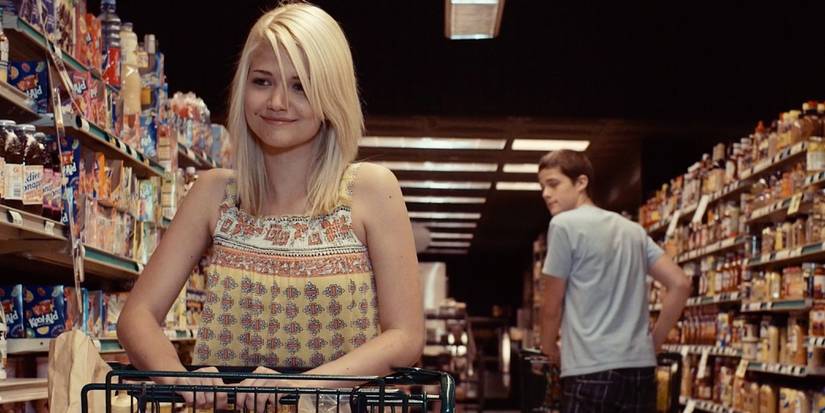 Image via IFC Films
Dazed and Confused was mentioned before as something that feels a little in line with David Robert Mitchell’s first movie: The Myth of the American Sleepover. The word “Myth” being in the title here feels like it does some heavy-lifting, supporting the argument that this is more than just a coming-of-age dramedy, and something that’s instead dreamlike or even a bit fantastical. It’s an avant-garde kind of coming-of-age movie, or it’s a fairly sloppily put-together attempt at making another coming-of-age dramedy that might have a chance at scratching the same itch as something like Dazed and Confused, or the other hang-out movies Richard Linklater’s directed.
It’s hard to know whether it’s just basic, or whether there’s some extra layer to the basic and amateurish qualities.
In The Myth of the American Sleepover, the teenagers feel like they’re hanging out in purgatory. The drama’s rarely dramatic, the crushes and romances scarcely passionate, and the comedy simply not there at all, to the point where one starts to wonder whether there’s been some massive era in this being labeled as a dramedy. It’s Mitchell’s smallest movie, and it looks like the simplest on the surface, so you return to it after having seen any combination of the other three, expecting something gentler and more basic, and nope. Well, it might be more basic. It’s hard to know whether it’s just basic, or whether there’s some extra layer to the basic and amateurish qualities, and so what you’re actually seeing is a more arthouse take on (or even an underhanded parody of) “the summer’s winding down” style coming-of-age movies. What a trip, and what a snooze, all at the same time.
3
‘The End of Oak Street’ (2026)
The cinematic world is not dominated by dinosaurs in the way it arguably should be because you’ve got Jurassic Park, which towers over everything critically and commercially, and then you’ve got the Jurassic Park sequels, which tower over things not so much critically but usually commercially. It felt as though there was something of a monopoly on big-budget dinosaur movies, so it’s nice when something like The End of Oak Street comes along and shows that dinosaurs don’t need direct attachment to Steven Spielberg’s original film/series to work. Of course, The End of Oak Street owes debts to Spielberg’s filmography in other ways. It doesn’t take place in that world, and the setting of 1982 appears to be a way to get out of any need for characters to mention “This is like that movie, Jurassic Park,” but some scenes do pay serious homage to the first two Jurassic Park movies. The premise also takes what the premise of Jurassic World Dominion should’ve been and has more fun with it.
That film promised dinosaurs freed at last and rampaging all over the world. Actual exciting scenes with dinosaurs in real-world locations proved minimal. With The End of Oak Street, you only get a small chunk of humanity thrown back in time, but many of the set pieces do resonate the way the set pieces in a hypothetically better Jurassic World Dominion might’ve. Beyond Jurassic Park, you’ve got some homages to Poltergeist (which Spielberg produced), Close Encounters of the Third Kind, E.T.: the Extra-Terrestrial, Jaws, and even some Raiders of the Lost Ark (though Indy never had to deal with a snake quite this big). Parts of The End of Oak Street also feel bloodier and a little more intense than you might expect, and the end of The End of Oak Street… it’s interesting. Certain things about it set in long after the movie’s over so it’s hard to feel sure about where it all ends up. But the ride there’s a fun one, and Anne Hathaway continues to battle Zendaya, Robert Pattinson, and Tom Holland in the competition of “Who Does 2026 at the Movies Belong to?”
2
‘Under the Silver Lake’ (2018)
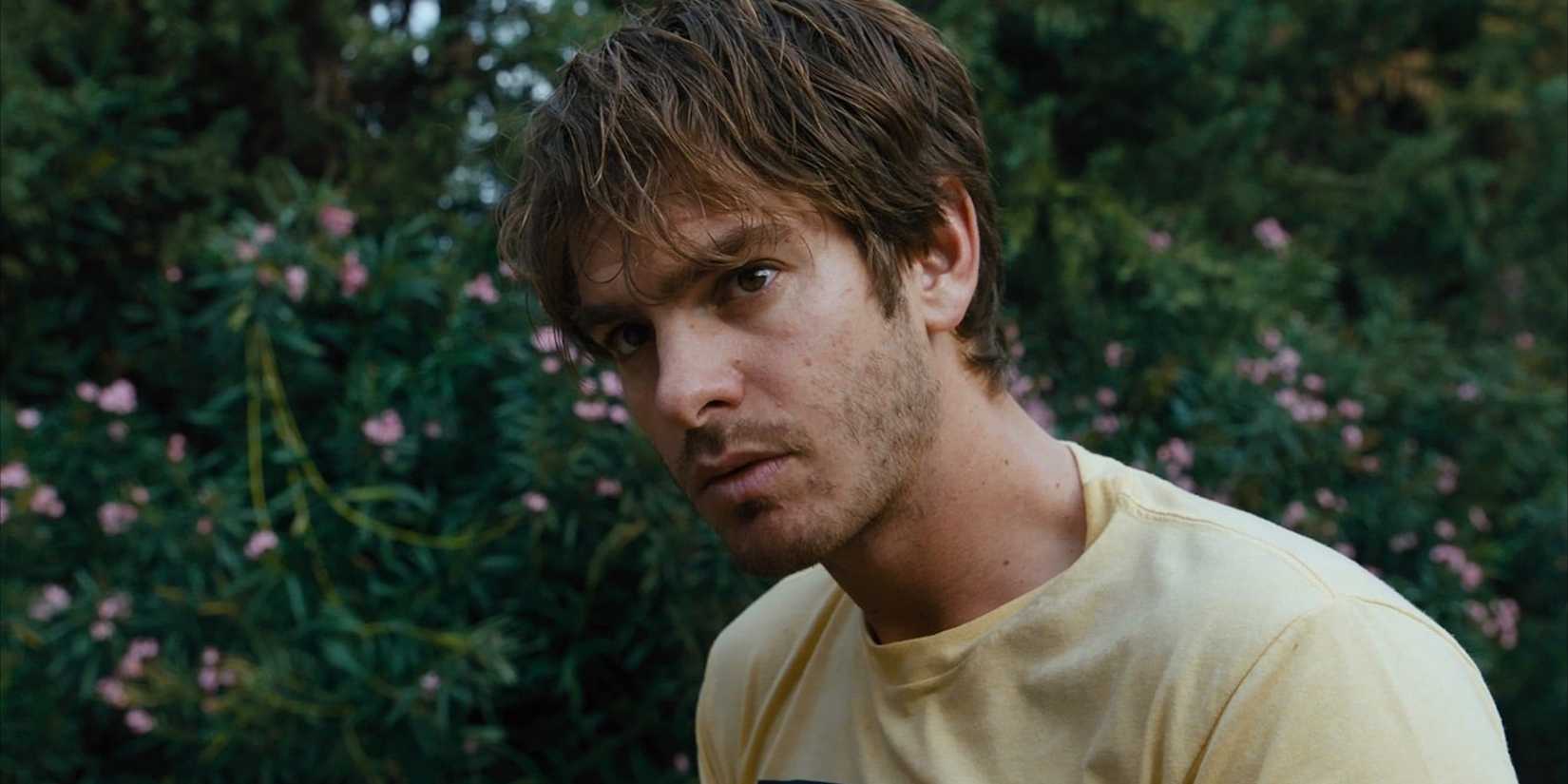 Image via A24
While there aren’t really ways to break down just what happens in Under the Silver Lake, there are things to compare it to. It’s less being like “Hey, the movie is about this happening, and if you like movies where that happens, maybe check it out.” It’s more like “Uh, this mess of a film takes messy inspiration from the best of the messes since it’s got the fingerprints of someone who wants to be Thomas Pynchon all over it, and then you throw in a bit of David Lynch fanaticism.” You say all that, and potential watchers are either clutching a bottle of pepper spray or starting to back away very slowly or maybe they’re just flat out running elsewhere. Look, Under the Silver Lake is not their kind of movie. It’s probably not your kind of movie. Whose kind of movie even is this?
Uh, Under the Silver Lake looks pretty good. Visually, David Robert Mitchell seemed to know what he was doing,andthe colorandstyleofitallbeingreminiscentofsomeworksby David Lynch …like that’s pretty high praise.As for Pynchon,it’s abouta guy stumblingaround tryingto uncoversomethingandlearninglessaboutallsorts of conspiracies shady figuresandunderground societies themorehetries interactwiththem.It’s abit Inherent Vice butwiththecomedystrippedaway,makingitarguablymorelike The CryingofLot49 butabit longerandmorecomplex,sothrowinabitof V into themixtoo.MaybethereareotherpostmodernauthorsMitchell’spullingfromtoo. Anyway verylittleofthismovie makesanykindofsenseintheway senseisusuallydefined understood butit’sworthawatchforthethingsitdoesrightstylisticallyandfortheundeniably daringplacesit’salsoveryconfidenttobargeintothroughout.
1
‘It Follows’ (2014)
Image via Image via RADiUS-TWC

The high-concept premise is the first thing that It Follows really has going for it,andthen thesecondthingisthefactthatsaidpremiseisexecutedincrediblywell.Watever David Robert Mitchell was tryingto doin The MythofTheAmericanSleepover (itremainsamythtery),he’dreallyworkedout hiswholestyleandwhattodowith It Follows . Thisis hismostintensestabatthorror genre ,withtheoutlandishpremisemadetoworkhereinvolvingasexuallytransmitted disease thatisamuchmoredeadly(inliteral sense)thanmore“normal”ones.Ifyougetinfected,you’restalkedby somekindofveryslowbutalsoverydeadlycreature,andtheonlyway–atleastitseemsinitially–togetthetargetoffyouisbyhavingsexualintercoursewithsomeoneelse,andthenthecreaturewillpursuetheminstead.
The paranoia remains because once they want is dead,the creature willgobackto thenextpersoninthechain.Thewholemoviehassomeyoungpeoplefranticallytryingto workallthisout ,allthewhile worryingabouthowlongtheycankeepfleeing–andkeeptrackof–themonstert hat’safterthem. Metaphorically… well,it’ sobviouswhatit’ sabout.The subtextbecomestext here ,or maybe thesubtext/textbecomesliteralvillain. It Follows makesallthiswork ,boastsahandfulofgenuinelyterrifyingsequences ,looksuniqueon an atmosphericfront,andfeelscleverasregardsthemythologyandunique central monsteritbuilds up.It ’soneofthebestpsychologicalthriller/horror/mysteryfilmsofthecenturysofar,andcertainlyfeelslike David Robert Mitchell’s single strongestfilmmaking effortto date.

[nospin]Here you can find the original article; photos used in our article come from this source. We are not their authors but have used them solely for informational purposes with proper attribution.
[INPUT_HTML_END]