
As a fan of <em>Traitors</em>, I experience a surge of excitement whenever I see Alan Cumming. His fabulous presence — marked by elaborate outfits and a wickedly witty monologue — indicates that something significant is about to unfold: a challenging task, a tense elimination, or a shocking betrayal. It’s curious how calm I feel while conversing with the host of one of Peacock’s most captivating shows. Perhaps it’s nostalgia. Like many millennials, my first encounter with him was in <em>Spy Kids</em>, where he portrayed a quirky TV show host creating henchmen made of thumbs, making it a comforting watch.
Or perhaps it’s because the man I’m speaking to isn’t the same one I see on my TV every Thursday. Cumming has mentioned that he approaches his hosting persona similarly to any other character, embodying a role that shares his face and name. While there are moments where the lines blur (his stylish striped sweater and chunky yellow glasses are undeniably chic, and he discusses the show’s chaos with an unmistakable gleeful glint in his eye), there’s a genuine sensitivity and humility to the real Cumming.
It’s hard to overstate just how accomplished Cumming is. His list of accolades is extensive, including Emmys, Tonys, BAFTAs, Oliviers, and nominations for Critics’ Choice and Golden Globes — not to mention the honors he’s received for his advocacy for animal and LGBTQ+ rights. Despite all this, Cumming remains incredibly grounded, offering both thoughtful intelligence and cheeky irreverence. Despite his on-camera humor, he admits to often feeling nervous, which may surprise those familiar with his work. He candidly shares his thoughts on everything from the Real Housewives and the MCU to the state of the industry and the more heartbreaking moments in his career that continues to thrive in his 60s.
‘The Traitors’ Isn’t a Reality Show — It’s a Psychological Experiment
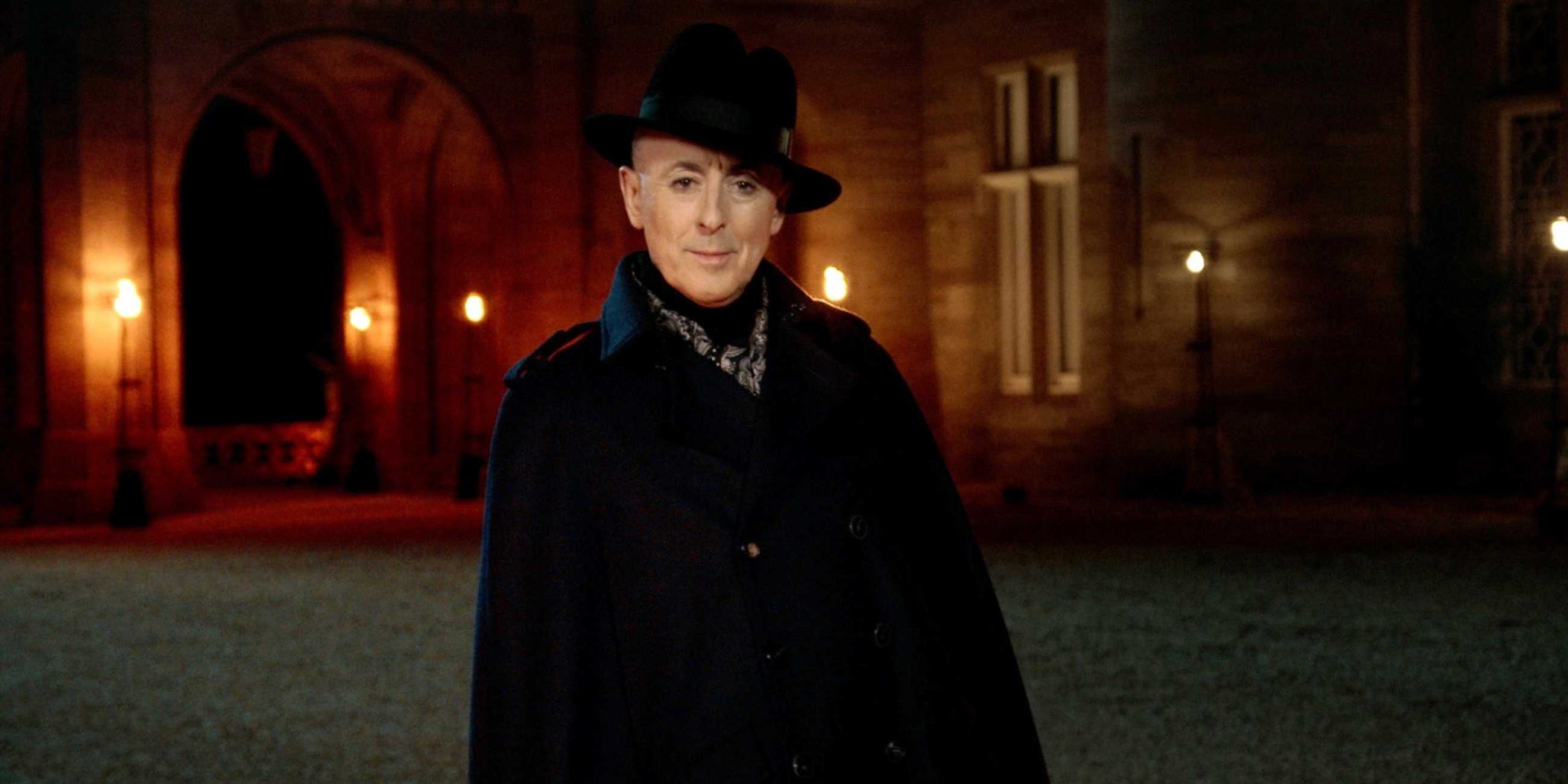
Image via Peacock/NBC Universal
Reality TV often gets criticized as being trashy or lowbrow, but dedicated fans know better: it’s a compelling study of human behavior. For those unfamiliar with it, The Traitors operates similarly to Mafia or Werewolf, where a group of Faithfuls attempts to vote out the hidden Traitors who are secretly sabotaging the game and conspiring to “murder” a Faithful each night. If the Faithfuls succeed in banishing all Traitors, they win the accumulated prize money. However, if even one Traitor remains, that Traitor takes all the cash for themselves. This creates a tense environment where loyalties are tested, betrayal is inevitable, and every word and microexpression is heavily scrutinized.
Cumming describes it as a psychological experiment. “Participants are placed in an incredibly taxing situation,” he explains. “They are likely pushed in psychological ways they wouldn’t typically experience and react in ways they wouldn’t normally react.” Like most reality shows, contestants are isolated from the outside world, confined with their fellow players in a remote Scottish castle. “It’s reminiscent of Lord of the Flies — they’re all in this bubble together.”
Contestants naturally gravitate toward like-minded individuals, forming alliances with those they trust. This can lead to sweet yet surprising connections but can also reveal inherent biases and provide insight into human psychology. For example, discussions about careers frequently arise early in the game when strategy or shared history is minimal. While Cumming understands this tendency, he believes that certain professions being more suited for success in the show is a myth. He cites Abby — an astrophysicist from The Traitors’ new season on NBC — who is often sought for her opinion despite her theories being consistently incorrect — as well as “gamers” from shows like <em>The Challenge</em> and Big Brother, who have been unfairly targeted in past seasons. “It’s natural,” Cumming admits. “You see people forming tribes and sticking together out of solidarity, but sometimes people overthink it. While there are skills involved, it’s much more arbitrary than that. It’s about instincts that don’t necessarily relate to gaming. That’s what I appreciate about this game.”
It’s more about having instincts that don’t necessarily have to do with gaming.
Currently, the show is edited so that viewers know who the Traitors are from the outset — allowing them to yell at the TV when Faithfuls trust one of the foxes in the henhouse. Some viewers have expressed interest in playing along with the Faithfuls by watching a version that conceals the Traitors’ identities. The show experimented with this last season by assigning one Secret Traitor but Cumming admits this twist didn’t pan out as expected—possibly because Donna Kelce was voted out quickly.
Cumming believes that not knowing any Traitor’s identity would undermine a fundamental aspect of the series. “The essence of the game is knowing who the villains are while watching everyone try to figure it out,” he says, noting that viewers’ “feeling of superiority” is crucial to enjoyment. “It would change everything about the show. We get to observe people lying — having to lie — while others attempt to identify liars. We don’t get that opportunity in real life.”
This doesn’t mean that the show’s format remains unchanged. From shields guaranteeing immunity to Traitors committing murder in plain sight, The Traitors continuously introduces twists and turns to maintain interest. This is particularly evident in elaborate challenges contestants must undertake—ranging from running up mountains to searching bug-infested cabins to mimicking songs sung by haunted dolls. “There’s a team dedicated to creating these challenges,” Cumming explains. “They even bring in stand-in contestants for testing purposes. They are incredibly well organized and brilliantly executed.” He also credits the British version of the show hosted by Claudia Winkleman, for its smooth operation: “Many missions are similar due to their established teamwork before we arrive.”
Cumming Has Built a Character Fit for a ‘Clue’ Reboot
 Photography by Lenne Chai for Collider