Key Takeaways
- Film Overview: “Ballistic” is a revenge action film featuring Lena Headey, directed by Chad Faust.
- Story Inspiration: The film’s narrative was influenced by statistics regarding American-made ammunition found in conflict zones.
- Character Development: The protagonist’s role shifted from a father to a mother, adding emotional depth to the story.
- Directorial Approach: Chad Faust emphasizes the psychological journey of actors, reflecting his background in acting.
ComingSoon editor-in-chief Tyler Treese spoke with Ballistic director Chad Faust about his new revenge action movie starring Lena Headey. Faust discussed his transition from acting to directing, changing the script to fit Headey, and subverting expectations from action films like John Wick. Brainstorm Media releases Ballistic in select theaters and on demand starting today.
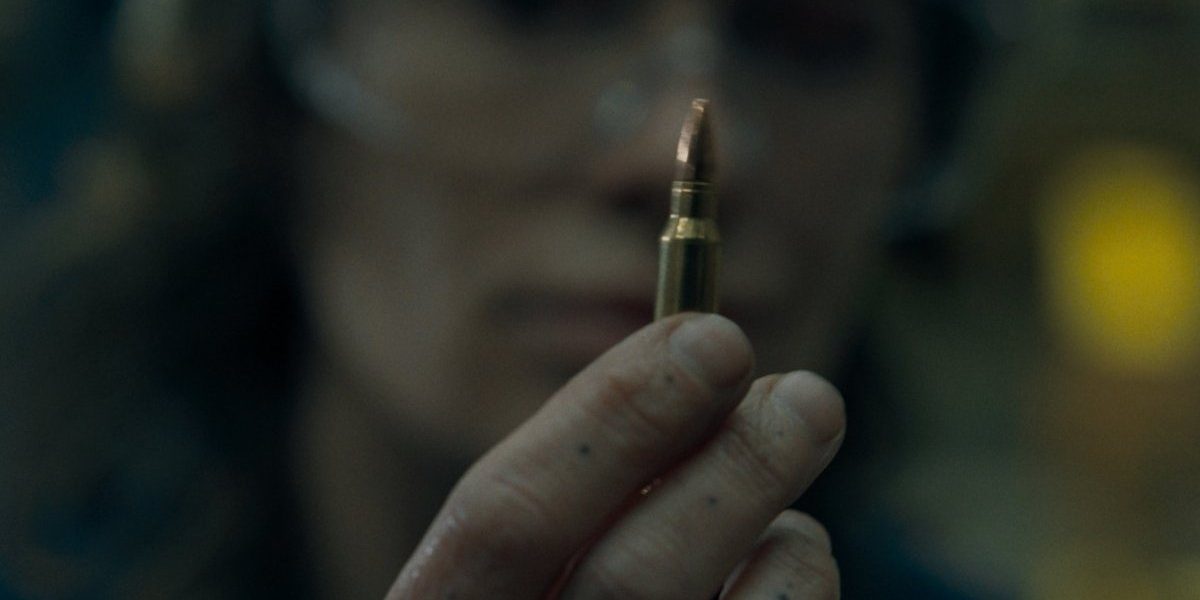
“When a soldier’s mother (Lena Headey) discovers the bullet that killed her son in Afghanistan was made at the factory where she works, she sets out on a path of revenge against those responsible,” says the synopsis.
Tyler Treese: Ballistic feels very timely. What inspired you to write the film?
Chad Faust: Yeah, I think it was about 13 years ago. I was in an office waiting room, and I read a stat that 30% of the lead that came back in American soldiers was American-made. Some people think that’s just a very obvious statistic. Of course, that goes on. In fact, it’s actually probably quite a bit higher than that. The military consultants that I worked with said there’s a street in the city of Kabul where you can just go buy anything you want, American-made, as far as ammunition, weaponry, artillery, everything. So, the number could be quite higher.
I wanted to find a way to personalize that story rather than politicize it because I don’t think it’s actually a partisan issue. I think it’s a human issue. Not that I’m even saying that this shouldn’t be the case. It’s just saying that what happens when you put things out into the world and they come back, you know? I think that does sort of put a bit of culpability on our shoulders and hopefully makes us at least a little bit more aware of what we’re putting out into the world. Even as me putting a film out into the world, I wanna feel like I’m responsible for the effect of it.
This is gonna generate some really positive conversation, I feel. I spoke with Lena earlier today, and she said that originally the script was about a father. How was it changing it to a mother, and what layers do you think that change added to the story?
Yeah, I had probably developed the story for about 10 years with it being a father. I was raised by my own dad, and I wanted to make an homage to him and the sacrifices he made to raise me. Then once I started talking to Lena about it, she says, ” Well, what if it’s a mom? Dude, what if it’s me?” I was like, “Oh, you’re right. That’s gotta be you.” Ever since then, it just was such an obvious choice, and it was meant to be her. From there on, the film just kind of naturally unraveled in the best way to be what it is.
Tyler Treese: You mentioned the lengthy production cycle that this took. Recently, we’ve seen so many John Wick-like action movies that while watching this, I almost felt like it was gonna snap into that mode. As the movie continues, you really start fearing that it will go that way because you don’t want to see her continue to unravel. Was that anything that you had on your mind that you wanted to play with? I just thought it was interesting in response to a lot of the action movies we see that take glee in that sort of action; here you’re dreading it by the end.
Chad Faust: I think that you nailed it. That’s exactly what I was trying to do. I wanted to play on that part of us that wants vengeance. I just watched Monkey Man, which I think is a brilliantly directed film by Dev Patel. At the same time, I’m like, “Gosh, do we really wanna be glorifying vengeance all the time?” Because you see it all the time. There is something satisfying about that, and I don’t think there’s anything wrong with portraying that; but I wanted to play on the very essence of what that invokes with us and actually show how destructive that can be. There’s no riding into the sunset after you kill all the people that hurt you; actually, you now have to reckon with your own response.
I think there’s this sense right now in our public discourse that we are the prosecutor and judge of the courtroom. I think we actually would be better if we maybe looked at ourselves as the defendant and looked within our own hearts about what’s going on with us and what we need to reckon with. This sets the story up to be that way just by the fact that she was culpable. Other films usually make the main character a bit more innocent of what went on. But hopefully, it at least creates a bit of a discussion about what justice could look like.
I was really impressed by Lena’s portrayal of grief. There are these really rough scenes right after she learns her son has passed away where she’s in the bathroom and she’s screaming and crying; it’s just so raw. How was it working with Lena to get that out of her?
I didn’t have to do anything to get it out of her. It was in there, and she knew it was the place to arrive. I think that scene in the bathtub was day one if not shot one; one of the very first things we shot was that darn bathroom scene. I remember thinking like, “Wow, sorry Lena; we’re kind of throwing this on you right up at start.” She’s like, “No dude; it’s fine. Don’t worry about it.” And that just set the tone. I think everyone went, “Oh okay; cool! We’re making something good; we’re doing something real here,” and woke everybody up. Okay; this is not just here to mess around; we’re here to lay down a cold hard truth.
This is your second full-length feature after Girl. What were the biggest lessons you learned on your debut that you’re able to implement on Ballistic?
I think a lot of first-time directors—this was my case—have no sense of how much preparation you need. There’s this sense of “I got a good sense of what this scene’s about; once we’re on set I’ll kind of find it.” Some people work well that way; but I discovered that I needed to really design the film in advance which means having those locations early—which is hard on a budget level like this—you’re constantly having to make pivots and you’re like “Wow! This whole design doesn’t work anymore because we lost location A.”
The biggest thing I learned from both films is… once I understand where my main actor is going emotionally—that’s how I bend everything around their psychology—I shoot their psychology; visualize it! So I’m constantly feeling where they’re at; sometimes if I see in rehearsal with Lena it’s going somewhere differently than expected—I might start adjusting shots accordingly.
Do you feel like your inclination as a director comes from your experience as an actor yourself? Because that’s seems like very actor-first approach.
It is! It’s like a subjective lens! Some directors might take a more objective positioning and try stepping back watching from afar—like watching a play—but for me—I want to be in heartbeat of my actors! You know? Breathing with them if you will! It comes naturally from my training as an actor for 25 years—it just sort of sits there for me!
Tyler Treese: What’s been your biggest adjustment going from in front of camera behind camera?
Chad Faust: Hmm interesting question! It’s mindset because as an actor there’s carefree nature—you have stay loose! You’re almost in yogic mindset all time because must stay playful! As director—you have such responsibility—it’s hard stay loose creatively! You want stay same mindset but it’s challenging! One reason why put myself in my films—forces me keep part alive—I feel better director when have be front camera too!
I love scenes between Lena and Hamza Haq! Can you speak working with Hamza and relationship between characters? Because adds another layer film—it’s kind soul story as progresses.
I cast Hamza after watching Instagram video where he spoke brown children world—addressing them after something happened Palestine—right from heart! Trying address kids who may have hard time understanding world! That guy—I don’t need see reel! Did watch reel but already made choice he’s guy! He’s such talented man!
I bent whole character where felt he coming from too! Originally wrote Hamza’s character Kahlil much older—20 years older than Hamza—but Hamza had soul 55-year-old man! So made work! Made more sense he would have younger child—loss more recent—before had healed—it would’ve been rawer for him still! Casting him brought life into character! Always liked how wrote him but took license because not from part world—I haven’t had experiences character has had! Once Hamza stepped in—I said “Dude this yours—just make real true!”
Thanks to Chad Faust for taking time talk about Ballistic.