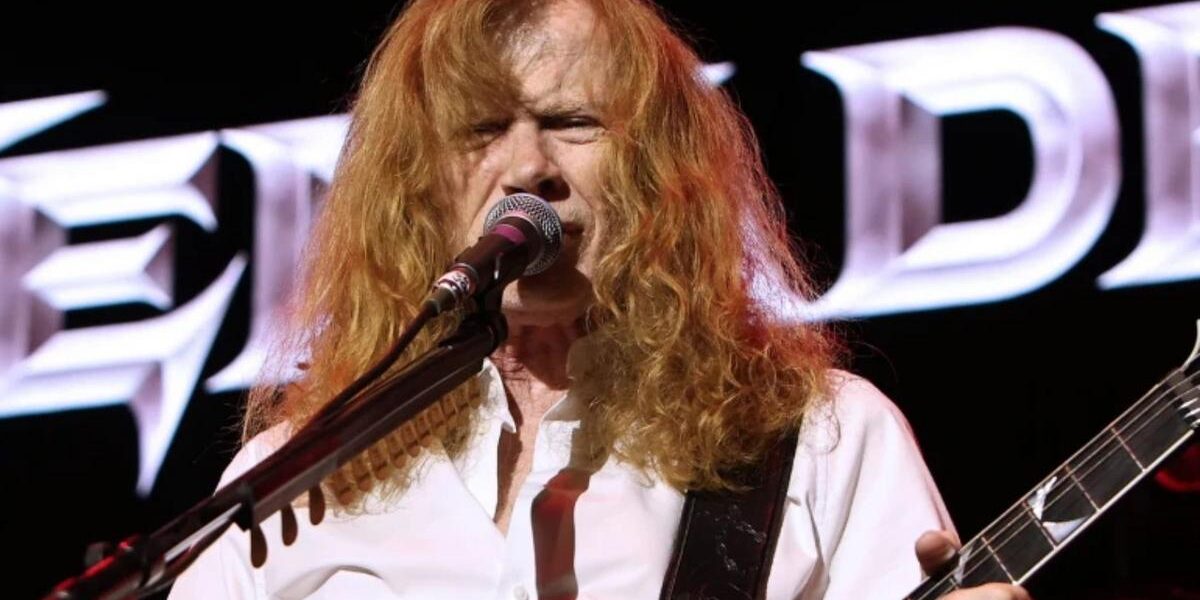
Dave Mustaine of Megadeth has identified four bands he considers part of a “new” alternative to the existing “Big 4” of thrash metal.
In an interview with Ocko TV’s Moshpit in the Czech Republic, Mustaine was asked about introducing a “younger generation” to the Big 4. While he didn’t directly address the question, it prompted him to highlight other acts thriving outside of thrash’s well-known Big 4.
Which Bands Would Dave Mustaine Include in Thrash Metal’s “Big 4”?
Metallica, Megadeth, Slayer, and Anthrax are widely recognized as thrash metal’s Big 4 and even toured together during select shows in the early 2010s. However, when asked to name a “new young generation of the Big 4,” Mustaine replied, “Well, it wouldn’t be a young generation, but I do believe that there are ways to do a new Big 4.”
He then listed several possibilities: “I think that Testament, I think Overkill, I think Exodus and maybe Trivium, I don’t know. Trivium’s not really a thrash band, so I’d have to think about that. But I think those other three guys would be really great.”
Expanding on his selections, he noted, “Overkill is really important on the East Coast metal scene. Exodus, of course, I love Exodus. And I’ve been friends with Gary [Holt] longes of all people that I’ve been friends with in the music industry. And Testament, Eric [Peterson] and Alex [Skolnick], those guys are really great guitar players. And I love when we get a chance to play with the band.”
Dave Mustaine Appears on Ocko TV’s Moshpit
What Has Dave Mustaine Previously Said About the Big 4?
Earlier this year in January, Dave Mustaine spoke with Loudwire Nights host Chuck Armstrong and stated, “The time has come for a new generation of Big 4 members. I see a lot of bands that are out there and a lot of them are really good, but are there four? I don’t know.”
Regarding the established Big 4, Mustaine mentioned in April that he has influenced all four bands. Notably, Mustaine began with Metallica and launched Megadeth independently; however, as he shared with São Paulo’s 89FM A Rock Radio, his influence extends to Slayer and Anthrax as well.
“Well, I’ve been very invested in the metal community. Kerry [King] and I played together and I showed him how to play Megadeth songs, which was before [Slayer] started having all their pivotal records,” says Mustaine. “Kerry and I had a really great time together. And I wrote music in Metallica and I wrote music in Megadeth. So I’ve been very influential with the guitar with these three bands.”
Regarding Anthrax, he added, “When I met Scott [Ian] and the guys in Anthrax out in New York, same thing happened. Their first record was very different from the record they made after they met me and the guys in Metallica. So I think that’s great. I love all those bands.”
READ MORE: The Best Song Off Every Megadeth Album
Since the original Big 4 shows, Mustaine has frequently advocated for more dates under the Big 4 banner, especially during Slayer’s farewell tour run. However, no additional dates have been scheduled since those early 2010s performances.
Megadeth in 2026 and Beyond
Megadeth is currently touring in support of their self-titled album, which they have announced is their last studio record. The band is back in the U.S., where they will perform in Hershey, Pa., tomorrow night (Sept. 15) before their appearance at the Louder Than Life festival on Thursday (Sept. 17). The current North American tour leg supporting Iron Maiden runs through Sept. 29 in San Antonio.
The group will then perform on Oct. 3 in South Korea before starting a November tour in Australia and New Zealand. For all dates and ticketing information, visit the Megadeth website.
Below are our picks for the Big 4 of 17 metal subgenres.
The ‘Big 4’ of 17 Metal Subgenres
Everyone knows the ‘Big 4’ of thrash metal; however, what about other styles of metal?
Gallery Credit: Jordan Blum