Key Insights
- Film Development: The process of turning a movie concept into a finished product often involves unexpected changes.
- Script Evolution: Many films began as sequels to other movies before being significantly altered.
- Notable Examples: Films like Die Hard with a Vengeance and Solace have interesting backstories involving previous projects.
- Industry Challenges: Various factors, including actor availability and studio decisions, can impact film production.
The journey from a movie’s first concept to the finished product can take some strange and unexpected turns. Scripts get rewritten, characters disappear, studios change direction, and sometimes the movie that finally reaches the screen bears little resemblance to what was originally planned. In more than a few curious cases, it wasn’t even supposed to be its own movie at all.
Today, we’re looking at a handful of movies that started out as sequels to completely different films before being reworked, repurposed, and transformed into something else entirely.
Die Hard with a Vengeance Was Supposed to Be Lethal Weapon 4 (and Rapid Fire 2)
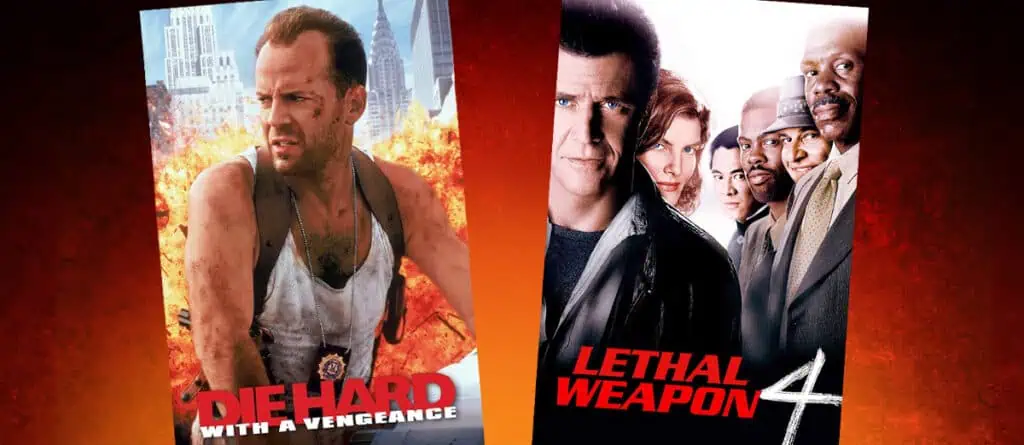
Following the release of Lethal Weapon 3, Warner Bros. and producer Joel Silver were eager to move forward with another sequel. A spec script by Jonathan Hensleigh caught their attention. Titled Simon Says, it involved an NYPD officer who becomes embroiled in a revenge plot involving a mad bomber who has planted explosives throughout the city.
But that wasn’t the beginning of the script’s story.
Simon Says had originally been picked up by 20th Century Fox as a potential vehicle for Brandon Lee, possibly even as a sequel to Rapid Fire. Angela Bassett would have starred alongside him as a community activist who helps track down the bombs. However, Lee’s tragic death on the set of The Crow put an end to those plans, and the script went back on the shelf.
That’s when Warner Bros. came calling. It’s not hard to imagine Murtaugh and Riggs butting heads and trading fast-talking quips as they race across the city trying to stop the bomber. Since Fox still owned the script, Warner Bros. attempted to acquire it for Lethal Weapon 4, but the deal didn’t happen. The Lethal Weapon sequel remained in development for several more years and wouldn’t reach theaters until 1998.
But Simon Says didn’t stay buried. The script was eventually revamped as Die Hard with a Vengeance. The NYPD officer became John McClane, while Angela Bassett’s community activist evolved into Zeus Carver, played by Samuel L. Jackson. The mad bomber was also rewritten as Simon Gruber, the brother of Hans Gruber, the villain from the original Die Hard.
Solace Was Supposed to Be Se7en 2
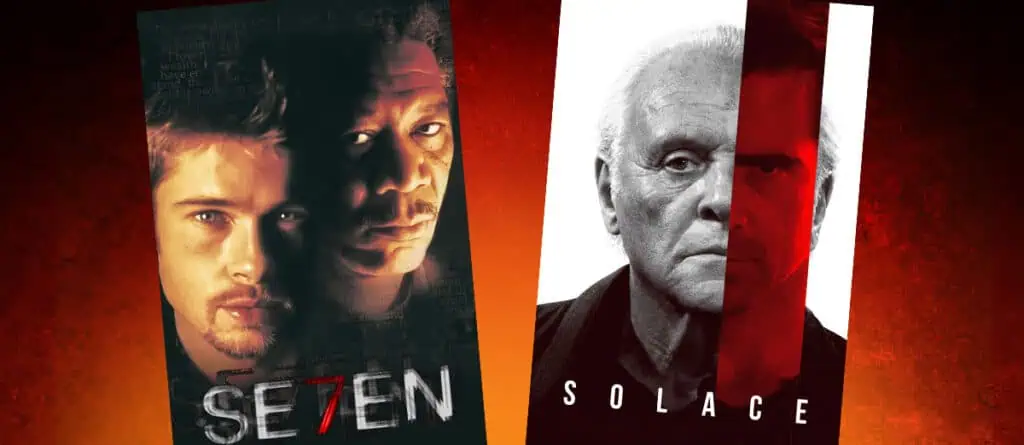
David Fincher’s Se7en was one of the best crime thrillers of the ’90s, a superbly stylish serial-killer mystery that absolutely did not need a sequel.
So, naturally, Hollywood tried to make one.
The spec script for Solace, written by Ted Griffin and Sean Bailey, was originally picked up by Fox 2000 Pictures in 1998, just three years after the release of Se7en. Nothing happened with it for several years until New Line Cinema acquired the project in 2001. The story revolved around a doctor with psychic abilities who is enlisted by law enforcement to help track down a serial killer with similar powers.
New Line eventually began developing the script as a sequel to Se7en, which they planned to call… Ei8ht. Ugh. The idea was to replace the psychic doctor with Detective William Somerset, with hopes that Morgan Freeman would return to the role. That would have meant giving Somerset psychic powers, which sounds like a pretty wild departure from Se7en.
Fincher had absolutely no interest in returning for the sequel, memorably saying, “I would have less interest in that than I would in having cigarettes put out in my eyes.”
Thankfully, the connections to Se7en were eventually removed, and Solace returned to being a standalone movie. That didn’t mean its trip to the screen suddenly became any easier. The project went through numerous directors and cast members over the years, with Bruce Willis attached at one point before Anthony Hopkins finally signed on to play the psychic doctor opposite Colin Farrell as the serial killer.
Solace was eventually released in 2015, nearly two decades after the script was first sold. And after all that waiting, critics weren’t exactly kind.
Cyborg Was Supposed to Be Masters of the Universe 2 (and Spider-Man)
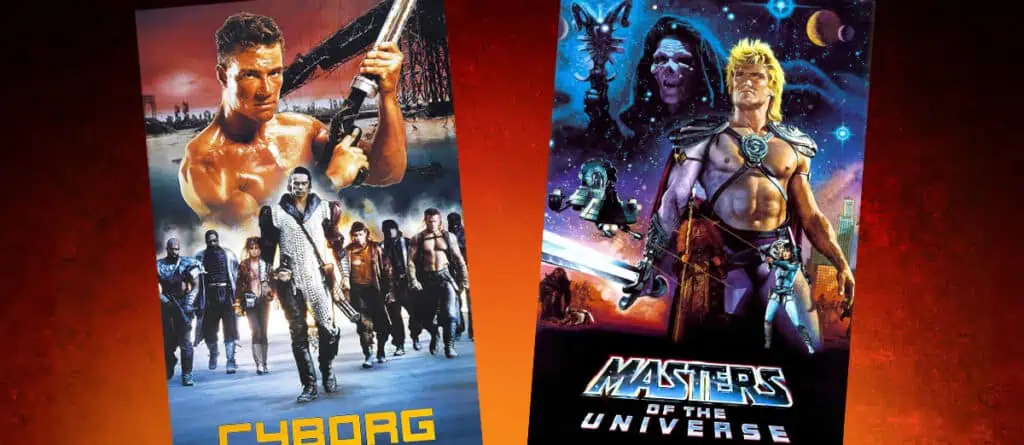
Although Masters of the Universe was considered a critical and commercial disappointment, Cannon Films still believed a sequel could work. The studio began moving forward with Masters of the Universe 2, but Dolph Lundgren wasn’t interested in returning, so surfer Laird Hamilton was cast as the new He-Man.
But Cannon had an even more ambitious plan. Not only would the company make a Masters of the Universe sequel, but it would also shoot it back-to-back with what could have been the first live-action Spider-Man movie.
Albert Pyun was tasked with directing both films, and the proposed shooting schedule was certainly unusual. “The concept was to shoot 2 weeks of Spider-Man first,” Pyun explained in a 2005 interview. “The section of Peter Parker’s story before he was bitten. Then we would shoot 6 weeks of Masters 2.”
The actor playing Peter Parker (Pyun couldn’t recall who was cast) would spend that time following an intensive workout regimen, bulking up for his transformation into Spider-Man. Once Masters of the Universe 2 wrapped, production would return to Spider-Man.
This wasn’t just wishful thinking either. Costumes and sets had already been created for Masters of the Universe 2, while portions of New York City had been constructed for Spider-Man. Unfortunately, just two weeks before shooting was scheduled to begin, Cannon’s licensing arrangements with Marvel and Mattel fell apart.
By that point, roughly $2 million had already been spent. Rather than letting all those costumes, props, and sets go to waste, Pyun proposed creating an entirely new movie that could make use of them. He wrote the first draft of what would become Cyborg, over a single weekend.
<p"What I remember most from the film was exhaustion," Pyun later recalled. "The turnabout from prepping to shoot Spider-Man and Masters 2 to writing and shooting Cyborg was punishing."
Pyun originally wanted Chuck Norris for the leading role but Cannon suggested Jean-Claude Van Damme, who had recently starred in Bloodsport.
In the end, it all probably worked out for the best. Cyborg‘s production cost less than $500,000—not counting what Cannon had already spent on Mastors of the Universe 2, and went on to gross around $10 million.
Nighthawks Was Supposed to Be The French Connection III
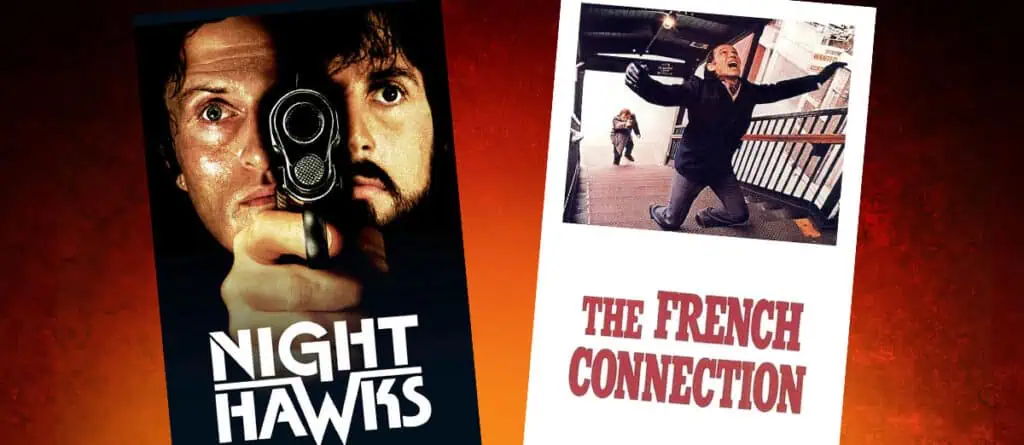
One of Gene Hackman’s most iconic roles was Jimmy “Popeye” Doyle in The French Connection, the rough-edged police detective willing to do just about anything to crack a case. The 1971 movie was a huge success earning roughly $75 million worldwide and winning five Academy Awards including Best Picture and Best Actor for Hackman.
A sequel,< em French Connection II followed in 1975 but didn’t enjoy the same level of success. Despite that development began on a third installment. David Shaber wrote a script that would have found Popeye Doyle teaming up with a wisecracking cop—Richard Pryor was reportedly considered for this role—as they investigated an international terrorist case.
The problem: Gene Hackman wasn’t interested in playing Popeye Doyle again. With Hackman unwilling to return,The French Connection III was scrapped but its script didn’t disappear; it was reworked intoNighthawks with Sylvester Stallone and Billy Dee Williams playing NYPD detectives transferred to an anti-terrorist squad.
Nighthawks became modestly successful and has since developed into one of Stallone’s more underrated films.
The French Connection III never happened but Popeye Doyle did eventually return; A made-for-TV movie simply titledPopeye Doyle featured futureMarried…with Children star Ed O’Neill taking over Hackman’s role.
Colombiana Was Supposed to BeThe Professional 2

FollowingLéon: The Professional ’s release , Luc Besson began developing a sequel centered on Natalie Portman’s character Mathilda . Besson wanted to wait until Portman was older before making this movie , so this project sat on hold for several years .
Unfortunately , during this time , Besson left Gaumont Film Company , founding his own studio EuropaCorp . Gaumont still controlled rights overThe Professional and wasn’t about giving them up . Rather than lose this project entirely , Besson eventually reworked many ideas he had for Mathilda intoColombiana . This action thriller released in 2011 starred Zoe Saldaña as Cataleya , an assassin seeking revenge against those responsible for her family’s murder .
Olivier Megaton directedColombiana ; he’d already been involved when it still intended following Mathilda . “Ten years ago we decided on making Mathilda , which was Professional sequel , but we couldn’t do it because of many things – about Natalie [Portman], about [estranged distributor] Gaumont,” Megaton told IndieWire in 2011 .
It’s hard not wondering how original version might have looked like; seeing grown-up Natalie Portman return could’ve been fascinating although there’s no guarantee she’d agree coming back . Portman has since described her relationship withThe Professional as “complicated,” even while acknowledging this movie launched her career .
The post Five Movies That Started Out As Sequels To Other Movies appeared first on JoBlo.